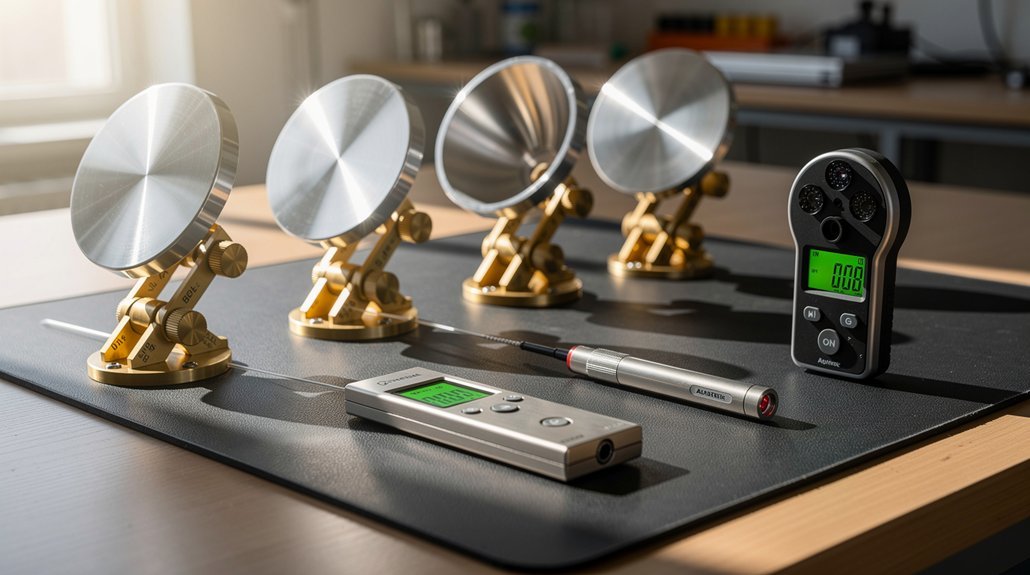

When cooking with a sun oven on cloudy days, you'll need to double your standard recipe times and make strategic adjustments. Plan your cooking between 11 AM and 3 PM when UV intensity peaks, and cut ingredients into smaller pieces to reduce cooking time. Focus on quick-cooking items like rice and lentils, or stick to reheating pre-cooked foods. You'll want to monitor internal temperatures every 15-20 minutes with a digital probe thermometer and realign your reflectors every 30 minutes for best sunlight capture. Reduce liquid amounts and use tight-fitting lids to maintain moisture. These fundamentals will help you master the art of solar cooking in less-than-ideal conditions.
Understanding Cloudy Day Temperature Ranges

When clouds blanket the sky, they fundamentally alter how temperatures behave throughout the day.
You'll notice that cloudy days won't get as hot as clear ones because clouds scatter and absorb incoming sunlight before it reaches the ground. This means you'll experience cooler daytime temperatures, even during typically warm periods.
At night, you'll find the opposite effect. Clouds act like a natural insulator, emitting infrared radiation back toward Earth's surface. This keeps nighttime temperatures warmer than they'd be under clear skies. The presence of frequent cloud cover dramatically reduces temperature variation in any given location.
You'll notice that cloudy nights only drop a few degrees from daytime highs.
What does this mean for your temperature planning? You can expect a much narrower range between day and night temperatures when it's cloudy, regardless of the season or other weather conditions.
Timing Your Solar Cooking Sessions
Temperature patterns on cloudy days directly impact your solar cooking schedule.
You'll need to maximize your cooking time between 11:00 am and 3:00 pm when the sun's overhead position provides the highest UV intensity. On cloudy days, focus on quick-cooking items like white rice, lentils, or potatoes rather than dishes requiring extended cooking times. In the Salish Sea region, cooking temperatures typically range from 12 to 32°C.
Start preheating your solar oven by 10:00 am to make the most of available sunlight.
You'll need to adjust your cooker's position more frequently during winter months to track the sun's movement. Check weather forecasts carefully and plan accordingly – if heavy cloud cover is predicted, you might want to choose a different cooking method.
For partially cloudy days, expect longer cooking times and be prepared to maintain your food in a warming stage until around 4:00 pm.
Recipe Modifications for Cloud Cover

Since cloudy weather affects solar cooking temperatures, you'll need to modify standard recipes to assure successful results. Even with clouds, the Sun Oven can reach 300-375°F temperatures with proper alignment. Add extra time to your cooking schedule, treating your solar oven like a slow cooker during overcast conditions. Use a thermometer to monitor internal temperatures and ensure food safety.
Enhance heat retention by lining your cooking vessels with black surfaces and wrapping them in aluminum foil. You'll want to seal any gaps with plastic wrap to minimize heat loss.
Position your reflectors carefully using E-Z Sun-track indicators and realign them every 30 minutes to capture maximum sunlight. If you're leaving the oven unattended, face it due south and secure it with T-Leg stakes in windy conditions.
Remember to compensate for reduced sunlight by using reflective materials to redirect available light into your oven.
Food Selection for Overcast Days
Selecting the right foods for solar cooking on overcast days can make the difference between success and frustration.
You'll want to focus on pre-cooked foods and dishes that don't require high temperatures. Consider using leftovers, canned goods, or items that only need reheating, like soups and stews. Solar ovens are particularly effective during peak sunlight hours between 10am and 2pm.
Choose ingredients that retain moisture well and can adapt to varying cooking conditions. Slow-cooking dishes are ideal since they're more forgiving when sunlight is limited.
You can also opt for foods that you can partially cook in the solar oven and finish with an alternative method if clouds roll in.
When planning your menu, prioritize simple recipes that don't demand long cooking times or precise temperatures. Moist dishes like braises and stews work especially well since they stay warm longer.
Temperature Monitoring Best Practices

You'll need to check your solar oven's temperature frequently during cloudy conditions using a reliable digital probe thermometer inserted into the thickest part of your food.
For consistent monitoring, set a timer to record temperatures every 15-20 minutes, ensuring your food stays above 140°F (60°C) for safe cooking.
Keep your thermometer properly calibrated and position its probe outside the oven if steam affects visibility through the glass.
Checking With Digital Thermometers
Proper temperature monitoring makes all the difference when solar cooking on cloudy days.
You'll need a reliable digital probe thermometer that can measure temperatures from -50°C to 300°C to guarantee food safety when sunlight is limited.
Insert the probe into the thickest part of your meat, avoiding fat and bone, for accurate readings. Choose a thermometer with an external display so you won't need to open the oven and lose precious heat.
On cloudy days, your solar oven acts more like a slow cooker, so it's essential to keep food above the danger zone (10°C to 52°C). Remember to check that meats reach their minimum safe temperatures: 145°F for whole cuts, 160°F for ground meats, and 165°F for poultry.
Regularly calibrate your thermometer to maintain accuracy.
Regular Temperature Recording Intervals
When cooking with a solar oven on cloudy days, maintaining consistent temperature records becomes essential for food safety and ideal results.
You'll need to check your oven's temperature every 30 minutes during peak hours (11 AM to 3 PM) to guarantee it stays between 200-300°F (93-149°C).
Use your digital probe thermometer to record temperatures during preheating, which typically takes 20-30 minutes.
For longer cooking sessions, adjust your oven's position every 1-2 hours to track the sun's movement.
Keep detailed notes of temperature fluctuations, especially when clouds pass overhead, and be ready to extend cooking times accordingly.
Remember to check that food doesn't linger in the danger zone between 50-125°F (10-52°C).
Your records will help you make better adjustments for future cloudy-day cooking sessions.
Positioning Strategies During Cloud Cover
Successfully positioning a solar oven during cloudy weather requires strategic placement and frequent adjustments to maximize limited sunlight.
You'll need to place your oven in an open area and realign it every 20-30 minutes to track the sun's movement.
For best results, aim your oven toward where the sun will be strongest, typically between 1 PM and 2 PM.
Use E-Z Sun-track indicators to guarantee perfect alignment, and keep the oven on a dry, level surface.
When clouds are intermittent, don't give up – cooking will slow down but won't stop completely.
You can enhance performance by using a pot lid or high-temperature baking bag to retain heat.
Remember to secure your oven against wind using stones or stakes, but avoid cooking if winds exceed 35 MPH.
Moisture Control in Cloudy Conditions

Beyond positioning your solar oven correctly, managing moisture becomes your next challenge during cloudy weather.
You'll need to prevent condensation from blocking precious sunlight while maintaining cooking temperatures. To tackle this, leave one or more latches slightly loose on your oven door, or use a wooden skewer to create a small gap for steam escape.
When moisture builds up, quickly wipe the glass lid with a cloth or paper towel.
For recipes that produce a lot of steam, like Bolognese sauce, place a dark-colored tea towel under the pot's lid to absorb excess moisture.
Don't let the absorbent material block sunlight. If needed, prop the oven door open half an inch, but remember this will affect cooking times.
Monitor your oven's temperature and adjust your ventilation strategy accordingly.
Heat Retention Methods
Since cloudy weather reduces solar energy input, effective heat retention becomes essential for maintaining cooking temperatures. You'll need to maximize insulation and reflective surfaces to trap every bit of available heat. Line your cooking cavity with multiple layers of crumpled newspaper and add dark construction paper at the base for better heat absorption.
To optimize heat retention during cloudy conditions:
- Install double-glazed panels with proper spacing and seal them using high-temperature silicone.
- Position smooth aluminum foil reflectors strategically around the cooking area.
- Use dark, lidded cookware and guarantee it's positioned in the center of the oven.
Keep your solar oven protected from wind interference and reposition it every 30-45 minutes to capture maximum sunlight.
The combination of proper insulation, glazing, and positioning helps maintain consistent cooking temperatures despite cloud cover.
Alternative Cooking Time Calculations

While cooking with a solar oven on cloudy days requires patience, you can calculate adjusted cooking times by multiplying your recipe's normal duration by 1.5-2.5, depending on cloud density.
You'll need to plan your cooking around peak sunlight hours, typically between 1 PM and 2 PM, when the sun's rays are strongest.
To optimize your cooking time calculations, you'll want to take into account seasonal factors. In winter, you're limited to about 5 hours of cooking time, while summer offers up to 13 hours in southern latitudes.
Cut your ingredients into smaller pieces to reduce cooking duration, and don't forget to realign your oven every 30 minutes.
When calculating cooking times, factor in your latitude, season, and cloud coverage to determine if you need to start cooking earlier in the day.
Seasoning Adjustments for Slower Cooking
Adjusting seasonings for solar oven cooking requires a thoughtful approach to maintain flavor despite longer cooking times. You'll need to balance salt carefully, as it concentrates during extended cooking periods, and consider adding it towards the end to prevent over-seasoning.
Choose robust seasonings and herbs that can withstand lengthy cooking sessions, and layer your flavors strategically. When using your solar oven, remember these key points:
- Use whole spices instead of ground ones to prevent overwhelming flavors
- Add fresh herbs in the final stages to preserve their vibrant taste
- Incorporate aromatics like onions and garlic early for depth of flavor
Monitor moisture levels by using tight-fitting lids and reducing liquids by 1/4 to 1/2 cup, as solar ovens retain moisture differently than conventional ovens.
You can manage steam by leaving a small airspace or inserting a matchstick between the lid and gasket.
Weather Pattern Impact Assessment

Understanding weather patterns is essential for successful solar cooking, as cloud coverage directly impacts your oven's performance.
You'll need to monitor sky conditions throughout your cooking session, as intermittent clouds can considerably affect temperatures and cooking times.
When you notice partial cloud cover, double your standard cooking times to compensate for lower temperatures.
If you can't see your shadow, your Sun Oven won't reach sufficient cooking temperatures.
While outside temperature isn't critical (your oven can reach 350°F even on cold days), clear skies are essential for success.
Watch for wind conditions too – you can secure your oven with stakes or clamps up to 35 MPH, but consider postponing cooking in stronger gusts.
Regular position adjustments will help maintain direct sunlight exposure for ideal results.
Sun Tracking During Variable Conditions
Beyond monitoring weather patterns, successful solar cooking requires mastering sun tracking techniques – especially during variable conditions.
You'll need to continuously adjust your oven's position to follow the sun's path while watching for breaks in cloud cover.
For ideal results during partly cloudy days:
- Position your oven toward the sun's midday location for gradual heating
- Use a thermometer to monitor internal temperature and adjust positioning accordingly
- Take advantage of clear sky intervals by quickly repositioning your oven to maximize direct sunlight exposure
Keep your reflector flaps adjusted to capture available sunlight, and maintain proper insulation to retain heat during cloudy periods.
When clouds threaten consistent cooking, aim for lower temperature targets between 180-225°F, which are more achievable in variable conditions.
Equipment Preparation for Cloudy Days

To guarantee successful solar cooking despite unpredictable weather, you'll need a well-prepared backup system alongside your sun oven. Keep your Cloudy Day Cube Stove ready with various fuel options and make certain it's easily accessible. You'll want to maintain both your primary and backup equipment in top condition.
| Equipment | Preparation Steps |
|---|---|
| Sun Oven | Clean reflectors and check seals regularly |
| Cube Stove | Store fuel supplies in a dry location |
| Cookware | Have suitable pots for both methods |
| Storage | Use insulated containers for food transfer |
Store your sun oven in a protected area when not in use, and keep all necessary utensils within reach. You'll find it helpful to organize your cooking space so you can quickly switch between solar and alternative methods when clouds appear. Remember to stock various fuel types for your backup stove, including twigs, charcoal, and solid fuel tablets.
Frequently Asked Questions
Can I Use Aluminum Foil to Boost Solar Cooking Power on Cloudy Days?
Yes, you can use aluminum foil to boost solar cooking on cloudy days. Just add extra foil reflectors to capture more scattered sunlight, though you'll still need longer cooking times than on sunny days.
How Does Altitude Affect Solar Cooking Performance During Cloudy Conditions?
At higher altitudes, you'll get better solar cooking performance even on cloudy days because there's less atmosphere to block radiation. You'll still experience reduced temperatures, but cooking times won't be as long.
Does Food Spoilage Risk Increase When Solar Cooking on Cloudy Days?
Yes, you'll face higher food spoilage risks on cloudy days since your solar oven can't maintain safe cooking temperatures. When temperatures drop into the danger zone, bacteria can multiply quickly in your partially cooked food.
Can Different Colored Cookware Affect Cooking Efficiency Under Cloud Cover?
Yes, your cookware's color greatly affects cooking efficiency under clouds. You'll get better results with dark-colored pots and pans since they absorb more heat, while light-colored ones reflect it, reducing cooking effectiveness.
Should Food Be Covered or Uncovered When Solar Cooking in Cloudy Weather?
You should always keep your food covered when solar cooking in cloudy weather. It'll help trap heat, maintain temperature, and prevent steam from escaping, making your cooking more efficient despite limited sunlight.
In Summary
You'll find cooking with your sun oven on cloudy days requires patience and smart adjustments. Monitor your temperatures closely, choose appropriate recipes for lower-temperature cooking, and track weather patterns to maximize available sunlight. Don't forget to adjust seasonings and cooking times accordingly. With these adaptations and proper planning, you can still create delicious solar-cooked meals even when conditions aren't perfect.