
You'll find success cooking sun-based food during overcast weather by implementing these proven methods: Use reflective panels with clear glass mirrors for maximum efficiency, modify your solar box cooker with thermal storage materials, and employ hybrid techniques combining parabolic dishes with conventional ovens. Add heat-retaining materials like clay-coated carbon bricks, position reflectors strategically, and maintain backup electric systems for cloudy days. Monitor weather patterns to capitalize on cloud breaks, utilize UV-based adaptations indoors, and optimize your setup with proper insulation and thermal mass storage. These foundational strategies open the door to mastering sun-based cooking in any weather.
Reflective Panel Cooking Systems

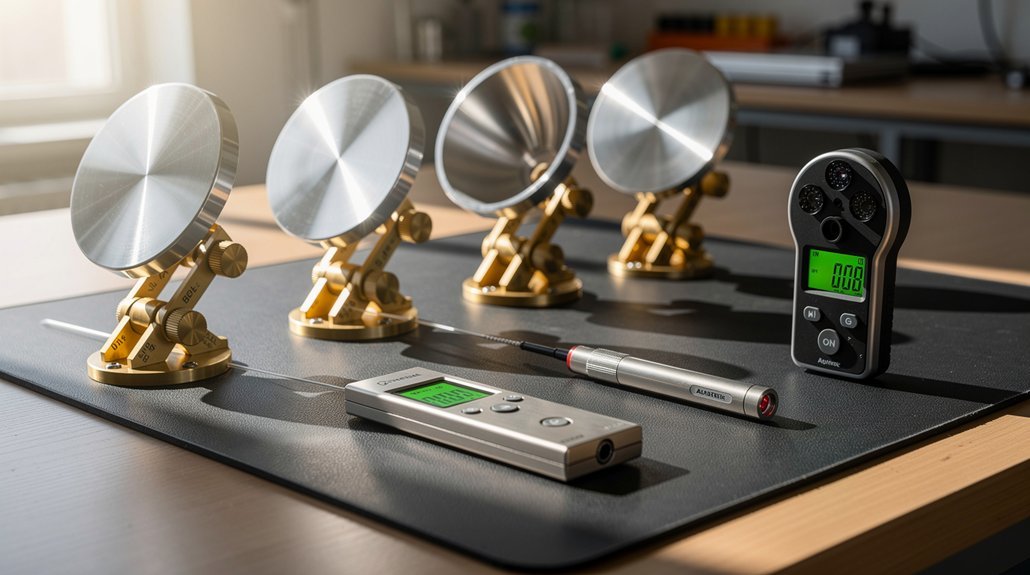
While traditional solar cooking methods can be limited, reflective panel cooking systems offer a sophisticated solution through their innovative use of parabolic reflectors.
You'll find these systems are remarkably efficient, achieving up to 84% optical efficiency with clear glass mirrors and temperatures reaching 1020°C at the focal point.
You can install these systems with the cooking area inside your house while keeping the reflector outside, making them practical for daily use.
With an 8m² reflector, you'll get about 2.2 kW of cooking power at 700 W/m² solar radiation – enough to boil 22 liters of water in an hour.
The reflectors' flexible design allows for seasonal adjustments, providing between 1.7 kW in summer and 2.5 kW in winter, though you'll need to clean them regularly to maintain efficiency. The system requires manual adjustments every 2-3 days to ensure the reflector maintains optimal alignment with the sun.
Solar Box Cooker Modifications
You'll get better results from your solar box cooker by carefully positioning the reflective panels to track the sun's movement and using adjustable tilt angles for maximum exposure. The vertical rotation feature enables optimal sun tracking throughout the day.
To maintain cooking temperatures during cloudy periods, you can upgrade your cooker with thermal storage materials like Bayburt stone and enhance the insulation with foam trays or plywood sealed tightly around the edges.
When sunlight is limited, consider adding a backup heating element that can be powered by a small battery or portable power bank to guarantee your meal completion.
Reflective Panel Positioning Tips
Since ideal sunlight capture is essential for solar box cooking, proper reflective panel positioning can greatly enhance your cooker's efficiency.
You'll need to adjust your reflectors throughout the day, tilting them at approximately 30 degrees when the sun is overhead and rotating them 10 degrees hourly to track the sun's movement.
To optimize alignment, check if you can see your cooking pot's reflection in the panels.
When the sun's low on the horizon, position your sunward reflector horizontally while tilting the opposite panel 30 degrees toward the sun.
Secure your reflectors using supports like chopsticks or strings to maintain stability against wind.
For precise positioning, you can use sun finders or hollow tubes to track the sun's rays, ensuring maximum heat concentration on your pot's bottom and sides.
The nine mirror glass pieces in the reflector box work together to concentrate sunlight onto the cooking surface for optimal heating performance.
Heat Retention Design Features
Three key design features can transform a basic solar box cooker into a high-performance heat retention system.
You'll want to focus on insulation, thermal mass, and air-tight construction. Line your cooking chamber with thick materials like cardboard or wood, and add high-capacity heat storage elements like bricks to maintain consistent temperatures during cloudy periods. These modifications can help achieve temperatures of up to 150 degrees Celsius in your box cooker.
- Use black-colored pots and interior surfaces to maximize heat absorption
- Add multiple layers of insulation using foam, wood, or cardboard
- Install a well-sealed transparent lid made of glass or plastic
- Place heat-storing bricks or stones inside to maintain cooking temperatures
- Create an air-tight seal around all edges to prevent heat escape
Remember to pre-heat your modified cooker for up to an hour before cooking, and you'll find it maintains cooking temperatures much longer than standard models, even in overcast conditions.
Emergency Backup Power Options
While heat retention features provide reliable performance in most conditions, even the best solar box cooker needs a backup plan for extended cloudy periods.
You'll want to integrate a portable stove or alternative cooking device into your emergency kit to guarantee consistent meal preparation regardless of weather.
Keep your backup options organized and easily accessible.
You can develop a simple routine that helps you decide when to switch from solar to backup methods based on cloud cover and available sunlight.
It's vital to maintain both your solar cooker and backup devices in good working order, checking them regularly for any needed repairs or fuel supplies.
Make it a habit to practice using both cooking methods so you're comfortable switching between them when conditions change.
Heat Retention Cooking Methods

The cozy nest of a hay-filled box marks the humble beginnings of heat retention cooking, a method that dates back to medieval times.
While our ancestors used hay bales and wooden boxes, you'll now find modern versions using vacuum insulation and foam-based materials that work like giant thermoses.
You'll get the best results by bringing your food to a boil first, then transferring it to your retained heat cooker where it'll stay hot for 8-10 hours.
- Use thin metal pots with tight-fitting lids for ideal heat retention
- Fill your pot to maximum capacity – air spaces reduce efficiency
- Expect foam units to lose 6 degrees per hour, vacuum units 8-10 degrees
- Cook large portions rather than small amounts for better results
- Keep water hot overnight or slow-cook beans without electricity
Alternative Energy Cooking Solutions
You'll find electric backup power systems essential for maintaining cooking capabilities during overcast periods when solar cooking isn't viable.
Portable solar storage units can collect and store energy on sunny days, providing power for electric cooking appliances when clouds roll in.
These backup solutions work well alongside traditional solar cooking methods, ensuring you're never without a way to prepare meals regardless of weather conditions.
Electric Backup Power Systems
Leveraging electric backup power systems provides a reliable alternative for sun-based cooking during overcast conditions.
You'll benefit from a simple 12-volt setup using LiFePo4 batteries and direct DC operation, which eliminates the need for complex inverters. This system's efficient design, featuring ceramic fiber kiln insulation and high-temperature baking bags, helps maximize your stored power.
- Run appliances for 4 hours using a 200AH battery at 600 watts
- Connect directly to solar panels for charging, often without needing a controller
- Use specialized 12-volt cooking appliances designed for off-grid scenarios
- Maintain indoor air quality with zero emissions or harmful fumes
- Save money through reduced energy loss and simpler components
This backup system guarantees you'll still have cooking capabilities when sunshine is limited, while maintaining environmental benefits and safety standards typical of sun-based methods.
Portable Solar Storage Units
While traditional sun-based cooking relies on direct sunlight, portable solar storage units offer a flexible solution for maintaining cooking capabilities in varying conditions.
You'll need to connect your solar panels in series to a battery pack, which stores energy for later use during overcast periods.
When setting up your system, position multiple panels in an arc formation to capture maximum sunlight throughout the day. Choose a lightweight, foldable panel design for easy transport and storage.
Make sure your battery pack comes with clear charging instructions and connect it to an inverter that matches your cookstove's wattage requirements.
For peak performance, select electric stoves with lower heat requirements or high thermal efficiency.
The stored energy can power your cooking needs during early mornings or cloudy days when direct sunlight isn't available.
Hybrid Solar Cooking Techniques

Since overcast weather can disrupt traditional solar cooking, hybrid solar cooking techniques offer versatile solutions by combining multiple heating methods.
You'll find that hybrid designs using parabolic dishes with conventional box ovens maximize your cooking options during variable weather conditions. By incorporating both funnel reflectors and insulated components, you can maintain consistent temperatures even when clouds roll in.
- Use cast iron cookware to distribute heat evenly and prevent burning
- Position your cooker to capture sunlight quickly when clouds break
- Pre-soak beans and prepare dough in advance to enhance sunny intervals
- Reorient your cooker every 10-15 minutes for ideal heat collection
- Choose quick-cooking foods like rice, lentils, or potatoes during partly cloudy days
These adaptable techniques let you cook everything from fried eggs to roasted meats, making the most of available sunlight while maintaining food safety standards.
Thermal Mass Storage Strategies
You'll want to select materials with high thermal mass properties like clay-coated carbon bricks or black-coated granite, which can effectively store solar heat for extended cooking periods.
Your storage container design should incorporate slanted, reflective inner walls and black bottom surfaces to maximize heat retention while preventing unnecessary energy loss.
For ideal results, you can integrate dark-colored cooking vessels with your thermal mass system, enhancing the overall heat absorption and storage capacity during peak sunlight hours.
Heat-Absorbing Material Selection
When selecting materials for thermal mass storage in sun-based food preparation, it's essential to focus on substances that excel at heat absorption and retention.
You'll want to incorporate materials like concrete, tiles, and bricks, which can effectively store and release heat throughout the day. For best results, you'll need to take into account how these materials interact with your local climate and available sunlight.
- Choose concrete slabs for their excellent heat-storing capacity and consistent temperature regulation
- Incorporate dark-colored tiles to maximize solar absorption
- Use brick walls or elements to provide steady heat release over time
- Consider PCM-enhanced materials for extended heat retention periods
- Select double-walled containers with reflective inner surfaces to maintain food temperatures
Remember to pair these heat-absorbing materials with proper insulation and shading to prevent unwanted heat loss or gain during overcast conditions.
Solar Storage Container Design
Designing an effective solar storage container requires careful integration of thermal mass materials and strategic placement to maximize heat retention. You'll need to focus on the first 100mm of thickness when using masonry materials, as additional thickness beyond 150mm won't improve performance.
| Feature | Implementation |
|---|---|
| Container Material | Use concrete, brick, or water-based systems |
| Insulation | Apply external insulation while maintaining airtight seal |
| Heat Collection | Position glass surface at 6:1 ratio to mass area |
| Monitoring | Install thermometers to track performance |
| Position | Place internally for better heat transfer |
| Ventilation | Include thermal chimney for heat distribution |
Your container should incorporate phase change materials and reflective surfaces to enhance thermal capacity. Remember to include glazing to trap heat and maintain consistent temperatures during overcast conditions.
Natural Light Enhancement Tips

Three essential techniques can dramatically enhance natural light when photographing food: diffusers, reflectors, and strategic positioning.
You'll find that placing a sheer curtain or light diffuser near your window creates soft, flattering light, while a reflector positioned opposite the light source fills shadows and adds vibrancy.
Experiment with side lighting and backlighting to highlight textures and create depth in your shots.
- Use a 5-way reflector's white side to gently soften intense shadows
- Position your diffuser closer to the window than the subject for ideal results
- Place black foam board to deepen shadows and enhance food texture
- Combine diffusers with reflectors for balanced, controlled lighting
- Adjust your setup throughout the day to leverage varying light intensities
Cloud Break Cooking Windows
Despite overcast conditions, successful cloud kitchen operations require strategic scheduling to maximize natural light opportunities throughout the day.
You'll need to monitor weather patterns and plan your food preparation around predicted cloud breaks, leveraging these windows for ideal cooking efficiency.
Using your kitchen display system, you can coordinate multiple orders during these brief periods of natural light.
When you spot a potential break in cloud cover, quickly adjust your digital menu to highlight sun-dependent dishes.
Since cloud kitchens allow for rapid menu updates, you're able to capitalize on these moments without any printing delays.
Structure your kitchen layout to position sun-dependent cooking stations near windows or skylights, and keep your delivery coordination streamlined so meals reach customers while maintaining ideal temperature and quality.
UV-Based Cooking Adaptations

When faced with persistent overcast conditions, you can leverage UV-based cooking adaptations that mimic natural sunlight.
UV technology offers you a reliable alternative that's FDA-approved and energy-efficient. You'll find that UV-based cooking preserves food's nutritional value and natural taste while ensuring safety through pathogen reduction.
- Set up portable UV equipment indoors to continue your sun-based cooking during cloudy weather
- Adjust exposure times and UV-C fluence levels based on your specific food items
- Take advantage of customizable germicidal lamp systems that integrate with your existing setup
- Monitor treatment parameters to maintain consistent results across different food types
- Use UV-C light settings that match your recipe's sunlight requirements
This method doesn't require chemicals or excessive heat, making it an excellent choice for maintaining your sun-cooking practices year-round.
Solar Power Conservation Methods
Beyond UV-based adaptations, solar power conservation methods offer sustainable ways to maintain your sun-based food preparation during overcast conditions.
You'll find that solar panels require minimal water for maintenance, making them ideal for long-term food preparation solutions, even on cloudy days.
You can maximize your solar efficiency by installing high-performance inverters and localizing your food preparation setup to reduce energy loss.
While traditional power sources need extensive water for cooling, your solar-powered cooking system will operate efficiently with just occasional panel cleaning.
With a lifespan of up to 35 years, solar panels provide a reliable, water-conscious solution for your cooking needs.
Consider implementing solar-powered pumps and equipment to enhance your food preparation system's overall sustainability during overcast weather.
Frequently Asked Questions
Can I Use Sun-Based Cooking Methods During Light Rain or Drizzle?
You shouldn't attempt solar cooking during light rain or drizzle, as it'll considerably reduce efficiency and may damage your equipment. The water droplets and cloud cover will block essential sunlight needed for cooking.
What's the Minimum UV Index Needed for Effective Solar Cooking?
You'll need a UV index of at least 7 for ideal solar cooking. While you can cook at lower levels, you'll face longer cooking times and should stick to foods that work well at lower temperatures.
How Do Different Cloud Types Affect Solar Cooking Temperatures?
You'll find thick stratus clouds greatly limit cooking temps, while thin cirrus clouds only slightly reduce heat. Cumulus clouds create intermittent cooking conditions, and low-lying stratocumulus clouds considerably block solar radiation reaching your cooker.
Are There Specific Foods That Cook Better in Overcast Conditions?
You'll find that soups, stews, and slow-cooked dishes work best in overcast conditions. They allow for gentle, even cooking and don't require intense heat. Comfort foods like pot pies also excel in these conditions.
Does Altitude Affect Solar Cooking Efficiency During Cloudy Weather?
Yes, you'll find better solar cooking efficiency at higher altitudes during cloudy days because there's less atmospheric interference. Even with cloud cover, you'll get more direct radiation than at lower elevations.
In Summary
You've now got multiple ways to keep cooking with solar power even when clouds roll in. Whether you're using reflective panels, modified box cookers, or UV-based adaptations, don't let overcast weather stop your sun-based cooking adventures. Remember to combine these methods with heat retention techniques and stay ready for cloud breaks. With these strategies, you'll make the most of available sunlight in any weather conditions.