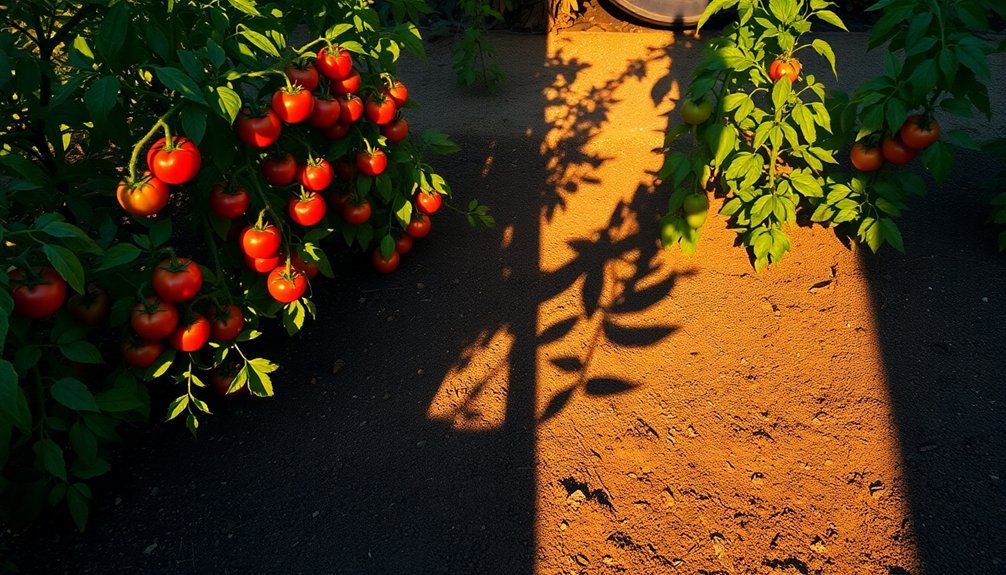
Tracking the sun's movement is essential for getting the best results from solar cooking methods. You'll achieve ideal cooking temperatures by adjusting your solar cooker's position every 30 minutes to follow the sun's path across the sky. The most intense sunlight occurs between 10 AM and 2 PM, making this the prime cooking window for consistent heat. You'll want to orient your cooker based on meal timing – facing east for noon meals and west for evening meals. Proper sun tracking also helps distribute heat more evenly throughout your food. Understanding these solar patterns can transform your outdoor cooking experience.
Understanding Solar Cooking Basics
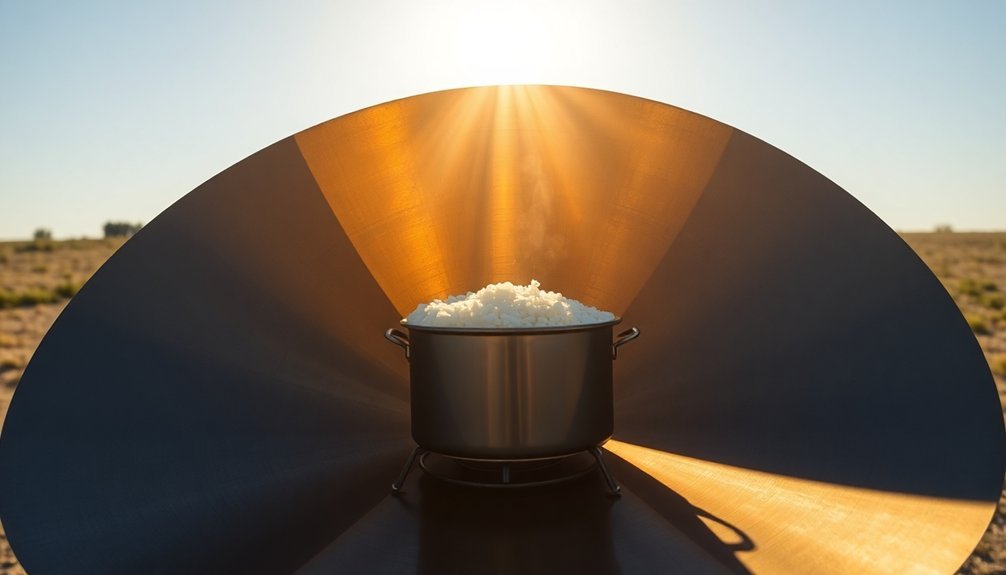
The fascinating world of solar cooking revolves around converting sunlight into usable heat energy.
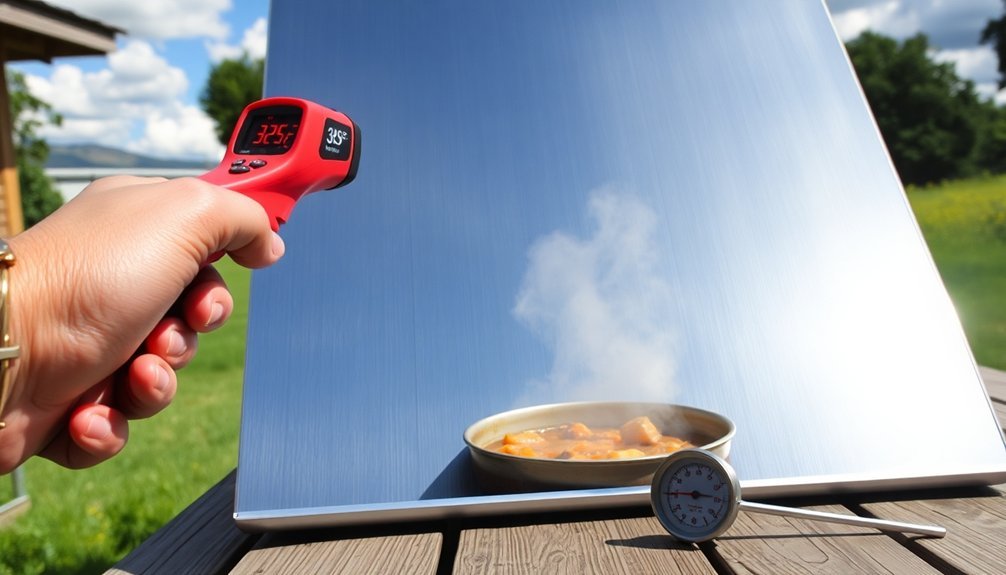
You'll need to understand how basic components work together to create an efficient cooking environment. Your solar cooker's reflective surfaces concentrate sunlight onto a cooking chamber, while black cookware maximizes heat absorption. Regular monitoring of sun position and movement helps ensure optimal heat concentration throughout the cooking process.
You'll find that insulation plays a vital role in maintaining cooking temperatures. Using transparent heat traps like glass bowls or clear plastic bags helps retain the valuable heat you've captured.
There are several types of solar cookers you can choose from: panel cookers work great for rice and vegetables, while parabolic models excel at grilling and frying.
For beginners, a simple collector box using everyday materials like foil and black paper can effectively demonstrate solar cooking principles.
Optimal Sun Angles Matter
Success with solar cooking depends largely on your ability to capture ideal sun angles throughout the day.
You'll get the best results when sunlight hits your cooker directly, rather than at an oblique angle. This is why equatorial regions naturally excel at solar cooking – they receive more concentrated solar energy year-round.
If you're cooking at higher latitudes, you'll need to compensate for less direct sunlight by adjusting your cooker's position. Rotating your solar cooker every 30 minutes helps maintain optimal sun exposure throughout the day.
Your elevation matters too – higher altitudes often provide more intense, unfiltered rays. For peak performance, you'll want to tilt your box or panel cooker to catch direct rays, though be careful not to spill your food.
With parabolic cookers, you must regularly realign the device as the sun moves to maintain cooking efficiency.
Positioning Your Solar Cooker
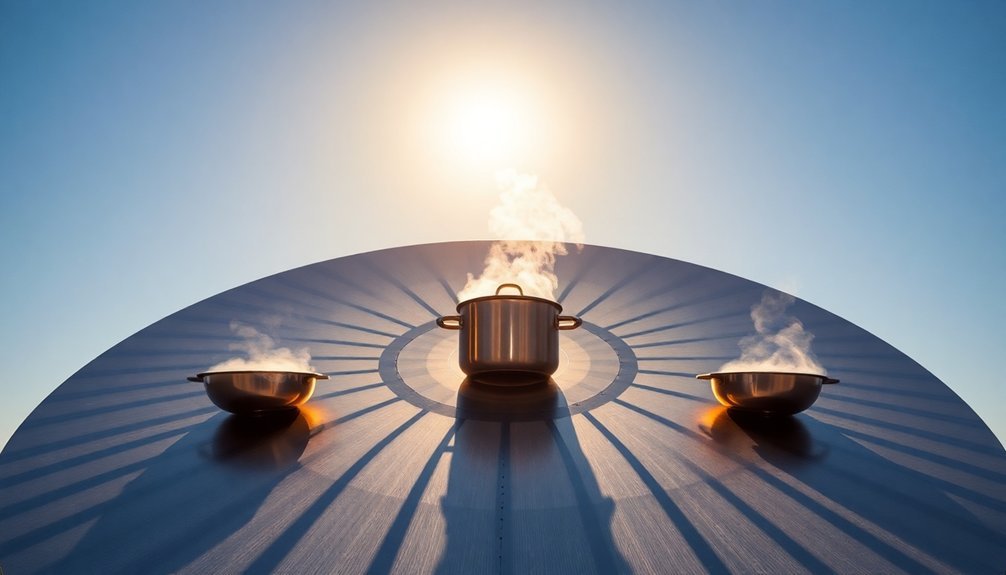
Properly positioning your solar cooker can make the difference between a perfectly cooked meal and an undercooked disappointment.
You'll need to place it on a dry, level surface away from shadows and wind, where you can easily adjust it throughout the day.
The peak sunlight intensity occurs between 11:00 AM and 3:00 PM for optimal cooking performance.
For noontime meals, point the shorter front panel eastward; for evening cooking, face it westward.
Check that the shadow falls directly behind the cooker to confirm proper alignment.
To maintain stability, especially on windy days, secure the sides with stones or bricks, and use clothespins to hold the front panel's flaps.
Remember to adjust your cooker every 20-30 minutes to track the sun's path.
During winter months, start cooking earlier, around 10:00 AM, to maximize available sunlight.
Time of Day Impact
Since solar cooking relies heavily on natural sunlight, understanding peak cooking hours is essential for meal planning.
You'll find the most intense sunlight between 10:00 AM and 2:00 PM, making this period perfect for baking breads and pastries.
For best results, time your cooking based on your desired mealtime. If you're planning a noon meal, start cooking by 9:00 AM. For evening dishes, begin by 1:00 PM.
Keep in mind that winter months offer shorter cooking windows, typically between 11:30 AM and 2:30 PM. During summer, you'll enjoy extended cooking hours from 10:00 AM to 4:00 PM.
Remember that cooking duration varies by food type and sun intensity. While bread might take 75 minutes, other dishes may require longer cooking times during periods of lower sun intensity.
Seasonal Sun Path Differences
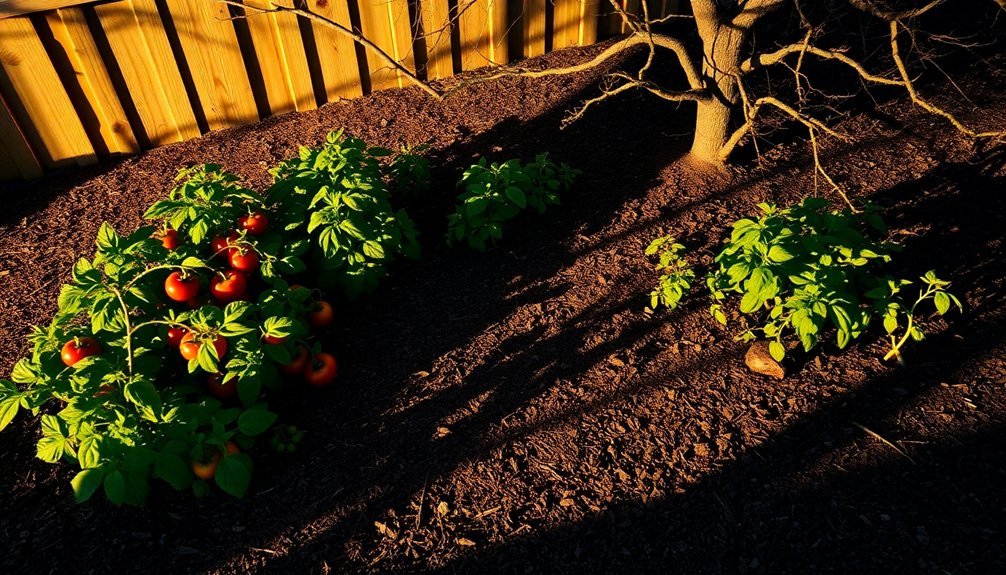
Understanding the sun's seasonal path variations will help you maximize your solar cooking results throughout the year.
During summer solstice, you'll find the sun 23.5 degrees north of the celestial equator, providing longer days and more direct sunlight for cooking. Winter brings shorter days with the sun 23.5 degrees south, requiring adjustments to your cooking schedule and equipment positioning.
You'll want to track these seasonal changes carefully, as they affect cooking times and efficiency. South-facing locations offer the most consistent sunlight year-round, making them ideal for solar cooking stations.
During spring and fall equinoxes, the sun rises exactly east and sets west, giving you predictable cooking windows. By understanding these patterns, you can adapt your solar cooking methods to maintain peak results across seasons.
Tracking Methods and Tools
When tracking the sun's movement for solar cooking, you'll find several effective methods and tools at your disposal. From automated platforms to DIY solutions, you can maximize your cooking efficiency by ensuring your solar cooker maintains ideal sun exposure throughout the day.
You'll discover tracking options ranging from sophisticated solar-powered systems to simple manual adjustments. Modern software tools help you understand sun patterns and plan accordingly.
- Small DC motors that automatically follow the sun's path
- Solar panels positioned to detect light differentials
- Web-based sun path charts for precise location planning
- Customizable tracking platforms that scale to your cooker's size
- DIY solutions using basic materials like cardboard and servos
These tracking methods eliminate guesswork and help you achieve consistent cooking results without relying on external power sources.
Common Solar Cooking Mistakes
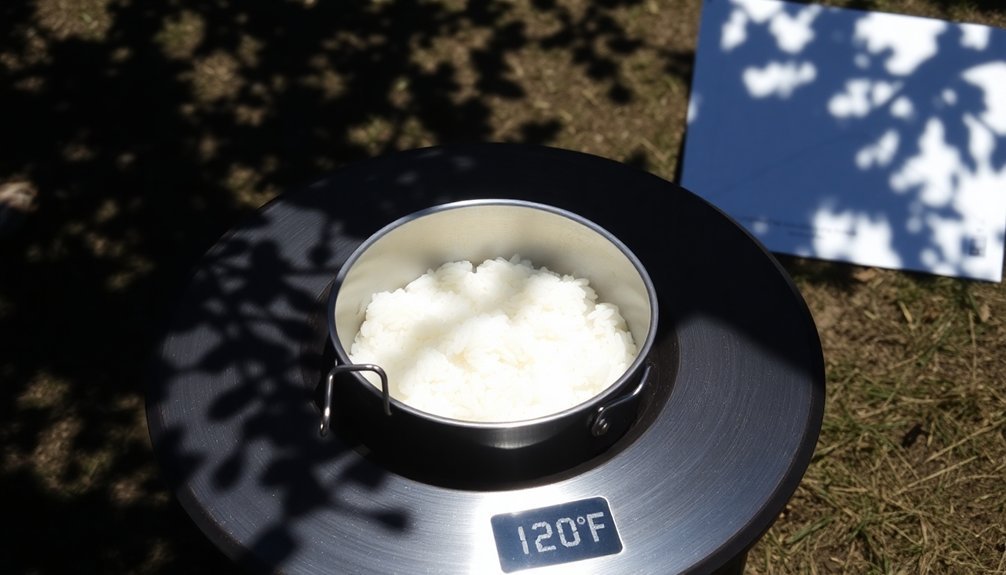
Although solar cooking offers an eco-friendly way to prepare meals, several common mistakes can hinder your success. The most critical error is improper alignment with the sun, which leads to extended cooking times and uneven heating. You'll need to adjust your cooker periodically as the sun moves across the sky.
Using incorrect cookware can also derail your efforts. Choose dark-colored pots or cover light ones with dark towels to maximize heat absorption. Thin metal or Granite Ware dishes work best.
Don't forget to pre-heat your cooker for 15-20 minutes and monitor temperatures with a thermometer.
Safety mistakes can be dangerous. Keep the area clear of flammable materials, wear sunglasses when using parabolic cookers, and watch for overheating components.
Always use pot holders, as solar cookers can reach extreme temperatures.
Weather Effects on Cooking
Since weather conditions greatly impact solar cooking success, you'll need to plan your cooking sessions around ideal environmental factors.
Humidity, air temperature, and altitude all affect how your food cooks and its final texture. You'll get the best results on clear, sunny days when humidity levels are lower.
Watch for these weather-related effects on your solar cooking:
- Excess moisture in humid air extends cooking times and affects food texture
- High temperatures cause faster melting of fats and butter, potentially compromising dish structure
- Higher altitudes speed up rising but can lead to coarse textures
- Cloudy conditions considerably reduce solar cooking efficiency
- Humidity levels affect ingredient measurements, requiring recipe adjustments
Consider chilling ingredients and equipment before cooking to counteract warm temperatures, and modify recipes based on your local altitude and weather conditions.
Meal Planning With Sun Position
By tracking the sun's position throughout the day, you'll know the ideal times to harvest herbs and vegetables for maximum nutrient content and flavor intensity.
You can also use natural daylight patterns to reduce energy costs in your kitchen by planning meal prep during peak sunlight hours.
Leveraging the sun's movement helps you create a more sustainable cooking routine while ensuring your ingredients retain their nutritional value from garden to plate.
Harvest Time Solar Benefits
The golden hours of sunlight hold the key to maximizing your solar cooking potential. By planning your meals between 10 am and 2 pm, you'll harness peak solar energy for ideal cooking results. Your solar ovens and grills will perform best during these hours, while early morning and late afternoon sun still offers viable cooking options.
You'll witness nature's power at work through:
- Sunbeams dancing off your solar grill's reflective surfaces
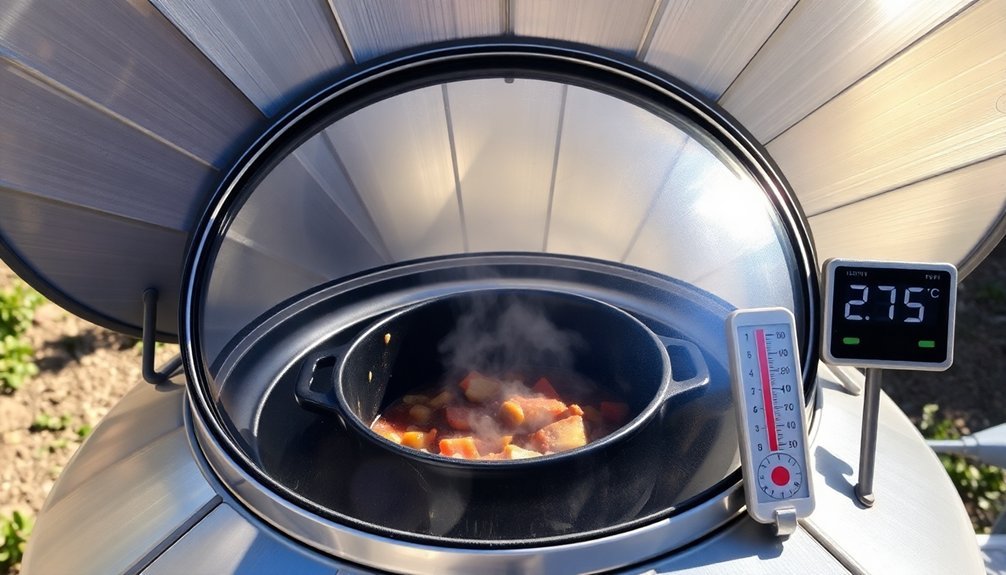
- Steam rising from slow-cooked stews in your solar oven
- Shadows shortening as the sun reaches its zenith
- Light rays concentrating on your cooking surface
- Gentle warmth radiating from your solar-powered appliances
Beyond energy efficiency, you're also gaining health benefits from natural light exposure while reducing your carbon footprint.
The cost savings add up quickly, as you'll eliminate traditional fuel expenses while maintaining minimal equipment upkeep.
Daylight Kitchen Energy Savings
While planning meals around natural daylight might seem like a simple change, it can substantially reduce your kitchen's energy consumption.
You'll notice immediate savings when you schedule your cooking during peak daylight hours, especially if you've positioned your windows and skylights strategically to maximize natural illumination.
Even in Cleveland, where you'll get about 166 sunny days yearly, you can make the most of available light by combining it with energy-efficient appliances.
Your BlueStar® Dual Fuel Range and induction cooktop will perform more efficiently in a naturally lit space.
You'll find that meal prep becomes more enjoyable and productive when you're working in natural light, and you're likely to make healthier food choices in a brighter environment.
Plus, you'll save substantially on your energy bills by reducing your reliance on artificial lighting.
Heat Distribution and Direction
You'll notice that morning sunlight moves distinctly from east to west, creating predictable heating patterns throughout your growing or cooking space.
The path of heat flow follows this same directional pattern, with surfaces receiving early exposure warming first and gradually transferring thermal energy westward.
Understanding these patterns lets you make smarter choices about when to harvest, process, or prepare food items for ideal results.
Morning Light Patterns
As dawn breaks across the horizon, morning sunlight follows distinct patterns that greatly influence heat distribution and direction.
You'll notice the sun's rays travel further through the atmosphere during early hours, creating scattered and diffuse light. This pattern changes as the sun climbs higher, affecting how heat spreads across your growing space.
- Red and infrared frequencies dominate pre-sunrise, bringing gentle warmth
- Blue light spikes at sunrise, signaling nature's wake-up call
- UVA light emerges when the sun reaches 10-30 degrees above horizon
- Maximum solar energy occurs when the sun is nearly overhead
- Evening brings back red and infrared light, closing the daily cycle
Understanding these patterns helps you position plants strategically, creating ideal microclimates that maximize growth potential through proper heat distribution throughout the day.
East-West Heat Flow
Since solar energy moves predictably from east to west, understanding its flow patterns can dramatically improve your greenhouse's heat distribution.
When you position your rows in an east-west direction, you'll notice significant variations in soil heat flux, especially between 9 AM and 2 PM. These differences occur due to the changing patterns of sunlit and shaded areas throughout the day.
You'll get maximum solar radiation absorption in cold regions by orienting your greenhouse east-west. However, you'll need to watch for temperature imbalances that can affect crop growth.
The position of your air supply outlets and the way sunlight interacts with your crops will create distinct microclimates. By tracking these patterns and adjusting your greenhouse management accordingly, you can optimize growing conditions and boost your yields.
Frequently Asked Questions
Can Solar Tracking Systems Be Integrated With Traditional Irrigation Methods?
You can easily integrate solar trackers with traditional irrigation, using servo motors and LDRs to maximize energy capture, while connecting them to existing water pumps and sprinkler systems for improved efficiency.
How Do Different Cloud Patterns Affect Solar Tracking Efficiency?
You'll notice your solar tracking efficiency drops during heavy cloud cover, but your system still adapts by monitoring real-time conditions. Different cloud patterns can reduce output by varying degrees, requiring continuous adjustments.
What Backup Systems Are Recommended During Extended Periods of Low Sunlight?
You'll need a combination of battery backup systems and generators for reliable power during low sunlight. Consider hybrid solutions that integrate grid connections and alternative energy sources to maintain continuous operation of your solar systems.
Does Soil Composition Impact the Effectiveness of Solar Tracking Systems?
Yes, soil composition directly affects your solar tracker's stability and performance. You'll need proper foundation design based on your soil type to guarantee accurate tracking and prevent structural issues during operation.
How Does Air Pollution Influence the Accuracy of Sun Tracking Sensors?
When you're dealing with air pollution, particularly PM2.5, your sun tracking sensors' accuracy decreases due to reduced solar irradiance and scattered sunlight, which can interfere with the sensor's ability to precisely locate the sun.
In Summary
Track the sun's movement to enhance your solar cooking success. You'll get faster cooking times and more consistent results when you align your cooker with ideal sun angles throughout the day. By understanding seasonal patterns and making adjustments, you're ensuring even heat distribution and better-tasting meals. Don't forget to plan ahead – the sun's position affects cooking times and temperatures considerably.

Leave a Reply