
Your solar oven won't perform well in bad weather because it needs specific conditions to reach proper cooking temperatures. You'll need a UV index of at least 7 and clear skies to hit the ideal 350°F (177°C). Cloud cover can block up to 67% of solar energy, while rain clouds completely disrupt heat generation. Strong winds above 35 MPH will destabilize temperature control, and high humidity creates internal condensation that interferes with cooking. Even light cloud cover can decrease energy by 25%, making your meals take longer to cook. Understanding these weather impacts can help you plan more successful solar cooking sessions.
Clouds Block Essential Solar Energy
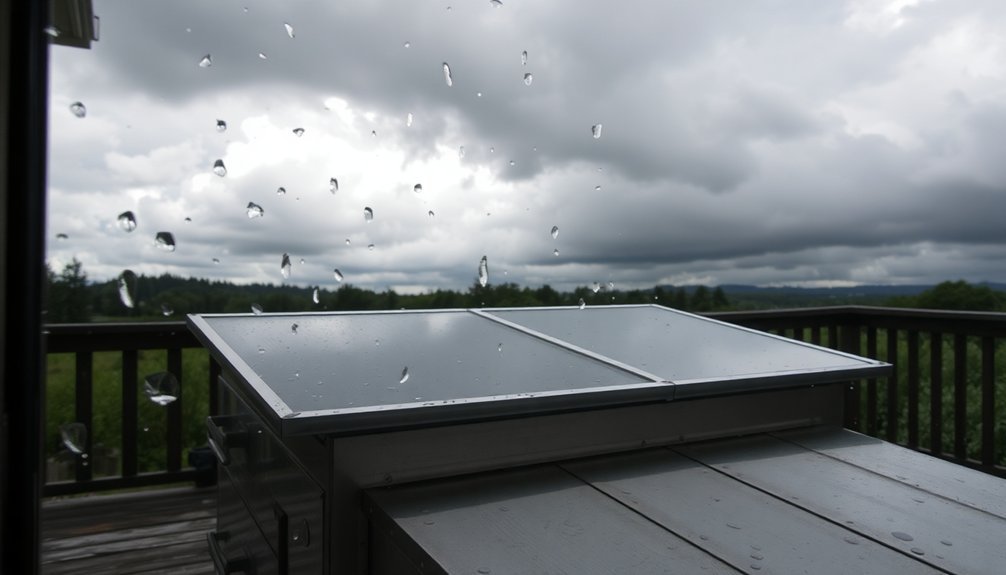
When clouds roll across the sky, they create an important barrier between solar ovens and their power source.
You'll notice your solar oven's performance drop considerably as clouds filter out the sun's rays, reducing the available energy reaching your cooking surface.
Even light cloud cover can decrease solar energy by nearly a quarter, while heavy clouds block up to 67% of the sun's power.
The denser the clouds, the less energy reaches your oven. Solar ovens can still generate some heat since panels operate on daylight, not sunlight alone.
While you might experience brief bursts of increased power due to the "edge of cloud" effect, where cumulus clouds act like magnifying glasses to intensify sunlight temporarily, these moments won't compensate for the overall reduction in cooking efficiency.
Understanding these limitations is essential because you'll need to plan your solar cooking around weather conditions for the best results.
Rain Disrupts Heat Generation
While sunny days provide ideal conditions for solar cooking, rainstorms completely derail your oven's ability to generate heat. Rain clouds block direct sunlight, preventing your oven from reaching the necessary 4 kilowatt hours per square meter per day for effective cooking.
You'll face multiple challenges when trying to use your solar oven in the rain. The transparent cover gets wet, compromising its heat-trapping abilities, while moisture can seep inside and cool the cooking chamber. Your oven won't reach the ideal 160-200°F needed for proper cooking, and wet reflective surfaces won't redirect sunlight effectively. NASA's Earth Observatory data helps meteorologists predict periods of heavy cloud cover that can impact solar cooking effectiveness.
If you're using a cardboard-based solar oven, rain can destroy its structure. You'll need to protect your device from moisture damage and likely resort to alternative cooking methods until the weather clears.
Wind Affects Temperature Control
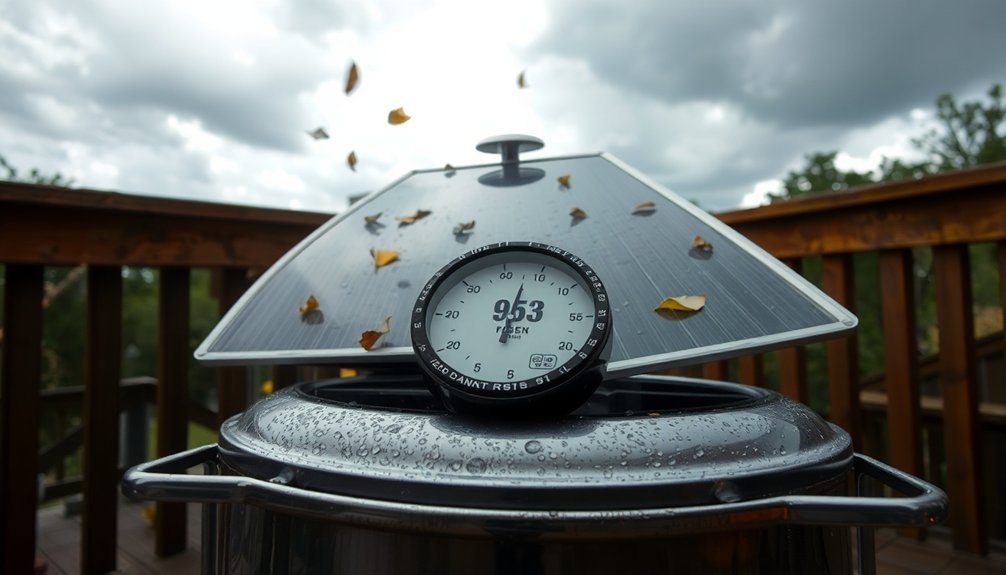
The destructive nature of wind poses another notable challenge for solar oven users beyond rainfall concerns. Your solar oven's performance can considerably drop as winds disrupt heat retention and destabilize the equipment.
Even with proper stakes and locked reflectors, winds exceeding 35 MPH can compromise your cooking results. Wooden clamps and stakes provide additional stability when properly installed.
To maintain control over your solar oven's temperature during windy conditions, you'll need to:
- Position your oven in a sheltered location to minimize wind exposure
- Secure the unit properly using stakes and the T-shaped alignment leg
- Check and adjust the oven's orientation every 30 minutes
- Add extra insulation to combat heat loss
Remember that wind mixing can affect local air temperatures, potentially requiring longer cooking times.
You'll find better success by monitoring internal temperatures closely and making necessary adjustments to maintain ideal cooking conditions.
Seasonal Changes Impact Cooking Times
Seasonal variations in sunlight intensity can drastically affect your solar oven's cooking performance throughout the year.
You'll notice the best results during summer months when direct sunlight provides temperatures comparable to conventional ovens. However, winter brings significant challenges, limiting your cooking window to just four hours between 11:00 am and 3:00 pm.
If you're cooking in fall or spring, you'll need to adjust your expectations and timing as UV ray intensity decreases. Your location matters too – if you're in sunny regions like Southern Arizona, you'll have more consistent results than those living in cloudy areas like Oregon. Cold dry air can actually improve solar cooking effectiveness in winter due to reduced light scattering.
To overcome these seasonal challenges, you can preheat your oven early, use dark-colored cookware, and plan multi-day cooking sessions when needed. Consider slow-cooking methods to maintain food warmth during shorter daylight periods.
Humidity Creates Condensation Problems
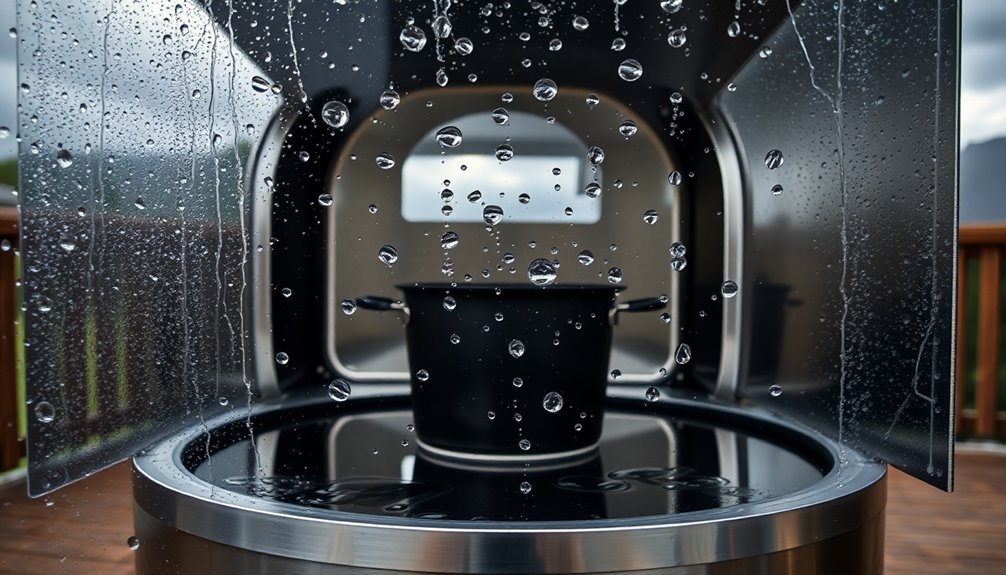
You'll notice your sunlight oven's performance drop when humidity causes internal condensation, creating fog that blocks vital sunlight from reaching your food.
The steam and moisture accumulating inside your oven's glass surfaces act like a barrier, considerably reducing the heat transfer needed for efficient cooking.
Your oven's internal temperature will struggle to rise as this unwanted moisture continues to interfere with the essential transfer of solar energy to your cooking vessel.
Internal Moisture Blocks Light
When moisture-laden air meets the cooler glass surface of a solar oven, condensation forms and creates a significant barrier to effective cooking. The water droplets that collect on the glass lid can reduce your oven's internal temperature by about 5 degrees and block essential sunlight from reaching your food.
You'll notice several issues when condensation builds up:
- Your thermometer readings become difficult to read accurately
- The cooking process slows down or may stop completely
- Sunlight gets reflected away instead of heating your food
- The oven's ability to maintain high temperatures diminishes
You can combat these problems by using a tea towel under the pot lid, slightly unlatching the glass door, or periodically wiping away moisture with a rubber squeegee.
These simple solutions help maintain ideal cooking conditions and guarantee your solar oven performs effectively.
Fog Forms Inside Oven
Three major factors contribute to fog formation inside solar ovens: moisture from cooking food, high external humidity, and trapped steam.
When you're cooking in a solar oven, you'll notice condensation building up on the glass door, which creates a foggy barrier that blocks sunlight from reaching your food. This fog forms when water vapor from your cooking food meets the cooler glass surface.
You'll see this happening more on humid days, as external moisture compounds the problem.
The fog doesn't just block your view – it actively disrupts the cooking process by reflecting sunlight away from your food and lowering the internal temperature.
You can combat this issue by using venting techniques like placing a BBQ skewer between the door and gasket or quickly opening the door for 2-3 seconds to release excess steam.
Steam Reduces Heat Transfer
Steam's detrimental effects on heat transfer create significant challenges for solar oven cooking.
While moist air conducts heat efficiently, excessive steam inside your solar oven actually reduces overall heat transfer and disrupts temperature stability. When steam meets cold surfaces, condensation forms, potentially damaging your oven's components and affecting its performance.
- Your oven's thermostat may cycle less frequently due to high moisture content, making it harder to maintain consistent temperatures.
- Condensation on doors, glass, or surfaces indicates potential seal issues or temperature imbalances.
- The energy needed to vaporize water reduces available cooking heat, diminishing your oven's efficiency.
- Steam increases heat loss from the system, requiring more energy to maintain desired temperatures.
To combat these issues, you'll need proper ventilation and regular maintenance of seals to guarantee peak performance during humid conditions.
Storm Planning for Solar Cooks
Since successful solar cooking depends heavily on weather conditions, having a robust storm plan is essential for anyone relying on a solar oven. You'll need clear skies with a UV index of 7+ for ideal performance, and you should always have backup cooking methods ready for stormy days.
| Weather Condition | Required Action |
|---|---|
| Cloudy/Overcast | Switch to indoor stove |
| Rain/Snow | Use backup cooking method |
| Strong Winds | Move to sheltered location |
| Low UV Index | Plan longer cooking time |
| Storm Warning | Secure oven, use alternatives |
Position your oven to face direct sunlight between 10 a.m. and 4 p.m., adjusting its position as needed. Choose a sheltered spot to protect against wind damage, and always wear eye protection when working with reflectors. You'll maximize efficiency by planning meals around weather forecasts and maintaining your equipment regularly.
Frequently Asked Questions
Can Solar Ovens Work at Night Using Stored Heat From Daytime?
You can't rely on stored heat alone for nighttime solar oven cooking. While heat-retention baskets help extend cooking time, they don't maintain sufficient temperatures. You'll need hybrid systems with electric backup for night cooking.
What Backup Cooking Methods Should I Have for Unexpected Weather Changes?
You'll want to keep camping stoves, rocket stoves, and buddy burners ready as reliable backups. Don't forget basic BBQ equipment and fire pit supplies. Test your gear regularly and store extra fuel safely.
Do Different Colored Cooking Pots Affect Solar Oven Performance?
Yes, your pot's color greatly affects solar oven performance. You'll get the best results with dark or matte black cookware since it absorbs more sunlight. Avoid light-colored or shiny pots that reflect energy away.
How Long Can Food Stay Warm After Sunset in Solar Ovens?
With proper heat retention materials like bricks or salt, you'll find your solar oven can keep food warm for up to 2 days. You'll maintain cooking temperatures between 300-400°F even after sunset.
Are There Specific Geographic Locations Where Solar Ovens Work Best Year-Round?
You'll find solar ovens work best near the equator in areas like North Africa, the Middle East, and parts of South Asia, where you'll get consistent sunlight, minimal cloud cover, and high solar radiation year-round.
In Summary
You'll find that sunlight ovens depend entirely on clear weather conditions to function properly. When you're facing clouds, rain, wind, seasonal shifts, or high humidity, your solar cooking plans can quickly unravel. Don't let bad weather catch you off guard – always keep a backup cooking method ready. Understanding these limitations will help you plan your solar cooking more effectively.

Leave a Reply