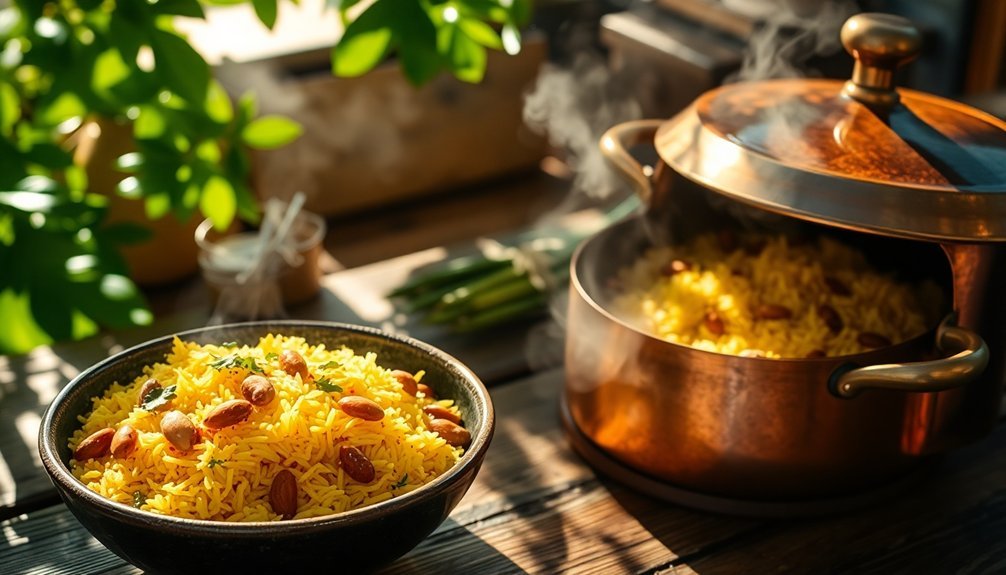
Start with selecting the right rice – long-grain varieties like basmati or jasmine will give you fluffy, separate grains perfect for pilaf. Next, prepare your ingredients ahead of time by rinsing the rice until clear and uniformly mincing your aromatics, as solar cooking requires organized mise en place for best results. Finally, maintain consistent temperature control by positioning your solar cooker correctly and monitoring for gentle bubbling during the 20-25 minute cooking time. While these basics will get you started, there's more to mastering the art of sun-powered rice pilaf that'll transform your outdoor cooking game.
Perfect Rice Selection Matters

In spite of its humble appearance, selecting the right rice variety makes all the difference in creating a stellar pilaf. You'll want to focus on long-grain varieties with low starch content, as they'll produce fluffy, separate grains rather than a sticky mess.
Basmati and jasmine rice are your top choices for pilaf. Basmati's delicate flavor and floral aroma make it perfect for absorbing the dish's seasonings, while jasmine offers a slightly nuttier profile with similar cooking properties. If you can't find either, standard long-grain white rice works well too, as it'll maintain its shape and won't become gummy.
While brown rice can be used, you'll need to adjust your cooking times and liquid ratios. It's chewier and nuttier than white varieties but offers more nutritional benefits. A quick 10-minute rice soak before cooking will ensure optimal texture and prevent clumping.
Whichever type you choose, don't skip rinsing your rice until the water runs clear – this removes excess starch that could make your pilaf clumpy. For enhanced flavor, you'll want to toast your rice in oil or butter before adding your cooking liquid, ensuring each grain is evenly coated.
Solar-Ready Mise En Place
Kitchen preparation is your secret weapon for creating the perfect sun-powered rice pilaf. Start by rinsing your rice thoroughly to remove excess starch, which can make your pilaf gummy.
Next, mince your aromatics – onions and garlic – ensuring they're uniform in size for even flavor distribution throughout the dish.
Get your essential tools ready: you'll need a large skillet or saucepan with a tight-fitting lid, a strainer for the rice, and a fork for fluffing. Measure your liquids precisely, and have your spices and herbs pre-portioned and within reach. If you're using butter or olive oil for sautéing, have it ready to go.
To enhance your pilaf's flavor profile, consider toasting the rice briefly in oil before adding your liquid. You can also incorporate aromatic noodles like orzo for textural contrast. Instead of plain water, use chicken or vegetable broth as your cooking liquid. Long-grain white rice is the best choice for achieving perfectly fluffy, non-clumping results.
Don't forget to plan your timing carefully – you'll need 15-20 minutes for simmering, followed by a short resting period. Remember to keep the lid on during resting to allow proper steam distribution.
Cooking Time and Temperature Control

Mastering three key timing phases guarantees your sun-powered rice pilaf turns out perfectly. You'll start with a 6-7 minute sauté of onions and garlic, followed by rice toasting until golden. The main cooking phase requires 20-25 minutes of simmering, with temperature control being essential for success. Cayenne pepper can be added during the simmering phase to enhance the overall flavor profile.
| Phase | Temperature | Duration |
|---|---|---|
| Sauté | Medium | 6-7 mins |
| Toast | Medium | Until golden |
| Simmer | Low | 20-25 mins |
| Rest | Off heat | 5 mins |
Your solar cooking setup should maintain steady temperatures throughout the process. You'll want to achieve a medium heat equivalent for the initial sautéing, then reduce to a low simmer once you've added your liquid. Watch for visual cues: the rice should gently bubble, not rapidly boil.
If you're making ahead, you'll need to cool the rice completely before freezing. When reheating, use medium-high heat with added moisture, stirring constantly to prevent burning. Remember that timing may vary based on your solar cooker's efficiency and environmental conditions, so keep checking for liquid absorption and rice tenderness as your ultimate doneness indicators.
Frequently Asked Questions
Can I Use Solar Cooking Methods During Cloudy or Overcast Days?
You can solar cook on cloudy days, but it'll be less effective and take longer. You'll need to double cooking times, use tubular or parabolic ovens, and have a backup cooking method ready.
What Type of Solar Cooker Works Best for Making Rice Pilaf?
You'll get the best results with a box oven solar cooker for rice pilaf. It provides even heat distribution and controlled moisture retention, making it ideal for achieving perfectly cooked, fluffy rice every time.
How Do I Prevent Moisture Loss When Solar Cooking Rice Pilaf?
You'll need to seal your pot tightly and use a cooking bag to trap moisture. Don't vent steam too often, and reduce your initial water ratio by 1/4 cup to prevent excessive evaporation.
Is It Safe to Leave Rice Pilaf in a Solar Cooker Unattended?
You shouldn't leave rice pilaf unattended in a solar cooker. You'll need to monitor cooking temperatures, adjust reflectors, and check for weather changes to guarantee food safety and prevent bacterial growth.
Can I Add Frozen Vegetables to Solar-Cooked Rice Pilaf?
You can add frozen vegetables to solar-cooked rice pilaf, but it's best to thaw them first. Microwave them briefly before adding to guarantee even cooking and prevent cold spots in your dish.
In Summary
You'll find this solar rice pilaf method revolutionizes your outdoor cooking game. By choosing the right rice, prepping ingredients efficiently, and mastering temperature control, you've opened up a sustainable way to create fluffy, flavorful pilaf. Don't let cloudy days discourage you – with these tips, you'll become confident in solar cooking and ready to explore more sun-powered culinary adventures.