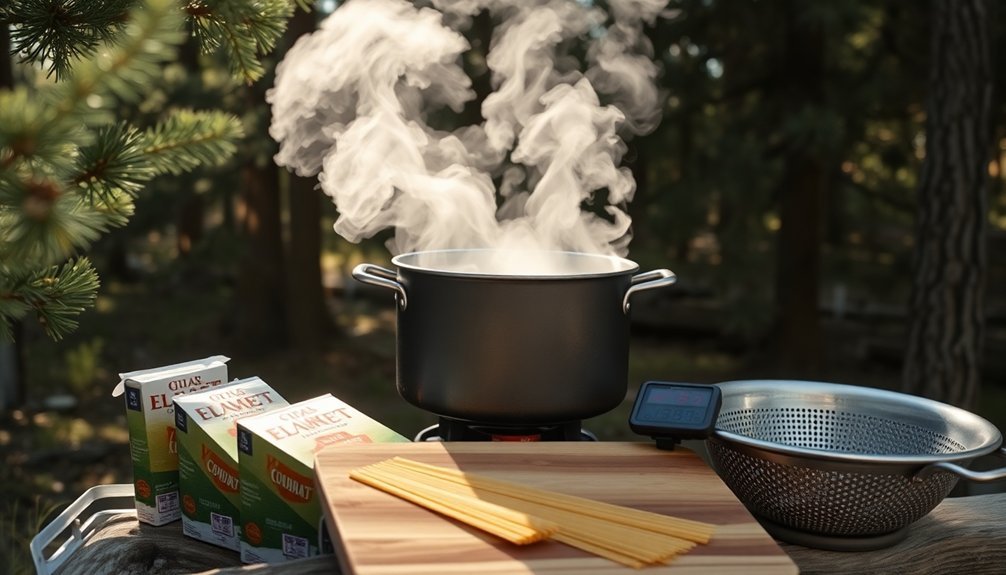
When cooking pasta outdoors, you'll need to set up your cooking station on a flat, stable surface away from flammable materials and use a portable gas stove or camping stove with enough fuel. Choose sturdy pasta shapes like rotini, shells, or penne that can handle outdoor cooking conditions. You'll want to bring water to a rolling boil, add salt, and adjust cooking times based on your heat source – typically 3-5 minutes for fresh pasta and 12-15 minutes for dried varieties. Keep a fire extinguisher nearby and maintain proper ventilation. These basic guidelines will help you master the essentials of outdoor pasta preparation.
Equipment Setup and Safety
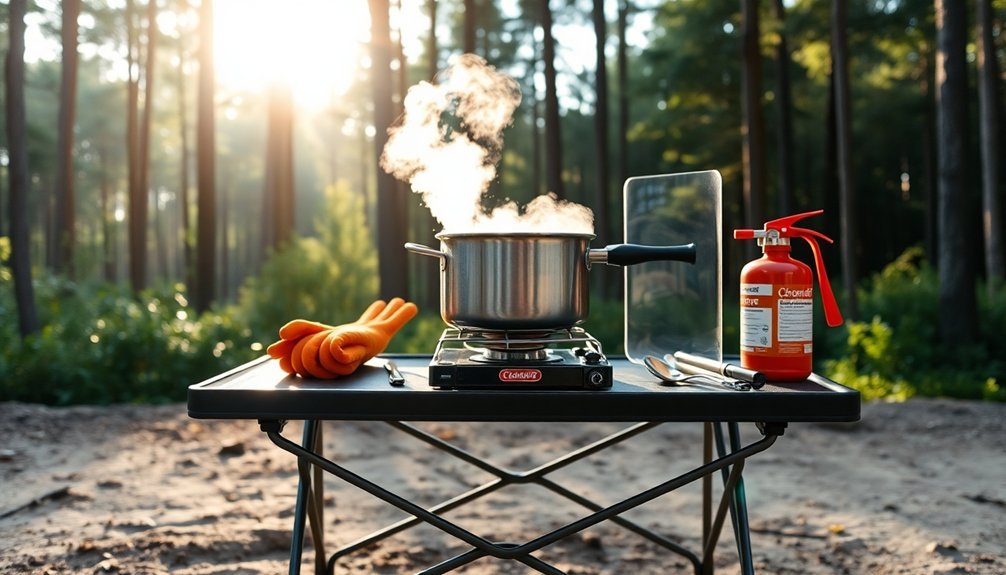
Before diving into outdoor pasta cooking, you'll need to set up your equipment properly and follow essential safety measures. Choose a portable gas stove or camping stove, and make certain you have enough fuel. Place your cooking station on a flat, stable surface away from any flammable materials.
Set up a weatherproof shelter like a gazebo to protect your cooking area, and make sure there's proper ventilation when using gas stoves. Keep a fire extinguisher or water source nearby for safety. Following proper food safety practices while cooking outdoors is crucial to prevent contamination and illness.
Create distinct zones for cooking, prep work, and cleaning to maintain an organized workflow. Place your portable stove in a strategic position that allows easy access to your utensils and ingredients.
Don't forget to inspect your equipment before use and keep cleaning supplies within reach.
Water Temperature Control Methods
When cooking pasta outdoors, managing water temperature effectively can make the difference between perfectly al dente noodles and a gummy mess.
You'll need to maintain a consistent heat source to keep your water at the right temperature throughout the cooking process.
For traditional boiling, bring your water to a vigorous rolling boil before adding pasta. Use a lid to help maintain temperature and prevent heat loss, especially in windy conditions.
If you're trying the cold water method, start with cold water in a 12-inch skillet and heat it on medium-high until steaming. This approach uses less water and creates starchier pasta water that's great for sauce binding.
Cooking Time Adjustments
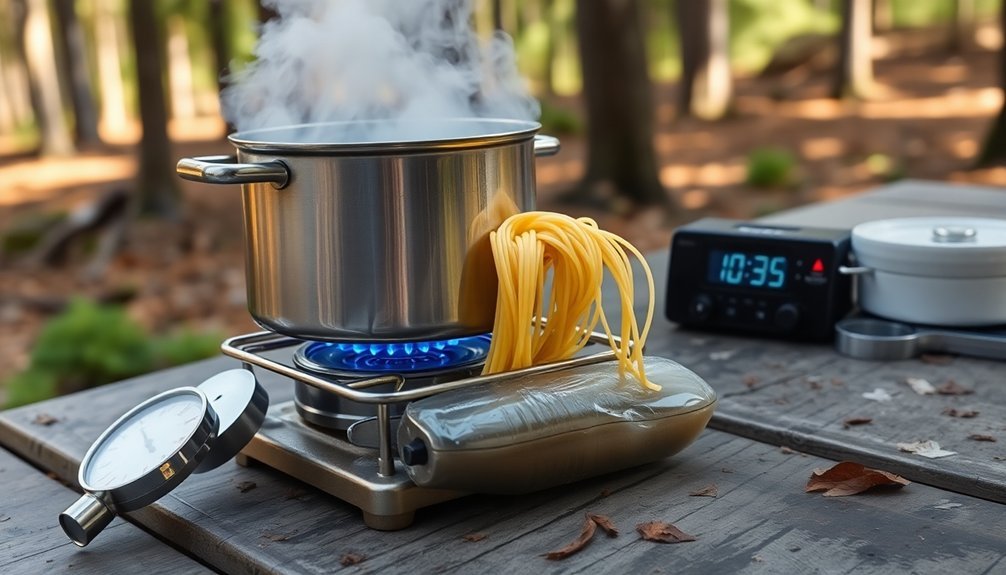
Successful outdoor pasta cooking relies heavily on proper timing adjustments.
You'll need to adapt your cooking approach based on your heat source and pasta type. Fresh pasta cooks quickly in 3-5 minutes, while thick dried pasta requires 12-15 minutes.
When using a camping stove, you can follow standard cooking times, but campfires need extra attention due to their variable heat.
For thermal cooking, reduce the initial cooking time by two minutes before transferring to your thermal cooker. Remember to bring water to a rolling boil first, add salt, and stir immediately after adding pasta.
You'll know your pasta's ready by testing it frequently before the estimated cooking time ends.
With wood-burning or rocket stoves, you may need to adjust times based on the heat intensity you're able to maintain.
Pasta Type Selection
Selecting the right pasta type can make or break your outdoor cooking experience.
You'll find that short and tubular pasta varieties are your best options for outdoor cooking, as they're more durable and easier to handle than long noodles.
Opt for pasta shapes like rotini, shell pasta, or penne rigate, which hold sauces well and maintain their structure during outdoor preparation.
Rigatoni and elbow macaroni are excellent choices for heartier dishes, while orzo and ditalini work perfectly in soups and salads.
You'll want to avoid delicate pastas like fettuccine, tortellini, or ravioli, as they require precise cooking conditions that are hard to achieve outdoors.
If you're looking for convenience, consider instant pasta varieties – they're specifically designed for quick, hassle-free outdoor preparation.
Alternative Heat Source Options
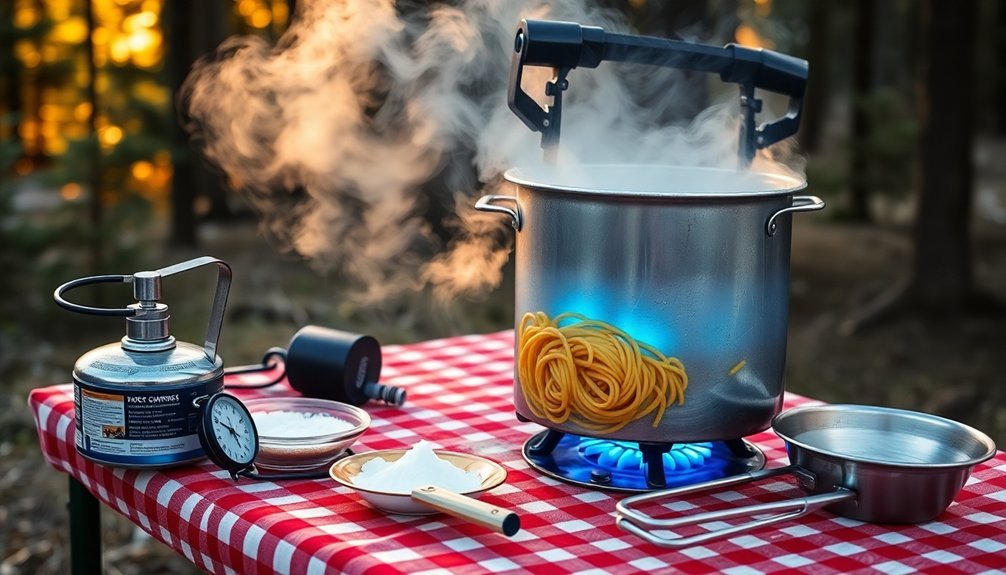
Once you've chosen your pasta type, you'll need reliable heat sources for outdoor cooking. Several effective options can guarantee your pasta cooks properly in an outdoor setting.
Wood-fired ovens offer excellent temperature control and don't require a chimney flue, making them ideal for outdoor pasta preparation. Using camping cooking bags, you can also create a simple heating system for boiling pasta water without complex equipment.
If you don't have access to a wood-fired oven, biofuel burners provide a portable alternative that's both safe and efficient. Just remember to follow safety guidelines and keep the burner away from children and pets.
For a more traditional approach, you can use pellet stoves, which provide consistent heat without electricity. They're particularly useful during power outages and won't release harmful substances.
When selecting your heat source, consider factors like portability, fuel availability, and the specific requirements of your cooking location.
Frequently Asked Questions
How Do You Prevent Wildlife From Being Attracted to Pasta Cooking Smells?
You'll reduce wildlife attraction by cooking pasta 100 yards from camp, using boiling water instead of frying, cleaning up immediately, and storing all food in airtight containers or bear-proof storage when you're done.
Can Pasta Be Cooked Using Snow-Melted Water in Winter Conditions?
Yes, you can cook pasta using snow-melted water, but you'll need to purify it first. Boil the snow-melted water thoroughly before adding your pasta to make certain it's safe for consumption and cooking.
What's the Best Way to Drain Pasta Without a Colander Outdoors?
You can use the pot's lid to hold back pasta while draining water, or scoop pasta out with a slotted spoon. For a DIY solution, stretch a clean cloth over a bowl to create a makeshift strainer.
Does Altitude Affect Pasta Cooking Time When Camping in Mountains?
Yes, you'll need more time to cook pasta at higher altitudes. Your cooking time can increase up to 25%, and you'll require extra water since it evaporates faster. Keep additional hot water ready.
How Can You Keep Pasta Warm Outdoors After Cooking Without Electricity?
You can keep pasta warm by using insulated containers, wrapping it in towels, or storing it in ziploc bags with olive oil. Thermal cookers and chafer dishes with hot water also work effectively outdoors.
In Summary
You'll find cooking pasta outdoors is entirely doable with the right preparation and adjustments. Remember to secure your cooking setup, maintain steady water temperatures, and choose pasta types that work well in outdoor conditions. Whether you're using a camping stove, grill, or open fire, you'll need to monitor cooking times more carefully than indoors. Keep your heat source stable and you'll enjoy perfectly cooked pasta anywhere.