
For ideal sun oven cooking, you'll want to use black or dark-colored pots that excel at absorbing and retaining heat. Cast iron stands out as a top performer, maintaining consistent temperatures and keeping food warm longer despite its slower heating time. Black-enameled steel and dark brown glass pots also work effectively, while aluminum pots need black coating treatment to minimize reflection. You can even modify regular pots with high-temperature BBQ paint to enhance their heat absorption. The key is choosing materials that can withstand temperatures up to 350°F and maintain steady cooking conditions. There's much more to discover about maximizing your sun oven's potential.
Essential Cooking Pot Properties
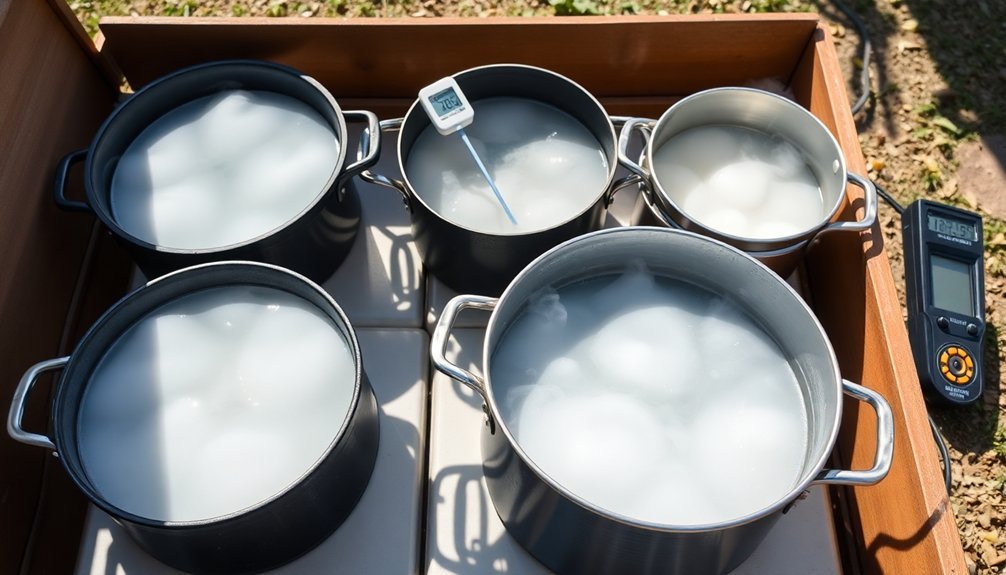
When selecting a pot for your sun oven, you'll need to evaluate four key properties that determine cooking success: heat retention, heat absorption, weight, and durability.
Your pot should retain heat effectively, with cast iron and pyrex being top performers. Glass and ceramic options also excel at maintaining consistent temperatures, especially when combined with an air-space design using a transparent outer bowl. Box cookers can accommodate most pot materials while maintaining similar efficiency levels.
For heat absorption, choose black-enameled or dark-colored pots, as they capture solar radiation most efficiently. While aluminum pots are lightweight, they'll need a black coating to improve their heat absorption capabilities.
Consider durability by selecting weather-resistant materials like anodized aluminum or stainless steel. Your pot should also be compatible with your oven's design and withstand temperatures up to 350°F without degrading or corroding.
Cast Iron Benefits
Cast iron cookware offers unique benefits for solar cooking, though with important trade-offs.
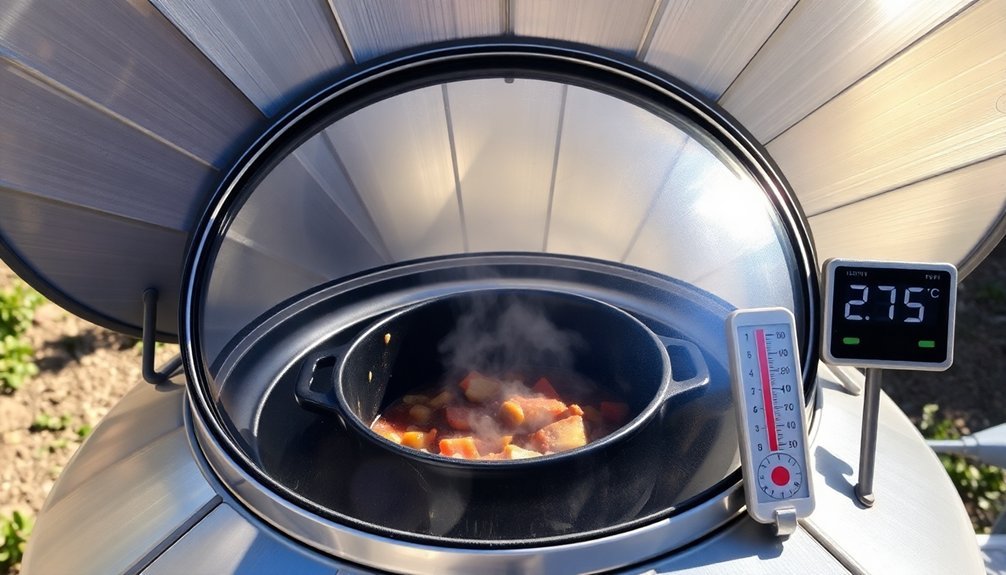
You'll appreciate its superior heat retention, which helps maintain consistent temperatures and keeps your food warm longer after cooking. It's also incredibly durable, resistant to warping and denting, and develops a natural nonstick surface when properly seasoned. Testing in Death Valley demonstrated a 10°F temperature increase with cast iron cookware.
However, you'll need to take into account that cast iron heats up much slower than other materials like enamelware or graniteware. This slower heating time means you'll need ample sunny conditions and patience for effective cooking.
While it performs well in parabolic cookers due to their higher heat output, you might find thin, dark-colored metal cookware more efficient for general solar oven use.
Cast iron works best when you're planning long-duration cooking sessions with reliable sunlight.
Alternative Materials to Consider
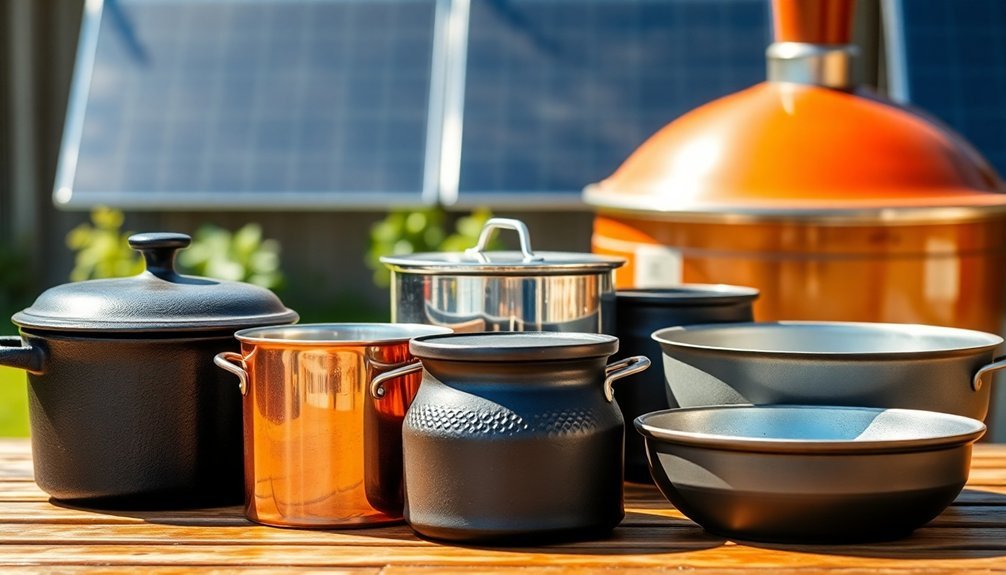
Looking beyond cast iron, you'll find several effective materials for your solar cooking needs. Black-enameled steel and dark brown glass dishes excel at absorbing solar radiation, making them ideal choices for your sun oven.
You can also use dark-coated aluminum pots, provided they're properly treated to minimize reflection. Using recycled materials for cooking vessels aligns with natural building's sustainable principles.
For enhanced heat retention, consider using glass bowls with air space or insulated pots with tight-fitting lids. These create a greenhouse effect that keeps your food cooking efficiently.
If durability is your priority, stainless steel and anodized aluminum containers offer excellent weather resistance and longevity.
Don't overlook eco-friendly options like repurposed canning jars painted flat black or recycled metal containers. With proper preparation, these alternatives can perform just as effectively as traditional cooking vessels.
Heat Retention Performance
Since different pot materials retain heat at varying rates, understanding their thermal properties is essential for successful solar cooking.
Cast iron offers superior heat retention and even distribution, making it ideal for long, slow cooking despite its slower heating time.
In contrast, aluminum heats quickly but doesn't hold heat as well, though it's highly efficient in commercial solar ovens. Dark enamel coatings on aluminum pots significantly enhance their heat absorption capabilities.
Stainless steel provides a middle ground, offering moderate heat retention with durability.
Black-enamel steel pots, when paired with glass bowls, create an effective greenhouse effect and maintain temperatures between 225-250°F.
Clay pots offer a sustainable option with moderate heat retention, especially when darkened and mixed with insulating materials.
For peak performance, you'll want to take into account adding proper insulation around your chosen pot, as it greatly impacts heat maintenance regardless of material.
Pot Modification Tips
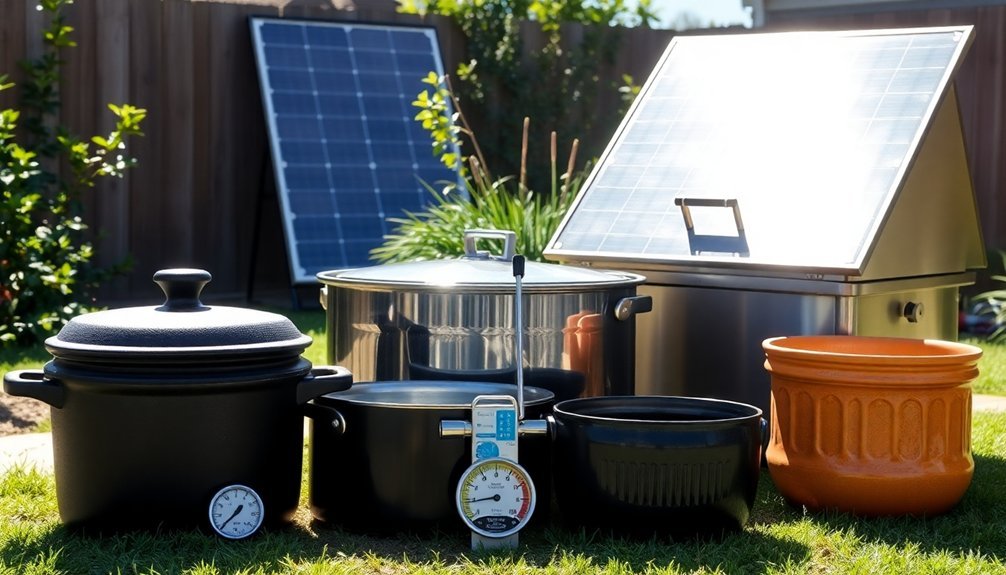
To maximize your sun oven's efficiency, several key modifications can transform ordinary cookware into solar-cooking powerhouses.
You'll get the best results by painting metal pots with high-temperature BBQ paint or choosing black speckled enamelware for ideal heat absorption. If you're using reflective pots, consider darkening their exterior surfaces.
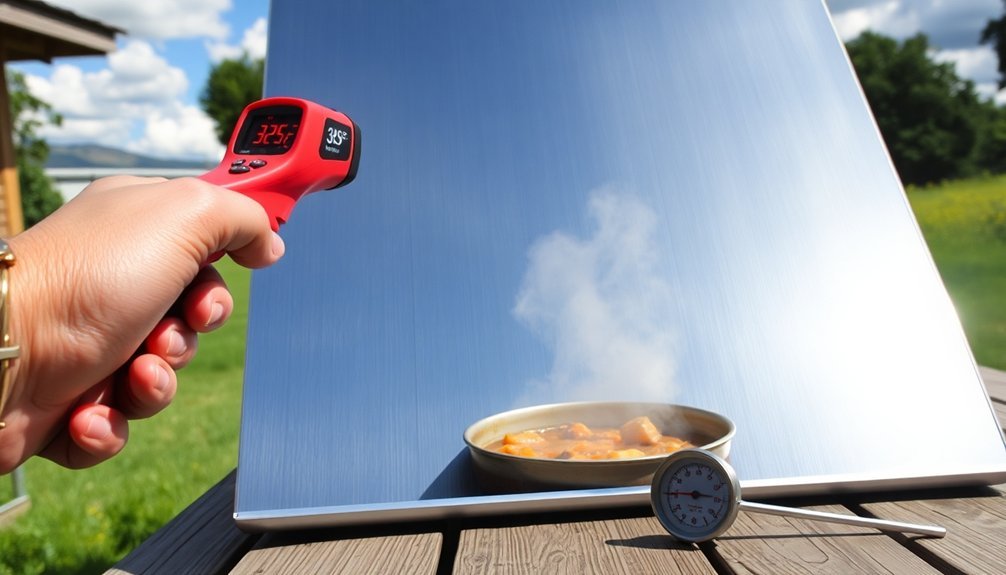
For enhanced performance, drill small drainage holes to prevent condensation buildup, and insert temperature probes to monitor cooking progress accurately.
You can improve maneuverability by mounting your oven on a tripod or adding a lazy Susan base for easier sun tracking.
Don't forget to maintain proper insulation around your pots to retain heat effectively.
When modifying your cookware, focus on creating non-reflective surfaces and ensuring good heat retention through these practical adjustments.
Frequently Asked Questions
Can Traditional Clay Pots Be Used Effectively in Solar Ovens?
Yes, you can use clay pots effectively in solar ovens. They'll retain heat well for slow cooking, but you'll need dark-colored pots and proper insulation. They're best suited for longer cooking sessions rather than quick meals.
How Does Pot Material Choice Affect Cooking Time in Cloudy Conditions?
You'll get the best results in cloudy conditions using dark-coated metal pots, as they absorb heat efficiently. Cast iron's slower heating but better retention can help maintain temperatures when sunlight's inconsistent.
Are Nonstick-Coated Pots Safe to Use in Solar Ovens?
You shouldn't use nonstick-coated pots in solar ovens. They can release toxic compounds when exposed to high temperatures. The long cooking times and intense heat will likely damage the coating and compromise food safety.
Do Different Pot Materials Require Different Solar Oven Temperature Settings?
You don't need different temperature settings for various pot materials. However, you'll need to adjust cooking times – dark metal pots heat quickly, while cast iron and ceramic pots require longer preheating and cooking periods.
How Long Do Black Coatings Typically Last on Modified Cooking Pots?
You'll find black coatings typically last 6-12 months with regular use, but their durability depends on your maintenance habits, usage frequency, and coating quality. You'll need to reapply sooner if using harsh cleaners.
In Summary
You'll get the best results from dark, thin-walled metal pots in your solar oven. Cast iron, while excellent for heat retention, can be too heavy and slow to heat. Instead, opt for black anodized aluminum or dark enamelware pots with tight-fitting lids. Remember to modify shiny pots by painting the exterior with high-temp black paint or covering them with dark, non-toxic materials for ideal solar absorption.

Leave a Reply