
Plan your solar cooking during the ideal window of 2 hours before and after local solar noon when temperatures can reach up to 400°F. You'll get the best results by checking weather forecasts and satellite imagery to identify clear periods, while positioning your cooker to track the sun's east-to-west movement. Make adjustments every 15-30 minutes for maximum sunlight exposure, and keep alternative cooking methods ready for cloudy conditions. Consider your latitude and season, as these factors greatly impact cooking times and effectiveness. Each weather pattern offers unique opportunities to enhance your solar cooking strategy.
Best Times for Peak Temperatures
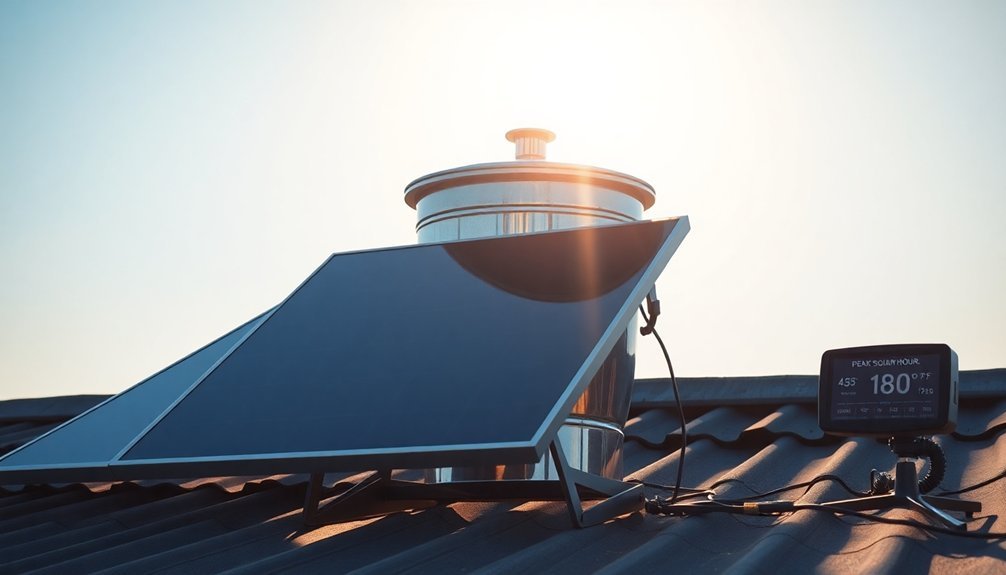
When planning your solar cooking schedule, timing is essential for maximizing temperature and efficiency. You'll achieve the best results during the two hours before and after local solar noon, when the sun reaches its highest point in the sky. During this peak period, your food will cook faster due to ideal solar radiation.
To maintain consistent cooking temperatures, you'll need to adjust your solar oven's position every one to two hours, keeping it aligned with the sun's movement. Well-designed solar ovens can reach up to 400°F on clear days, making them highly effective for most cooking needs.
If you start cooking early morning or late afternoon, expect longer cooking times due to lower sun angles. Position your cooker to face where the sun will be at solar noon, and you'll capture the most intense sunlight.
This strategic placement guarantees you're taking full advantage of the day's peak heating potential.
Seasonal Solar Cooking Adjustments
Your winter solar cooking requires more frequent position changes to follow the sun's quick path across the low horizon.
In spring, you'll need to adjust your cooking hours as the sun's angle shifts and days grow longer. The All Season Solar Cooker's adjustable design allows you to optimize your cooking setup for changing sun elevations.
Summer offers prime cooking conditions with longer daylight hours and higher sun angles that maximize your solar cooker's performance.
Winter Position Changes Daily
As winter approaches, the sun's position changes more dramatically day by day, requiring frequent adjustments to your solar cooker's alignment.
You'll notice the sun rising and setting further south, with the deviation from due east and west becoming more pronounced at higher latitudes.
You'll need to track the sun more actively during winter cooking sessions to maintain peak performance. While this might seem challenging, winter's cold, dry air can actually work to your advantage, as it allows more intense sunlight to reach your cooker. Many northern regions benefit from using well-insulated solar cookers that can effectively maintain cooking temperatures even in freezing conditions.
If there's snow, you can even benefit from its reflective properties. Start preheating your cooker around 10:00 am, and be prepared to adjust its position more frequently than in summer.
Adapting Spring Cooking Hours
Spring's moderate temperatures and increasing daylight create ideal conditions for solar cooking, though you'll need to adjust your schedule to match the season's unique patterns.
Plan to start your cooking between 10:00 a.m. and 2:00 p.m., when the sun's position is most favorable. A dark-colored pot will help absorb more sunlight and cook your food more efficiently.
You'll want to set up your solar cooker early to preheat and prep ingredients. While you'll get longer cooking windows than winter, they're not quite as extensive as summer hours.
Keep track of the sun's movement and adjust your cooker accordingly – angle reflectors upward in the morning and downward in the afternoon. Use alignment tools like sun dials or a Sunsight to maintain peak positioning.
Remember that spring weather can be unpredictable, so stay flexible with your cooking schedule and monitor temperature changes throughout the day.
Summer Peak Time Benefits
The sun's peak intensity during summer months offers exceptional advantages for solar cooking enthusiasts.
You'll find that between 10:00 AM and 4:00 PM, your solar cooker can reach temperatures above 250°F, making it ideal for preparing a diverse range of dishes. With extended daylight hours from 8:30 AM to 6:30 PM, you can cook multiple meals throughout the day.
- You can cook everything from meats and baked potatoes to cookies and brownies, thanks to the consistent high temperatures.
- Your solar cooker performs best when you adjust its position throughout the day using tools like the Sunsight for optimal sun alignment.
- You'll achieve faster cooking times and better results during summer's clear skies, even on partially cloudy days when temperatures still reach 200-250°F.
Regional Weather Impact Analysis
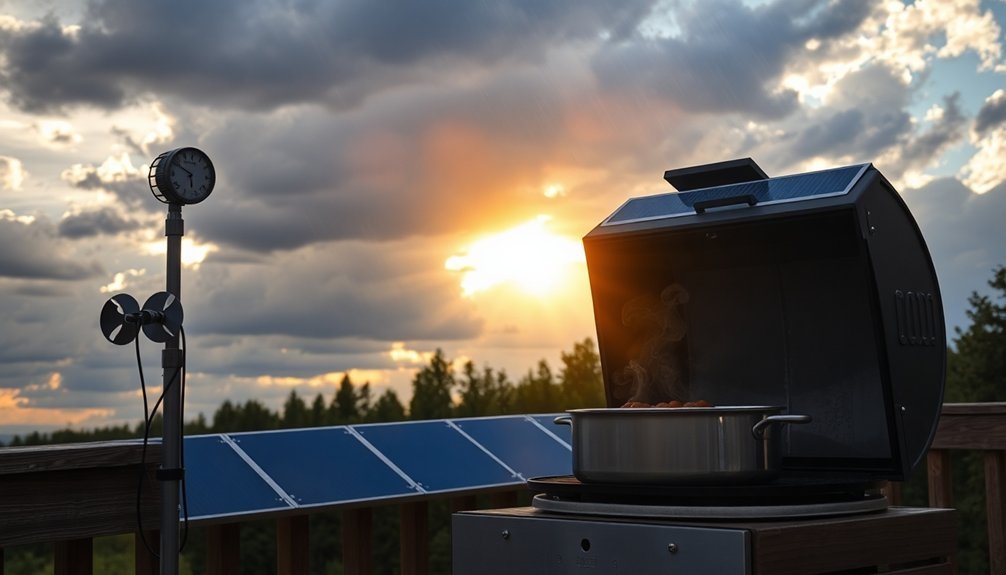
When planning a solar cooking adventure, you'll need to carefully consider how regional weather patterns affect your success. Your location's proximity to water bodies, elevation, and latitude all play vital roles in determining ideal cooking conditions.
If you're near the ocean, you'll experience more moderate temperatures but potentially increased cloud cover due to higher humidity and evaporation.
Mountain regions pose unique challenges – higher elevations mean less atmospheric protection from solar radiation, which can actually improve cooking efficiency on clear days. However, you'll need to watch for mountain-induced cloud formations and rain shadow effects.
Keep in mind that seasonal variations will impact your cooking schedule differently depending on your latitude.
You'll get more consistent results near the equator, while higher latitudes require adapting to significant seasonal changes in solar intensity.
Cloud Cover Cooking Strategies
You'll need to seize opportunities during breaks in cloud cover by having your food prepped and ready to place in the solar cooker when the sun emerges.
Setting up multiple solar cookers can help you take maximum advantage of these sunny periods, allowing you to cook different dishes simultaneously or prepare larger quantities of food.
When clouds return, your well-insulated cookers will maintain cooking temperatures longer, giving you more flexibility to work around variable weather conditions.
Work Around Cloud Breaks
Successfully working around cloud breaks requires understanding different types of cloud cover and their impact on solar cooking efficiency.
You'll need to adapt your cooking strategy based on whether you're dealing with scattered, broken, or intermittent clouds.
- Track weather patterns using apps or visual observation to identify the clearest periods for cooking
- Position your cooker ahead of the sun's path and adjust reflectors frequently to maximize available sunlight
- Keep food well-insulated to maintain cooking temperature during cloudy periods
When clouds are present, extend your cooking time and use dark, thin-walled cookware to absorb heat more efficiently.
Monitor the temperature inside your cooker regularly and be ready to adjust your schedule to take advantage of sunny breaks.
Remember to have a backup cooking method available if cloud cover becomes too dense.
Multiple Unit Setup Benefits
Setting up multiple solar cooking units provides a robust strategy for overcoming cloud cover challenges while maximizing your cooking efficiency. You'll benefit from flexible placement options that let you track the sun's movement and maintain consistent cooking temperatures throughout the day.
| Benefit | Advantage |
|---|---|
| Space Usage | Portable, stackable units save storage space |
| Cooking Modes | Multiple temperatures for varied recipes |
| Labor Savings | Unattended cooking with preset options |
| Cost Impact | Reduced utility and maintenance expenses |
With systems like the SUNGOOD® 360, you can simultaneously handle different cooking methods – from grilling to baking. You'll appreciate how multiple units distribute the workload, allowing you to maintain cooking progress even when clouds partially block the sun. This setup's versatility means you're not limited to a single cooking area or temperature range, ensuring consistent meal preparation regardless of passing clouds.
Monitoring Daily Weather Forecasts
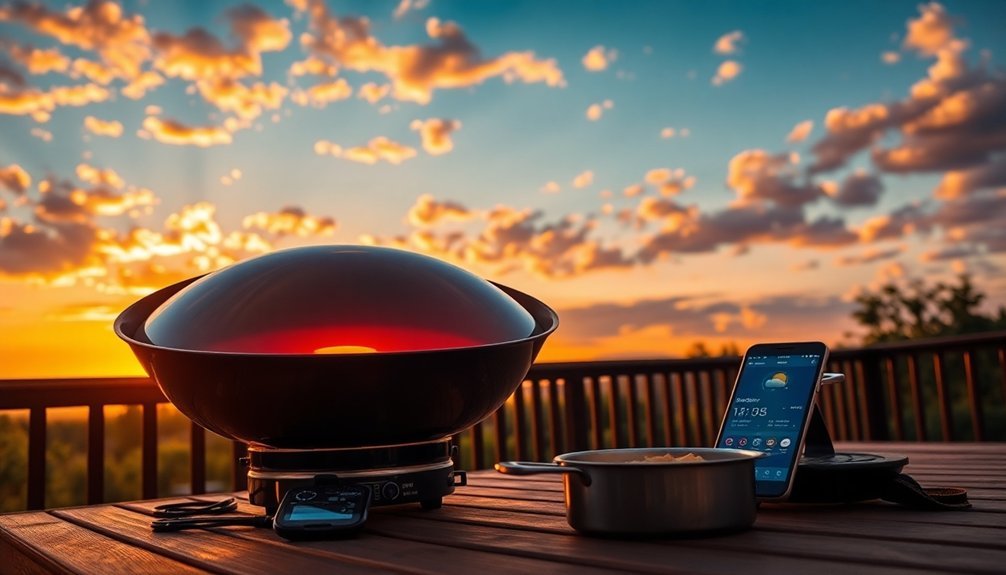
When planning to cook with solar energy, monitoring daily weather forecasts becomes vital for best results.
You'll want to check both weather stations and radar data to guarantee ideal cooking conditions. Modern weather tracking tools give you precise information about cloud cover, temperature patterns, and potential weather disruptions that could affect your solar cooking.
- Use weather station data to track temperature, humidity, and barometric pressure – all important factors that influence solar cooking efficiency.
- Monitor radar and satellite imagery to anticipate cloud formations that might block sunlight during your cooking time.
- Keep an eye on hourly forecasts through NWP models, which can help you plan the best time windows for your solar cooking sessions.
These monitoring practices will help you maximize your solar cooker's performance and avoid weather-related cooking disruptions.
Alternative Cooking Plans
Despite the best weather forecasts, Mother Nature doesn't always cooperate with solar cooking plans. You'll need reliable backup methods to guarantee your meals are prepared on schedule. Keep a portable gas or propane stove handy for cloudy days, and consider butane-powered options for rainy conditions.
You can also explore various DIY alternatives that work in different weather situations. Try making a simple cardboard box cooker with aluminum foil for slow-cooking meals, or construct a reflective panel cooker for basic food preparation.
When sunshine isn't available, traditional methods like pit cooking or earth ovens offer sustainable solutions. Adapt your recipes accordingly – dishes that work well in slow cookers are perfect for solar cooking, and you can easily modify stir-fries, soups, and casseroles for alternative cooking methods.
Latitude and Cooking Windows
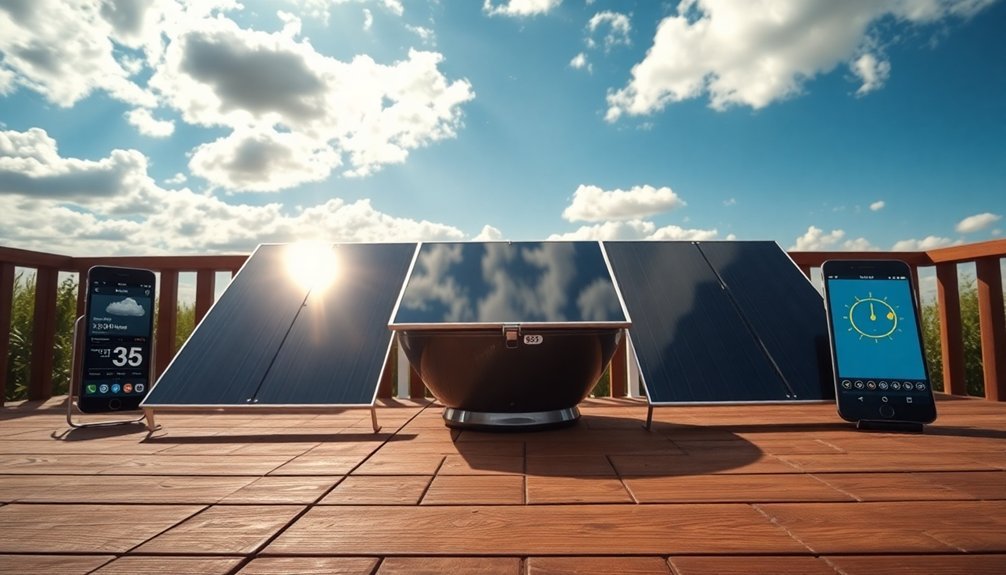
Your location on Earth greatly impacts solar cooking effectiveness. Near the equator, you'll find consistent cooking conditions year-round due to direct overhead sunlight.
However, if you're in temperate zones, you'll need to adjust your cooking schedule seasonally as the sun's angle changes dramatically.
- At higher latitudes, tilt your cooker to compensate for the sun's oblique angle and reposition it every 1-2 hours for ideal results.
- Between 20°N and 20°S latitude, your cooker needs minimal adjustments during midday cooking sessions.
- In mountainous regions, you can expect better performance despite colder temperatures, thanks to less atmospheric interference.
Consider your latitude when choosing a cooker design. Fixed solar wall ovens work best in temperate zones with south-facing walls, while parabolic designs require frequent adjustments but offer versatility across different latitudes.
Solar Position Tracking Tips
Tracking the sun's position accurately can dramatically improve your solar cooking results.
You'll want to reposition your solar cooker every 15-30 minutes to maintain ideal sunlight exposure. While you don't need complex tracking systems like those used in solar panels, understanding basic sun movement patterns will help maximize your cooking efficiency.
For the best results, place your cooker where it can track the sun's east-to-west movement throughout the day. You can use simple manual adjustments – just observe where the shadows fall and rotate your cooker to keep it directly facing the sun.
During summer months, you'll need to account for the sun's higher position in the sky, while in winter, you'll want to adjust for its lower arc. Consider marking ideal positions on your cooking surface for quick reference.
Temperature Control During Storms
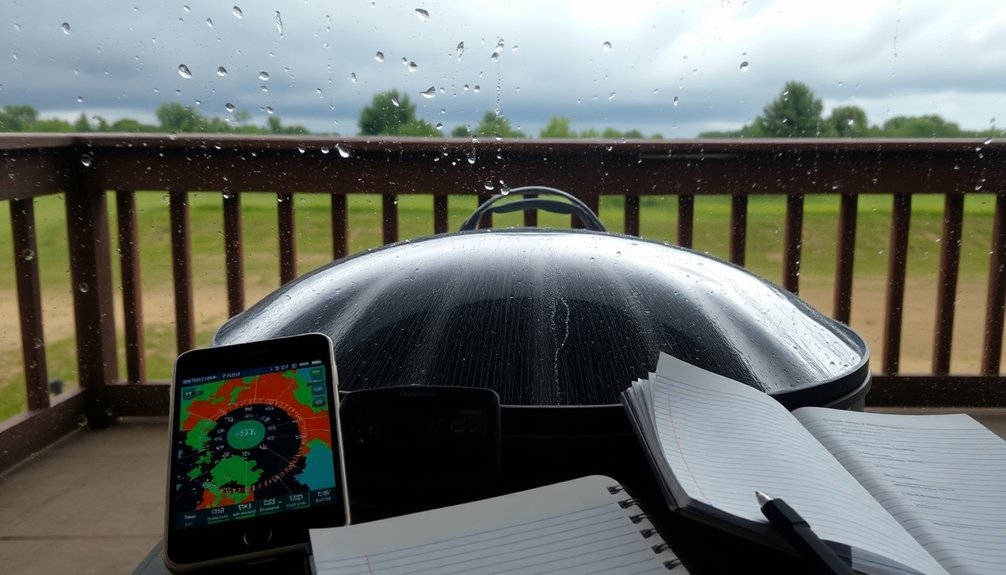
While mastering sun tracking enhances solar cooking, storms present unique challenges that require careful temperature management. During stormy weather, you'll need to adapt your cooking strategy as temperatures fluctuate and sunlight becomes limited. Your solar cooker's performance will decline as storms bring cooler air and reduced solar radiation.
- Use insulated containers and vacuum tube cookers to maintain consistent cooking temperatures despite weather changes.
- Add high-temperature plastic bags or glass lids to trap heat more effectively when conditions deteriorate.
- Combine your solar cooker with fuel-efficient alternatives to guarantee reliable cooking through the storm.
Focus on maximizing heat retention by utilizing insulation and greenhouse effects in your solar cooker. When storms approach, you'll want to start cooking earlier and prepare for longer cooking times due to reduced solar intensity.
Frequently Asked Questions
Can Solar Ovens Be Used Effectively for Cooking at High Altitudes?
Yes, you'll find solar ovens work effectively at high altitudes due to increased solar radiation and clearer skies. However, you'll need to adjust cooking times since water boils at lower temperatures in these locations.
How Do Air Pollution and Smog Affect Solar Cooking Temperatures?
You'll notice considerably lower cooking temperatures when air pollution and smog are present, as they scatter and block sunlight. Your solar cooker's efficiency can drop dramatically, requiring longer cooking times and higher temperatures.
What Materials Are Best for Solar Oven Cookware in Different Climates?
You'll want dark-colored aluminum cookware for sunny areas since it heats quickly. If you're in a variable climate, consider copper pots as they retain heat better. Avoid shiny or light-colored vessels regardless of location.
Does Cooking Near Reflective Surfaces Like Water Bodies Improve Solar Efficiency?
Yes, you'll get improved solar cooking efficiency near water bodies. Their reflective surfaces can redirect additional sunlight to your solar oven, but be cautious as wind from these areas might affect temperature stability.
Can Wind Affect Solar Cooking Performance Even on Sunny Days?
Yes, wind can drastically affect your solar cooking even on bright sunny days. You'll notice longer cooking times and lower temperatures as wind increases heat loss and may disturb your cooker's positioning.
In Summary
You'll find success in solar cooking by staying flexible and working with nature's patterns. Check weather forecasts regularly, understand your region's typical conditions, and plan meals around peak sun hours. Don't let cloudy days discourage you – just adapt your cooking schedule and keep backup options ready. With practice, you'll master the art of matching your solar cooking to weather patterns for reliable, sustainable meals.

Leave a Reply