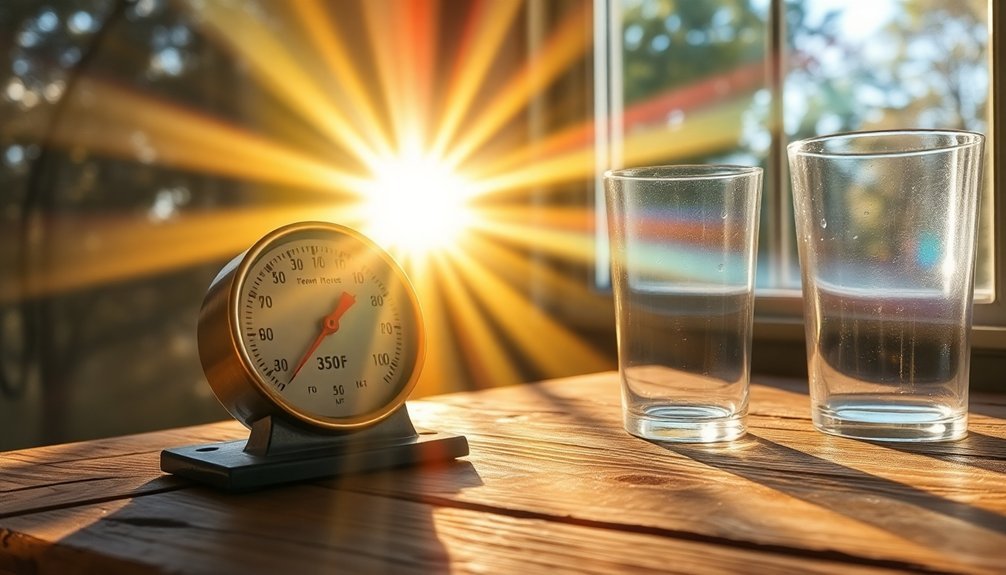
To convert your oven recipes for solar cooking, you'll need to reduce the temperature by about 25-50°F and double the cooking time. While conventional ovens cook at 350-400°F, solar ovens typically operate between 200-300°F. For example, if your recipe calls for 350°F for 1 hour, aim for 300°F for 2 hours in your solar oven. You'll want to preheat your solar cooker for up to an hour before starting, and rotate solid foods every 10-15 minutes for even cooking. Dark cookware and proper insulation will help maintain steady temperatures. The world of solar cooking opens up exciting possibilities for sustainable meal preparation.
Understanding Solar Cooking Heat Ranges
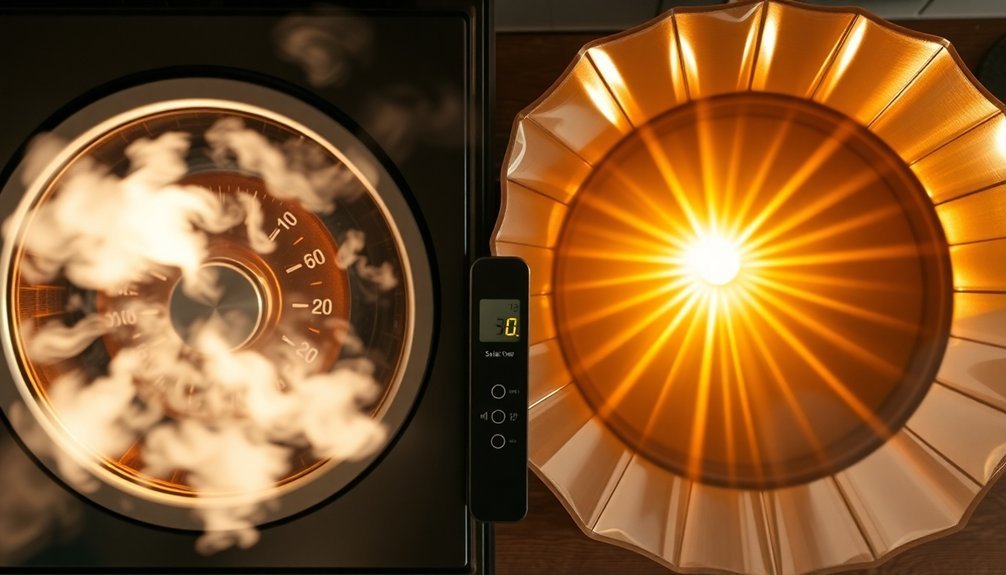
Solar cooking harnesses the sun's energy to achieve a surprisingly wide range of temperatures, from gentle warming to intense heat capable of searing food.
You'll find that well-made solar cookers can reach temperatures between 150°F and 400°F, with parabolic models soaring above 800°F.
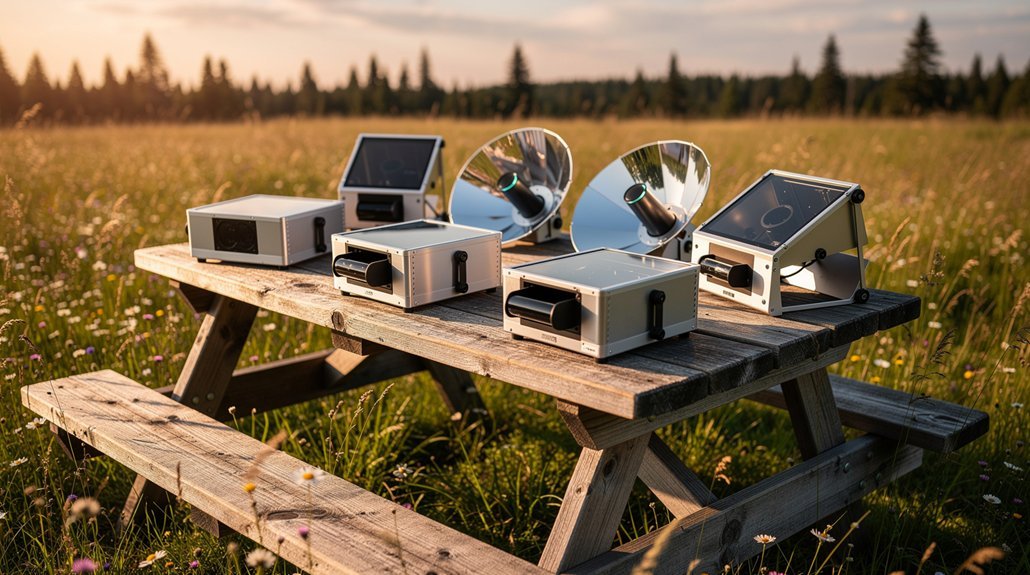
The type of cooker you choose determines your cooking temperature range. Box cookers typically hit 325°F to 400°F, perfect for baking and roasting.
If you're using a panel cooker, you can expect temperatures around 250°F, while portable ovens operate between 210°F and 260°F.
For effective cooking, you'll need at least 180°F, and it's crucial to use dark-colored cookware to maximize heat absorption. Using proper insulation materials like cotton balls or newspapers helps maintain these temperatures longer.
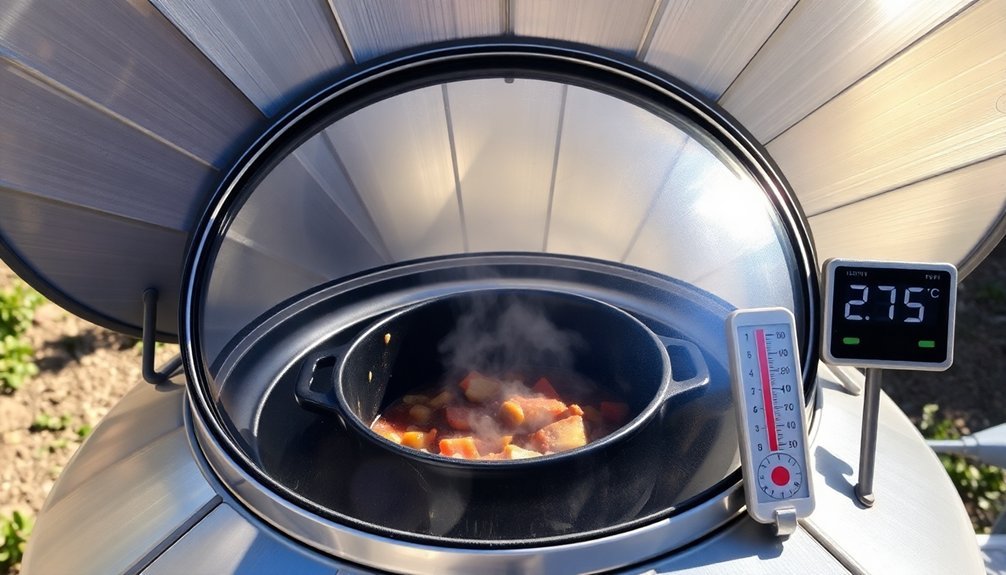
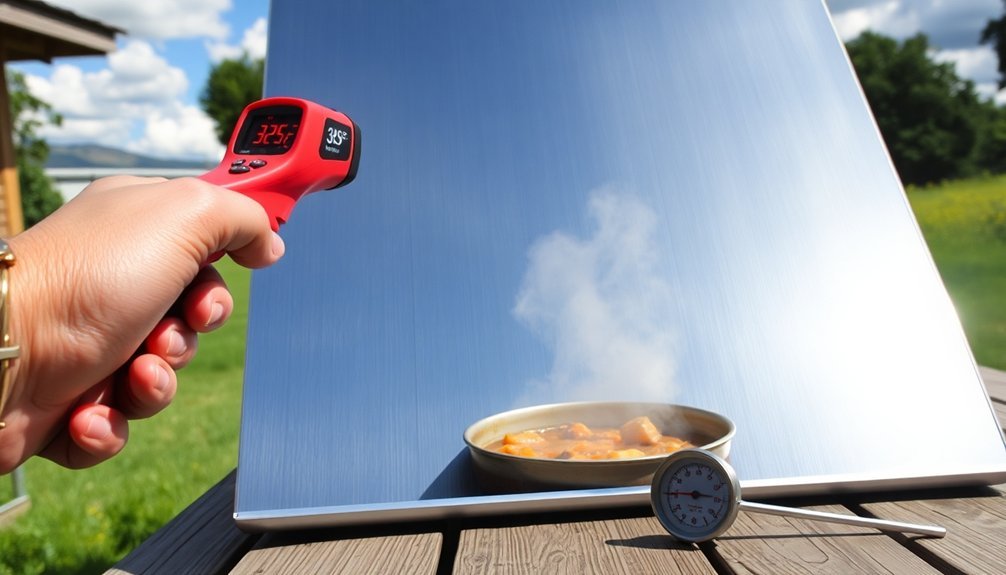
Remember to monitor your cooker's temperature with a thermometer and adjust its position throughout the day to follow the sun.
Converting Traditional Recipes
Now that you understand solar cooking temperatures, adapting traditional recipes requires thoughtful adjustments. Your solar oven will typically cook at 200-300°F, which means you'll need to double conventional cooking times and adjust your approach accordingly.
Key points to remember when converting recipes:
- Position your oven in direct sunlight between 11:00 am and 3:00 pm for best results.
- Rotate solid foods every 10-15 minutes and stir liquids every 10 minutes.
- Choose recipes that work well with lower temperatures, like stews and casseroles.
- Preheat your solar oven for up to an hour to reduce overall cooking time.
- Monitor and record your cooking data to improve future results.
Focus on recipes that don't require precise temperature control, and avoid those needing high heat or quick cooking times. Using reflective surfaces in your solar oven setup will help concentrate sunlight and maintain consistent cooking temperatures.
Solar Oven Temperature Testing
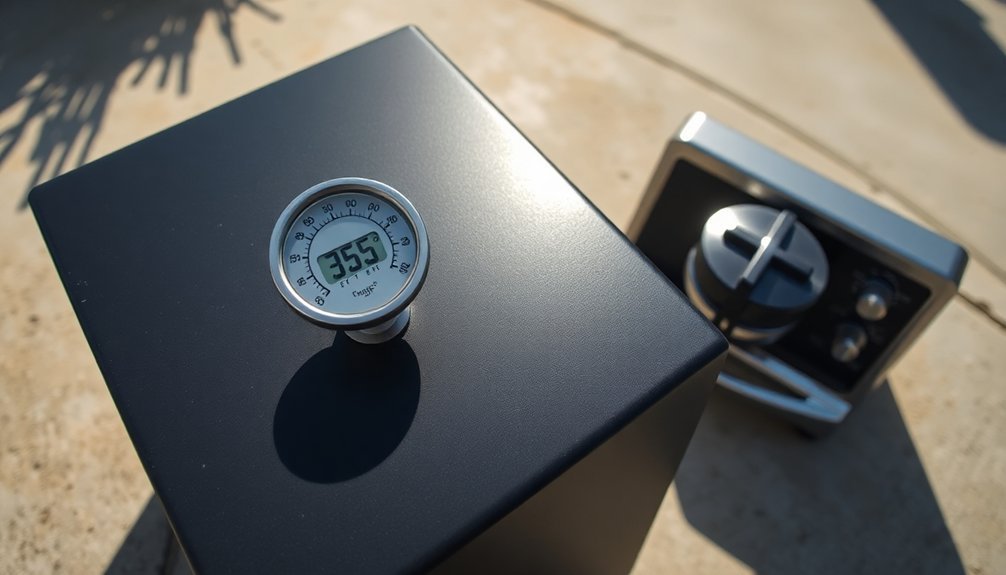
Testing your solar oven's temperature capabilities requires precise measurements and controlled procedures. You'll need type K thermocouples placed through strategic holes to measure both air and water temperatures while maintaining the oven's seal. Data should be collected every 30 seconds, tracking temperatures, wind conditions, and solar radiation. Under optimal conditions, temperatures in a well-constructed box solar oven can reach up to 200°F.
| Test Type | Key Measurements |
|---|---|
| No Load | Stagnation temperature, ambient conditions |
| Full Load | Temperature intervals with cooking vessels |
| Water Heat | Time to reach 80°C (175°F) |
| Cooling | Heat retention duration |
| Peak Performance | Maximum temperature 120°C (248°F) |
For ideal results, preheat your oven for an hour before testing. You'll need to reposition it hourly to maintain peak temperatures. Internal reflectors and proper insulation are vital for reaching and maintaining desired cooking temperatures, though adding extra insulation won't greatly improve maximum temperature.
Time Adjustment Methods
When adjusting cooking temperatures between recipes, you'll need to recalculate cooking times to guarantee proper food preparation. To adjust times accurately, calculate the percentage difference between original and new temperatures, then apply this change proportionally to your cooking duration.
- Calculate total energy needed by multiplying temperature by time
- Add a safety margin to prevent overcooking or burning
- Consider food placement and shelf position for best results
- Account for heat loss when opening the oven door
- Adjust cooking times based on your specific oven type
Remember that spreading food out allows for faster cooking than tightly packed items. When using solar ovens, achieving temperatures of up to 200°F requires full, direct sunlight exposure.
For example, if you're increasing temperature from 400°F to 450°F, you'll reduce a 60-minute cooking time to 53 minutes. Similarly, decreasing from 350°F to 250°F means extending a 30-minute cook time to 42 minutes.
Seasonal Temperature Variations
Beyond adjusting cooking times and temperatures for specific recipes, seasonal changes play a significant role in how you'll prepare meals throughout the year.
In spring, you'll want to shift toward lighter cooking methods like steaming and quick sautéing, while incorporating cooling ingredients such as cucumbers and sea vegetables.
Summer calls for outdoor grilling and revitalizing dishes that won't heat up your kitchen. You'll find yourself gravitating toward hydrating foods and fresh produce.
As fall arrives, switch to slow-cooking methods and heartier ingredients, emphasizing root vegetables and warming spices.
Winter demands the most substantial adjustments, where you'll rely on long-simmering stews, braised dishes, and baked vegetables to create comforting meals that combat the cold.
Remember to choose seasonal ingredients that naturally complement each season's cooking methods.
Cooking Equipment Temperature Impact
Your cooking equipment's temperature characteristics directly affect how heat transfers between different appliances during food preparation.
When moving dishes between ovens, stovetops, or other heating elements, you'll need to account for each appliance's unique heating patterns and temperature retention properties.
Understanding these differences lets you adjust cooking times and temperatures to maintain consistent results, whether you're transferring food from a slow cooker to broiler or moving between different types of ovens.
Heat Transfer Between Appliances
Temperature differences among cooking appliances can greatly affect how heat transfers to your food, requiring adjustments to cooking times and methods.
Understanding how heat moves between different appliances will help you adapt recipes successfully. When switching between cooking methods, you'll need to account for the primary heat transfer mechanism at work.
- Convection ovens cook 25% faster than conventional ovens due to circulating hot air.
- Metal cookware conducts heat directly to food, making it ideal for stovetop cooking.
- Radiation-based methods like broiling and grilling brown food differently than convection.
- Using lids can greatly reduce heat loss and cooking time in cold environments.
- Wind and ambient temperature impact cooking times, especially with outdoor equipment.
Choose your appliance based on the heat transfer method that best suits your recipe's needs.
Temperature Retention Properties
When selecting cooking equipment, understanding its temperature retention properties can greatly impact your cooking results. Different materials retain heat at varying levels – cast iron excels at holding heat due to its high thermal mass, while aluminum quickly conducts but doesn't retain heat well.
You'll find that thicker cookware maintains temperature better and distributes heat more evenly across the cooking surface. If you're looking for peak performance, consider multi-layered cookware that combines materials like aluminum and stainless steel. These hybrid designs give you both excellent heat conductivity and retention.
Remember that external factors affect your cookware's performance too. Cold ambient temperatures and wind can rapidly cool your cooking vessels, so you'll need to use lids and windscreens to maintain consistent temperatures, especially when cooking outdoors.
Weather Effects On Solar Temperatures
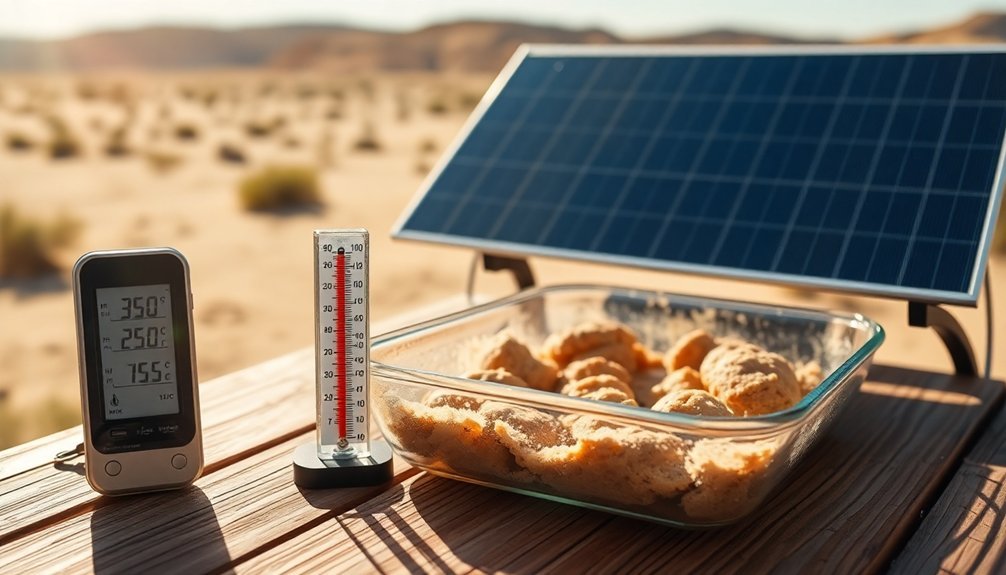
Understanding how weather affects solar temperatures reveals fascinating patterns in energy production.
You'll find that solar panels actually perform better in cooler conditions, with peak efficiency around 77 degrees. While summer months yield more energy due to longer daylight hours, cold sunny days can boost voltage production.
- Wind acts as a natural cooling system, helping panels maintain ideal performance
- Rain washes away dirt but reduces efficiency by 10-20% due to cloud cover
- Snow's high albedo effect can reflect additional light onto panels
- Clouds can drop panel efficiency to just 10-30% of capacity
Cool temperatures increase voltage output, though total energy is higher in summer.
Solar panels adapt to various weather conditions, and knowing these patterns helps you maximize their potential in any climate.
Temperature Management Techniques
While solar panels respond to natural temperature changes, modern medical cooling systems offer precise control over thermal management.
You'll find various cooling methods available, each with distinct advantages. Intravascular systems deliver rapid cooling through central veins but require invasive procedures.
Surface cooling options like water blankets need to cover most of your body and work slower, though they're less invasive.
For targeted brain cooling, you can use transnasal systems that deliver coolant mist through the nose, achieving quick temperature drops.
The most advanced option is servo-controlled systems, which adjust cooling rates automatically. They'll monitor your temperature every second and make up to 30 adjustments per hour, maintaining precise control between 32-38.5°C.
These systems prevent temperature fluctuations during both cooling and warming phases.
Frequently Asked Questions
Can Dark-Colored Pans Really Affect Cooking Temperatures in Solar Ovens?
Yes, you'll notice dark-colored pans notably boost your solar oven's temperature. They absorb sunlight more efficiently than light-colored ones, helping you achieve and maintain higher cooking temperatures needed for effective solar cooking.
How Do Altitude Changes Impact Solar Oven Cooking Temperatures?
You'll achieve higher cooking temperatures at increased altitudes because there's less atmospheric interference. Your solar oven receives more direct sunlight and stronger radiation, leading to more intense heat and faster cooking times.
Does Food Taste Different When Cooked in a Solar Oven?
Yes, you'll notice food tastes different in a solar oven. The slow, gentle cooking process preserves nutrients and natural flavors, while the lack of circulating air creates tender textures you won't get from conventional ovens.
Can Solar Ovens Be Safely Used for Baking Breads and Pastries?
Yes, you can safely bake breads and pastries in solar ovens. You'll need to maintain temperatures between 300-350°F, expect longer baking times, and rotate the oven regularly to track the sun's position.
What Materials Work Best for Maximizing Heat Retention in Solar Ovens?
You'll get the best heat retention using bricks or salt as your base material, paired with rockwool insulation and dark surfaces. Don't forget to add multiple glazing and reflective panels for maximum efficiency.
In Summary
You'll find solar cooking requires flexibility and patience as you adapt traditional recipes. While temperature conversions provide a starting point, you'll need to account for weather, seasons, and your specific equipment. Keep testing and adjusting your cooking times and methods. With practice, you'll master the art of reading the sun's patterns and managing heat levels for successful solar-cooked meals every time.

Leave a Reply