
Solar oven batch meals require careful temperature control between 300°F to 325°F for even cooking results. You'll need to monitor and maintain these temperatures by adjusting your oven's position every 30 minutes to track the sun. When cooking multiple dishes, preheating takes about 20 minutes to reach ideal temperatures, and opening the door can drop heat by 50-75°F. You can maximize efficiency by using dark cookware and grouping foods with similar cooking times together. Seasonal variations affect your cooking temperatures, with summer peaks reaching 400°F and winter ranges typically staying between 250-300°F. Understanding these temperature zones will transform your solar cooking success.
Understanding Solar Oven Heat Ranges
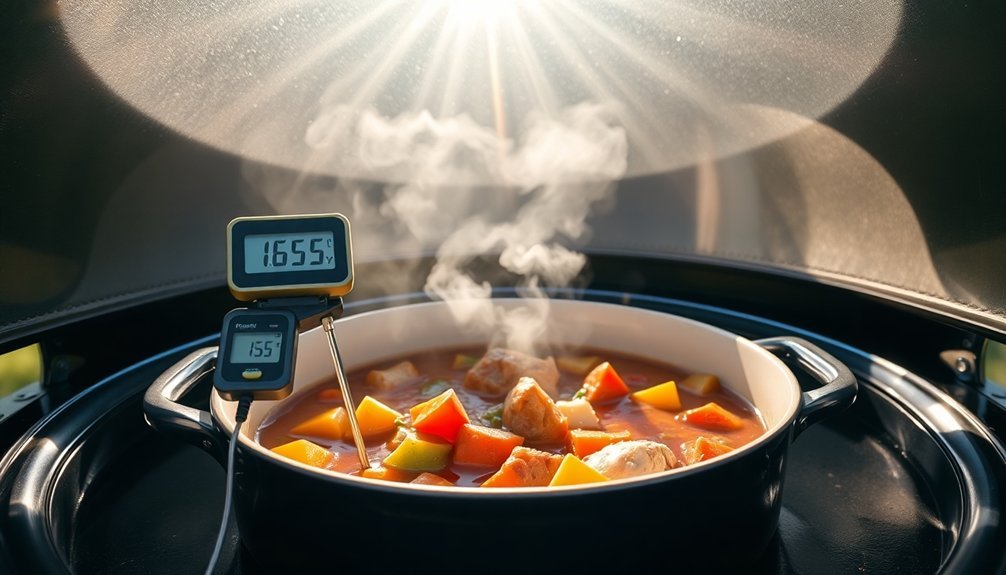
While solar ovens provide an eco-friendly cooking solution, understanding their temperature ranges is essential for successful batch cooking.
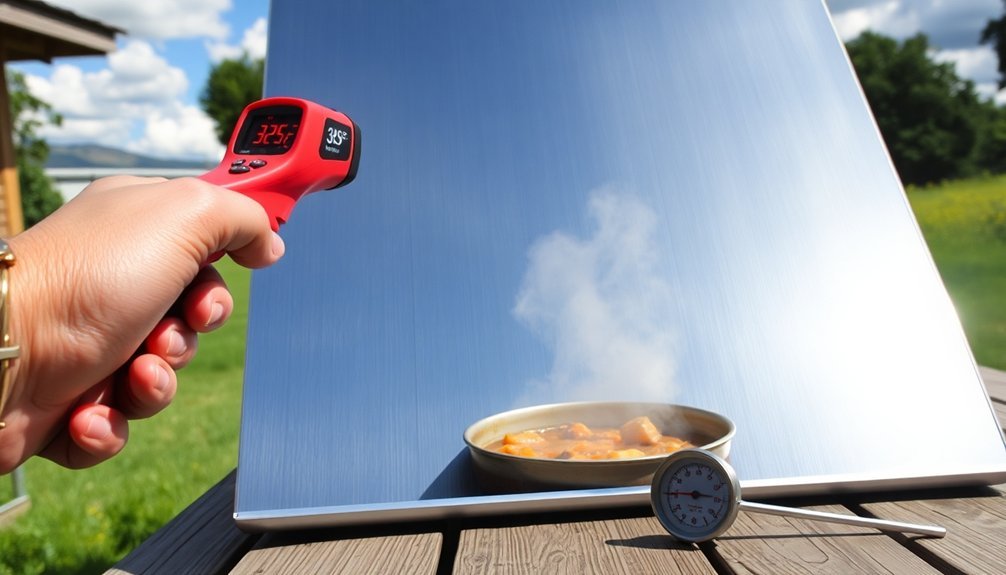
You'll find that different types of solar ovens reach varying temperature levels, with box-type ovens hitting 160°F to 400°F, parabolic cookers reaching up to 800°F, and panel cookers operating between 200°F to 300°F.
You need at least 180°F for safe cooking, though temperatures between 300°F to 400°F work best for most recipes.
Keep in mind that your solar oven's performance depends heavily on proper positioning toward direct sunlight and the quality of its insulation. Realign every 30 minutes to maintain optimal cooking temperatures throughout the day.
For ideal results, you'll want to cook during peak hours (11:00 am to 3:00 pm) when the sun's intensity is highest, and use dark-colored cookware to maximize heat absorption.
Batch Size Temperature Requirements
You'll need higher temperatures between 300°F and 325°F when cooking larger batch sizes in your solar oven to guarantee thorough and even cooking.
For smaller portions, you can achieve successful results at lower temperatures around 180°F to 200°F, though cooking times will increase.
When preparing multiple dishes simultaneously, position items requiring the highest heat toward the back of your solar oven where temperatures typically peak. Using reflective aluminum foil on the interior surfaces helps concentrate more solar energy and maintain consistent temperatures for batch cooking.
Temperature By Portion Size
Proper temperature control for batch cooking in sun ovens varies considerably based on portion size.
You'll find that smaller portions up to 4 pounds, like chickens or roasts, cook efficiently at temperatures above 300°F (149°C). For ideal results, larger items like turkeys must be fully defrosted before cooking. A simple pizza box can serve as an effective small-batch solar oven.
- You'll achieve better results using Dutch ovens or cast-iron pots, which maintain heat above 150°F (66°C) for several hours.
- Your food's internal temperature must reach 165°F (74°C) for safety, regardless of the oven temperature.
- You can trust that cooking times will adjust naturally based on your portion sizes.
- You'll need to monitor internal temperatures closely, as they're more essential than external readings.
Remember that dark-colored cookware enhances solar energy absorption, helping you maintain consistent temperatures throughout the cooking process.
Managing Multi-Dish Heat Levels
Managing multiple dishes in a sun oven requires careful attention to temperature zones and batch timing. You'll need to align your oven with the sun every 30 minutes to maintain ideal cooking temperatures between 300° and 375° F on clear days.
To effectively manage multiple dishes, start by preheating your oven, which takes about 20 minutes to reach 300° F. Remember that opening the door drops the temperature by 50-75° F, so plan your dish placement strategically. Blue enamel cookware distributes heat more evenly throughout your dishes during batch cooking.
Use dark-colored ovenware for better heat absorption, and consider that different foods require varying cooking times – rice takes about two hours while lentils need three.
You can maximize efficiency by grouping foods with similar cooking temperatures and times together, utilizing the oven's insulation and sealing features to maintain consistent heat levels.
Managing Multiple Dish Heat Levels
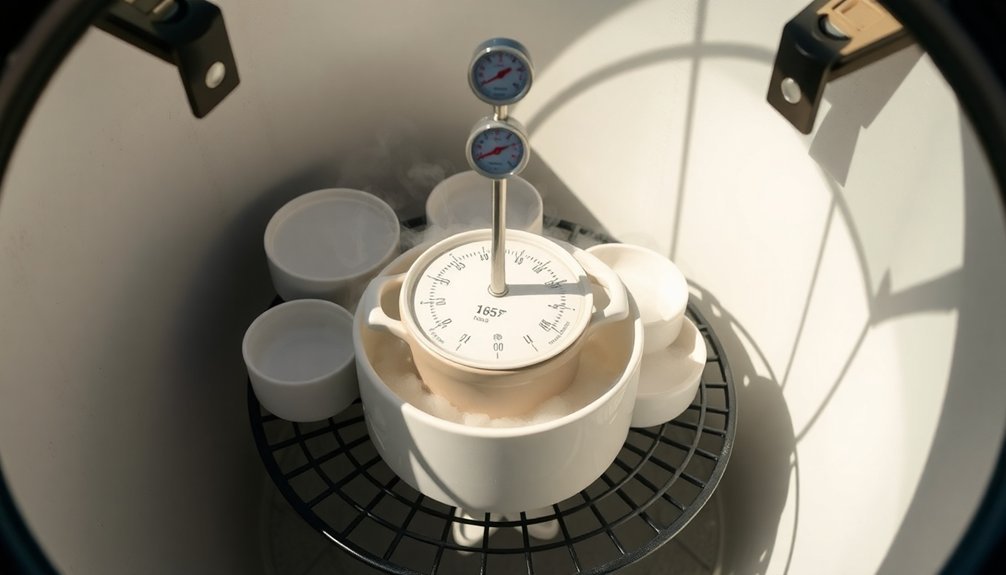
When you're cooking multiple dishes in your Sun Oven, you'll need to understand how heat zones work at different levels, with higher temperatures near the top and cooler zones toward the bottom.
You can take advantage of these temperature variations by placing foods that need higher heat (like meats) on the upper rack while positioning items requiring gentler cooking (like vegetables) on lower levels.
Use the dual-purpose leveling rack to create distinct temperature layers, ensuring each dish receives its ideal cooking temperature between 200°F and 400°F.
Heat Zones For Batches
The art of managing multiple dish temperatures in a Sun Oven relies on strategic pot placement and careful timing.
You'll need to understand how heat zones work when stacking pots for batch cooking. Dark-colored ovenware helps absorb more light energy, while proper insulation maintains consistent temperatures throughout the chamber.
- You'll feel confident knowing your Sun Oven can reach 400° on clear days, perfect for baking and roasting multiple items.
- You'll love how stacking pots let you cook dal and rice simultaneously, maximizing your solar cooking efficiency.
- You'll appreciate maintaining temperatures between 300-375° by realigning every 30 minutes.
- You'll discover the satisfaction of even heating by using the leveling rack for proper air circulation.
Remember to prepare all dishes beforehand and seal moisture-rich foods to prevent condensation on the glass door.
Temperature Layering Methods
Successful temperature layering in Sun Ovens builds upon your understanding of heat zones by introducing strategic dish placement techniques.
You'll need to arrange your dishes based on their required cooking temperatures, using multiple levels within your oven.
Place foods needing higher temperatures, like bread, on the upper rack where they'll receive direct heat from the reflectors.
You can position dishes requiring moderate heat, such as casseroles, in the middle zone.
For items needing gentle warming, like soups, use the lower level where temperatures are more stable.
To maintain ideal layering, you'll want to adjust your reflectors regularly and use dark-colored cookware for better heat absorption.
Don't forget to seal your containers tightly to prevent moisture loss, and rotate dishes every 15 minutes for even cooking throughout your batch.
Heat Distribution For Group Meals
Managing heat distribution effectively becomes essential when preparing meals for larger groups in sun ovens. You'll need to maximize your cooking space while guaranteeing even heat circulation throughout multiple dishes.
By using stackable pots and cross-stacking flat pans, you can cook several items simultaneously without compromising cooking times.
For best group meal preparation in your sun oven:
- Position a trivet beneath your cooking vessels to allow proper airflow and prevent hot spots.
- Cut ingredients into uniform, smaller pieces to guarantee faster, more consistent cooking.
- Seal containers tightly to maintain moisture and prevent condensation on the glass cover.
- Layer your dishes strategically, removing the leveling tray if needed for larger pots.
Remember to refocus your oven every 25-30 minutes to maintain steady temperatures between 360-400°F for consistent results.
Seasonal Temperature Planning
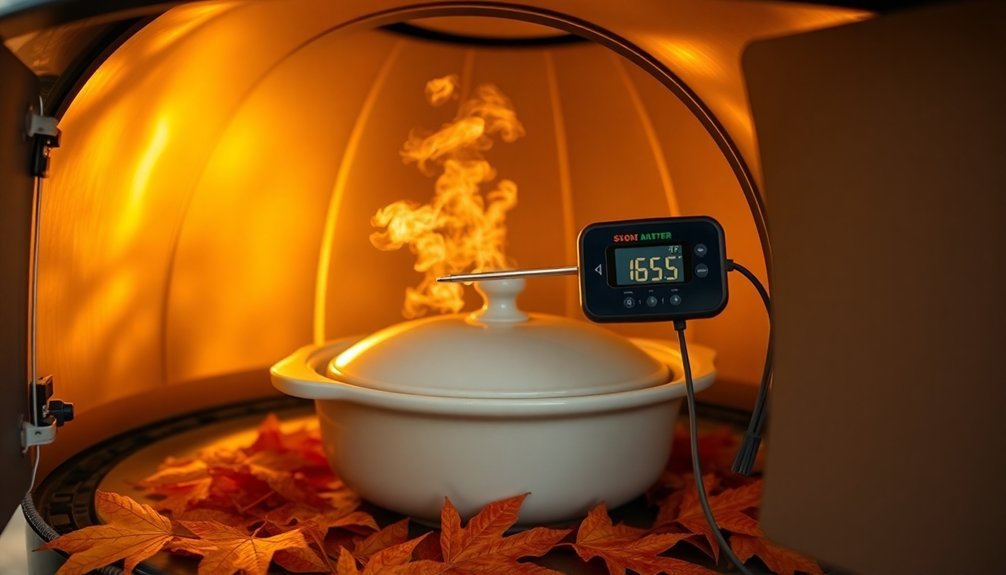
Since seasonal changes dramatically affect sun oven performance, understanding temperature variations throughout the year becomes essential for successful batch cooking. You'll find that summer days can reach up to 400°F, while winter temperatures typically max out at 250-300°F. Even cloudy days can achieve 250°F with intermittent sun exposure.
| Season | Peak Temp (°F) | Cooking Tips |
|---|---|---|
| Summer | 400° | Perfect for bread and dense foods |
| Spring | 350° | Regular realignment needed |
| Fall | 300° | Use dark cookware for efficiency |
| Winter | 250-300° | Choose lighter, quick-cooking meals |
| Cloudy Days | 250° | Double standard cooking times |
You'll need to adjust your cooking approach based on these seasonal variations. For best results, preheat your oven, use Dutch ovens or cast-iron cookware, and maintain regular alignment with the sun every 30 minutes.
Temperature Zones Within Solar Ovens
Understanding temperature zones within your solar oven is essential for achieving consistent cooking results.
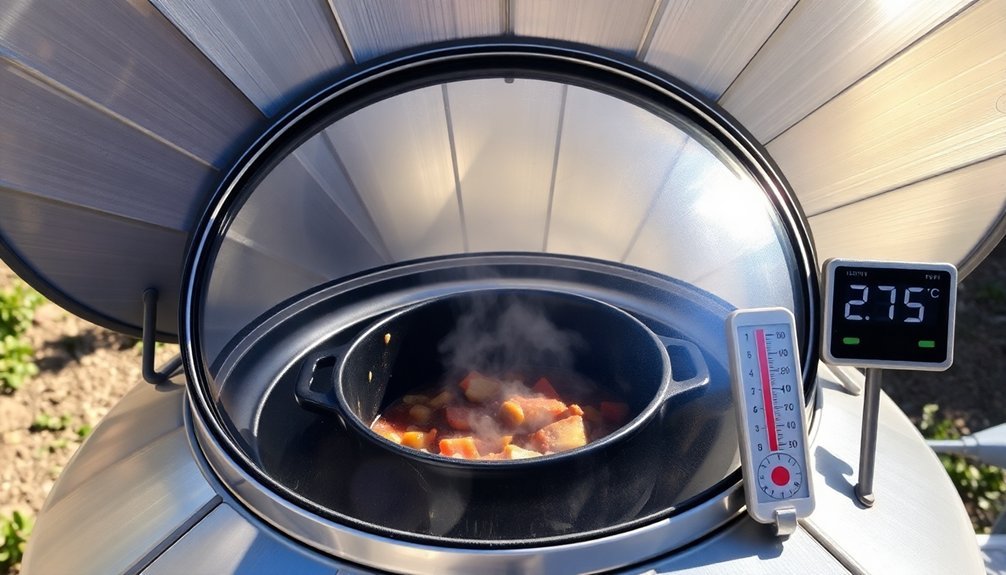
You'll need to maintain temperatures between 300°F and 375°F for ideal cooking, while staying above the important 140°F safety threshold. Your dark cookware plays a significant role by absorbing concentrated solar energy, creating stable heat zones throughout the chamber.
- You'll feel confident knowing your oven can reach an impressive 400°F on clear, sunny days.
- You'll love how the greenhouse effect and reflectors work together, providing 40% of your heating power.
- You'll appreciate how thermal mass from Dutch ovens keeps your food safely above 150°F for hours.
- You'll rest easy knowing that proper alignment every 30 minutes maintains perfect cooking temperatures.
Remember to use your food thermometer to verify safe internal temperatures, especially since opening the door can drop temperatures by 25-50°F.
Solar Batch Cooking Time Management
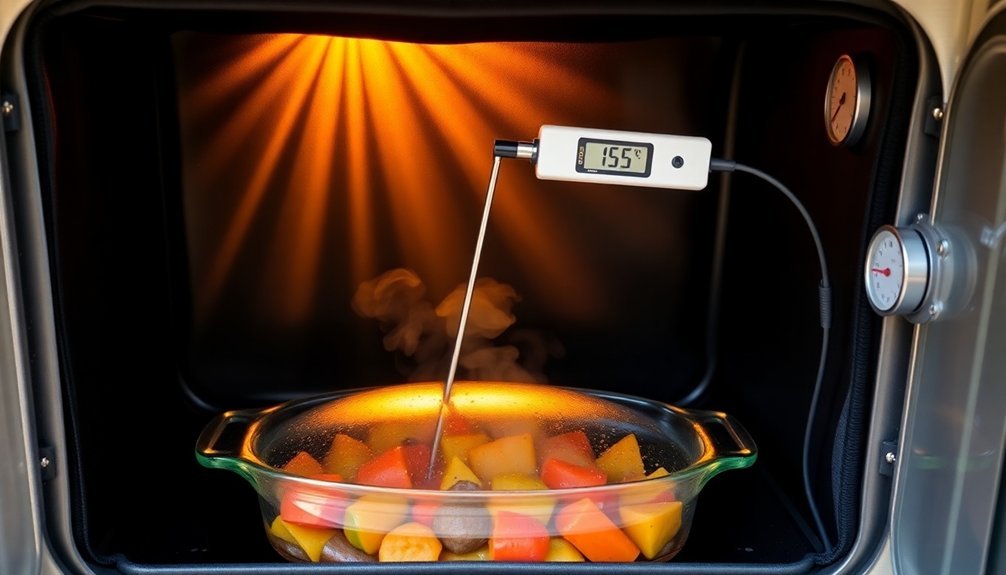
With your solar oven's temperature zones mastered, successful batch cooking depends on smart time management and strategic planning.
You'll need to check weather forecasts and plan your meals accordingly, especially for dishes requiring longer cooking times like beans and bread.
On clear, sunny days, you can expect cooking times similar to conventional methods. White rice, rolled oats, and pearl barley typically take two hours, while lentils, beans, and potatoes need about three hours.
You'll want to position your cooker facing the sun's midday position and adjust it every 30 minutes for ideal heat retention.
To speed up cooking, cut ingredients into smaller pieces and use dark-colored cookware. Pre-soak beans overnight and prepare dough in advance for morning cooking sessions.
During winter's shorter days, plan for more frequent cooker adjustments.
Frequently Asked Questions
How Does Altitude Affect Cooking Temperatures in Solar Ovens?
At higher altitudes, you'll find lower atmospheric pressure reduces boiling temperatures and slows cooking. You'll need longer cooking times, and you should add extra moisture since the drier air increases food's water loss.
Can Temperature Fluctuations During Cloudy Periods Spoil Batch-Cooked Meals?
You won't usually have food spoilage if clouds affect your Sun Oven, as temperatures stay warm enough to prevent bacterial growth. Just expect longer cooking times and monitor your food's progress closely.
What's the Minimum Ambient Temperature Needed for Effective Solar Oven Cooking?
You'll need at least 30°F (-1°C) for basic solar cooking, though you'll get better results above 50°F (10°C). Don't worry too much – a well-insulated solar oven can still reach cooking temperatures even in cold weather.
Do Different Colored Cooking Containers Affect Temperature Consistency in Batches?
Yes, your container's color greatly impacts batch temperature consistency. You'll get better results with dark or black containers since they absorb heat more efficiently and maintain steady temperatures compared to light-colored or reflective ones.
How Does Humidity Impact Temperature Control in Solar Batch Cooking?
You'll notice that high humidity can slow your solar batch cooking by reducing heat retention. However, you can minimize its impact by using covered containers and maintaining proper sun alignment throughout cooking.
In Summary
You'll need to maintain temperatures between 300-350°F (149-177°C) for most batch cooking in solar ovens. Keep track of your oven's temperature zones, adjusting dish placement accordingly. For best results, plan your cooking around peak sun hours and consider seasonal variations. Remember to rotate larger batches periodically and use dark, thin-walled containers to guarantee even heat distribution across multiple dishes.

Leave a Reply