
You'll get perfectly fluffy rice using sunlight by focusing on three key techniques. First, position your solar cooker in a sunny, wind-protected spot and adjust it throughout the day to track the sun's movement. Second, start with hot water in a dark-colored pot with a clear lid to maximize heat absorption and maintain a steady temperature around 100°C. Third, manage steam effectively by using a kitchen towel under the lid to catch condensation and let the rice rest covered for 5 minutes after cooking. Master these fundamentals, and there's even more to explore about perfecting your solar-cooked rice.
Choose Your Solar Cooking Spot
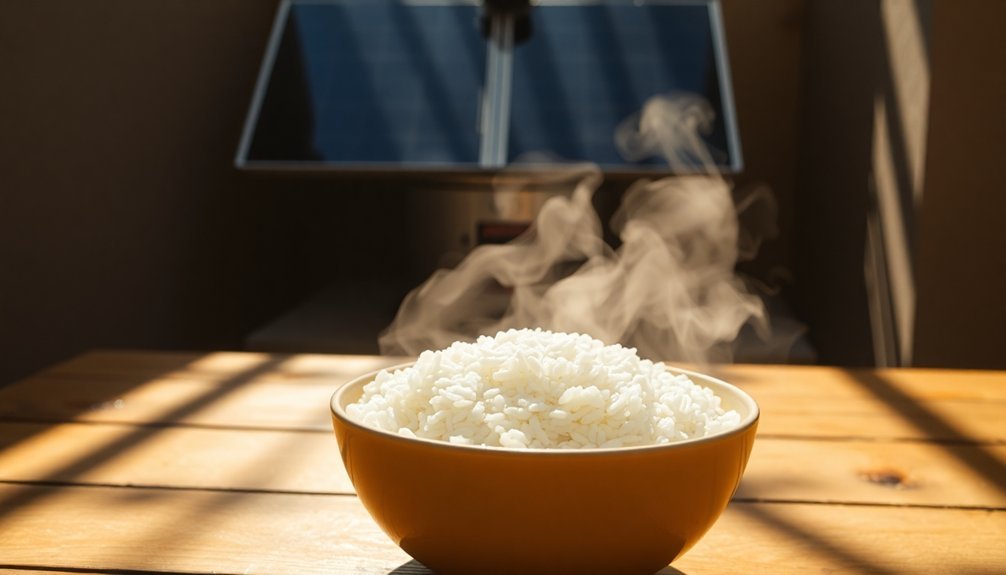
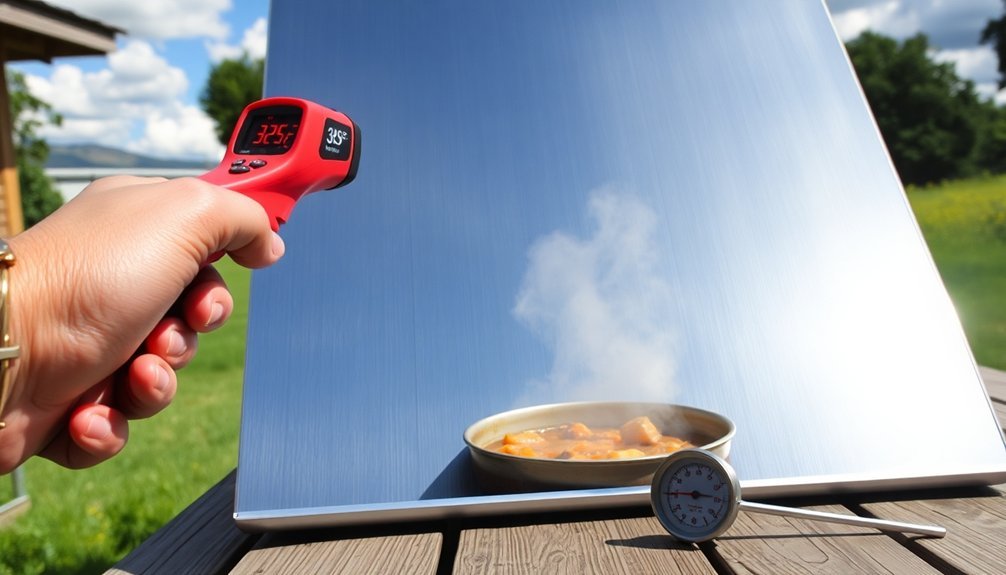
A sunny backyard or patio can become your perfect solar cooking station. To achieve fluffy rice using solar power, you'll need to carefully select a spot that receives consistent sunlight for at least 30-45 minutes each hour.
Position your solar cooker to face directly into the sun, and be ready to adjust its position as the sun moves across the sky.
Wind protection is essential for successful rice cooking. Find a sheltered area away from strong gusts that could destabilize your cooker or cause temperature fluctuations.
If needed, use weights to secure your solar oven, especially if it's a lighter model. You don't want sudden wind knocking over your rice mid-cook.
While ambient temperature plays a role, don't let cold weather discourage you. A well-insulated solar cooker can still perform effectively.
However, you'll want to take into account your geographical location and latitude. If you're far from the equator, you'll need to adjust your cooker's angle to compensate for the sun's lower position.
Higher elevations often provide more intense sunlight, which can help achieve better cooking results. For optimal results, plan your rice cooking between 10 am and 4 pm when sunlight is strongest. Always check weather forecasts and start cooking early if clouds are expected.
Water Temperature Control
Once you've positioned your solar cooker in the perfect spot, mastering water temperature becomes your next essential to success.
Start with hot water to speed up the cooking process, though you can preheat water directly in your solar cooker if you're starting with cold water. This initial temperature boost will help your rice cook more evenly and reduce overall cooking time.
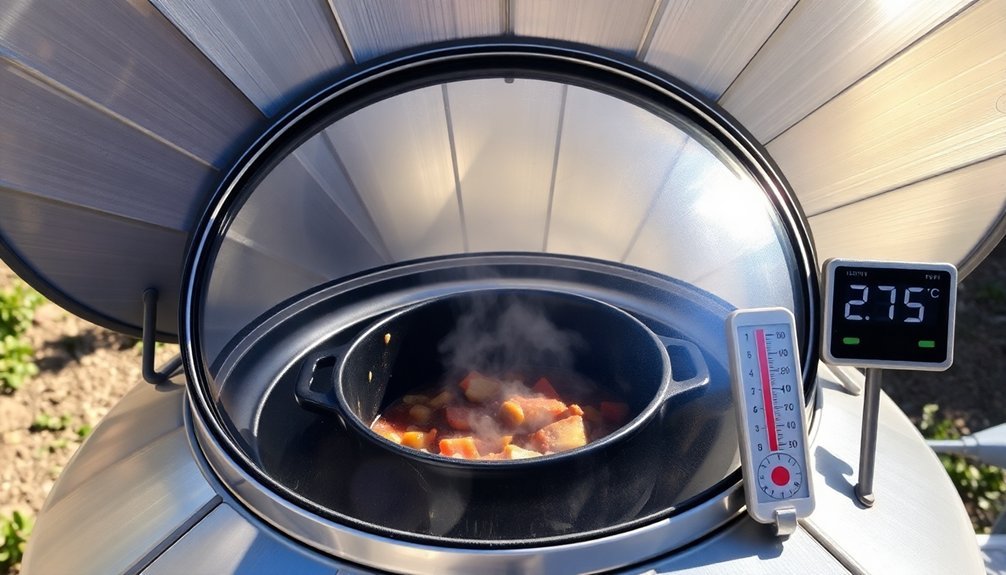
You'll need to maintain a temperature of around 100°C for perfectly fluffy rice. Your solar cooker can reach temperatures between 65°C and 400°C, so you'll want to manage this carefully. Using a dark-colored cooking pot will maximize heat absorption and help maintain consistent temperatures.
Use a clear plastic bag or glass lid to trap heat, and adjust your cooker's position and reflectors throughout cooking to maintain ideal temperature. If it's getting too hot, you can remove reflectors or loosen the heat seal.
When your rice is done, don't skip the vital resting phase. Turn off the heat and let your rice rest covered for 5 minutes – no peeking!
This allows moisture to redistribute evenly throughout the grains. After resting, fluff the rice with a fork to separate the grains and achieve that perfect, fluffy texture you're aiming for.
Steam Management During Sunlight Hours
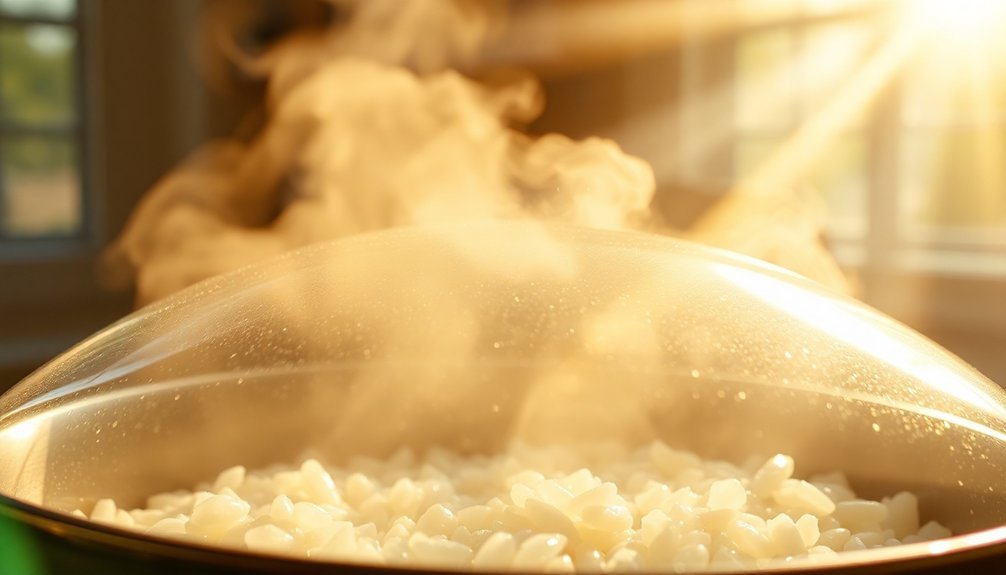
Managing steam effectively during peak sunlight hours can make or break your rice's texture. When cooking during bright daylight, you'll need to adjust your steam control techniques to prevent excess moisture loss and uneven cooking.
Start by placing your non-stick pot away from direct sunlight to maintain consistent temperature. You'll want to use a kitchen towel under the lid to catch condensation, but make sure it doesn't touch your heat source. This traditional damkoni technique has been perfected over centuries of Persian rice cooking.
For ideal results, begin with cold water in your steamer and place your rice in a heat-proof container that's shallow enough to allow even steam distribution.
Once you've brought the water to a boil, reduce the heat to a simmer immediately. This prevents too much steam from escaping in the warmer daytime temperatures. You'll know you're on the right track when you see gentle steam wisps rather than aggressive clouds.
After cooking, let your rice rest for at least five minutes with the lid on – this essential step allows the grains to separate naturally. Before serving, fluff the rice gently with a fork, being careful not to break the grains.
Frequently Asked Questions
Does Rice Cooked in Sunlight Have Different Nutritional Benefits Than Stove-Cooked Rice?
You won't get different nutritional benefits from cooking rice in sunlight versus stovetop methods. In fact, sunlight cooking isn't effective for rice preparation and won't properly cook the grains or alter their nutritional content.
Can Moonlight Be Used as an Alternative Energy Source for Cooking Rice?
No, you can't cook rice using moonlight. The moon's light intensity is far too weak (only 0.05-0.1 watts/m²) to generate enough heat for cooking. You'll need conventional heat sources instead.
What Types of Containers Work Best for Solar Rice Cooking?
You'll get the best results using dark-colored, moisture-resistant containers made of stainless steel or ceramic with tight-fitting lids. They should have good heat retention and be appropriately sized for your solar cooker.
How Do Cloudy Days Affect the Rice Cooking Time in Solar Setups?
You'll need to double or triple your usual cooking time on cloudy days. Even partial cloud cover will slow down your rice's cooking process, so it's best to start earlier and monitor closely.
Should Seasonings Be Added Differently When Cooking Rice With Solar Energy?
You don't need to change how you add seasonings for solar cooking. Add them at the start or during cooking, just like traditional methods. The slow cooking process actually helps distribute flavors evenly.
In Summary
You've learned how to harness sunlight for perfect, fluffy rice. By selecting an ideal cooking spot, monitoring your water temperature, and managing steam during peak sun hours, you'll achieve consistently great results. Don't forget to adjust these techniques based on your local climate and seasonal changes. With practice, you'll master solar rice cooking and enjoy environmentally-friendly, perfectly cooked grains every time.

Leave a Reply