
Cloud cover affects your outdoor cooking times by blocking direct sunlight and reducing the heat reaching your cooking surface. When clouds obstruct the sun, you'll experience up to 30% longer cooking times as temperatures fluctuate and heat distribution becomes less efficient. The type of cloud coverage matters too – scattered clouds might only cause slight delays, while heavy overcast conditions can greatly extend your cooking duration. High humidity under cloud cover can help retain surface temperatures, but the reduced solar radiation means your grill or solar cooker won't reach ideal heat levels. Understanding these weather patterns will help you master the art of outdoor cooking success.
Understanding Cloud Formation and Light
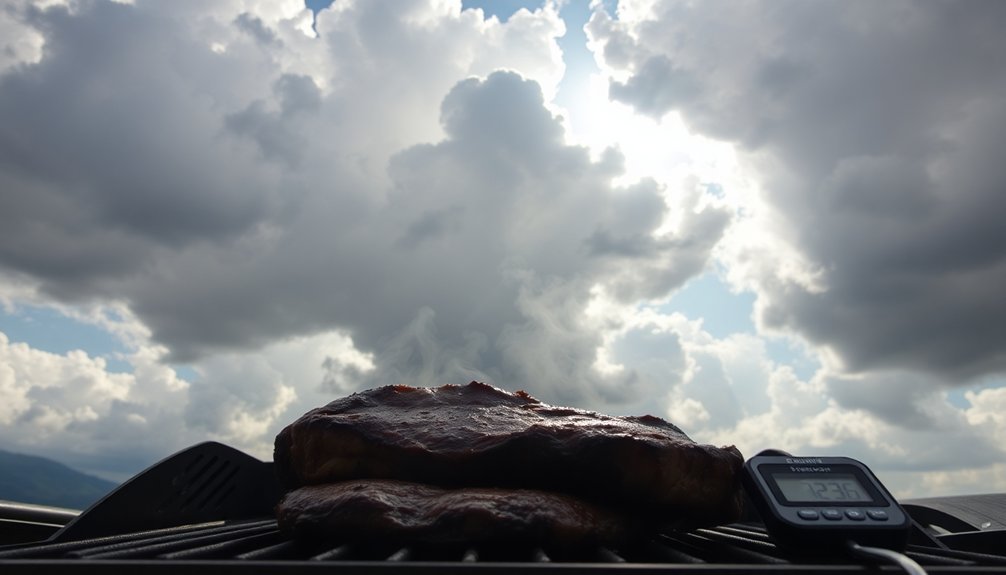
When you're trying to understand how clouds affect outdoor cooking, it's vital to grasp the basic process of cloud formation. As the sun heats the Earth's surface, air rises and cools, reaching its saturation point where water vapor condenses on tiny particles called condensation nuclei.
These particles, which include dust, smoke, and salt crystals, are essential for forming cloud droplets. At this stage, humidity must reach 100% before visible clouds can form.
The resulting cloud cover greatly impacts how sunlight reaches your cooking area. You'll notice that clouds scatter and absorb solar radiation, reducing the amount of direct sunlight that makes it to the Earth's surface.
Thicker clouds block more light, while thinner ones allow more to pass through. This variation in light transmission directly affects the temperature at ground level, which explains why your outdoor cooking times may need adjustment on cloudy days.
Direct Sunlight Vs Cloudy Days
When you're grilling in direct sunlight, you'll notice markedly higher temperatures and faster cooking times compared to cloudy conditions.
Your grill will heat up more quickly and run hotter than its set temperature on sunny days, while cloudy weather leads to slower heating and longer cooking times.
Managing these temperature variations requires different approaches: in direct sun, you'll need to monitor for overcooking and possibly adjust settings downward, while cloudy conditions may require increased temperature settings or extended cooking times. Wind and rain can significantly cool your grill's exterior surface, further extending the time needed to cook your food properly.
Temperature Variation Impacts
The striking contrast between direct sunlight and cloudy conditions considerably impacts outdoor cooking temperatures and timing.
Just as forum members share technique tips for optimal drumming performance, you'll notice that sunny days create higher, more consistent surface temperatures on your grill, while cloudy conditions can lead to fluctuating heat levels.
When you're planning your outdoor cooking, keep these key temperature variations in mind:
- Direct sunlight heats your cooking surface faster and maintains higher temperatures, potentially reducing cooking times by 15-20%.
- Cloudy days create more stable ambient temperatures due to heat-trapping effects, but you'll need to adjust for overall lower cooking temperatures.
- Humidity levels change with cloud cover, affecting moisture retention in your food and requiring you to modify cooking durations.
Understanding these variations helps you adapt your cooking strategy for best results, regardless of weather conditions.
Solar Heat Management
Managing solar heat effectively during outdoor cooking requires understanding the stark differences between direct sunlight and cloudy conditions.
You'll get the best results in direct sunlight, where solar cookers operate at peak efficiency and reach higher temperatures quickly. However, when clouds roll in, you'll need to adapt your cooking strategy.
High clouds aren't as problematic as low clouds, which can reduce heat output by up to 30%. You can optimize your cooking by using reflectors and adjusting your cooker's position every 20-30 minutes.
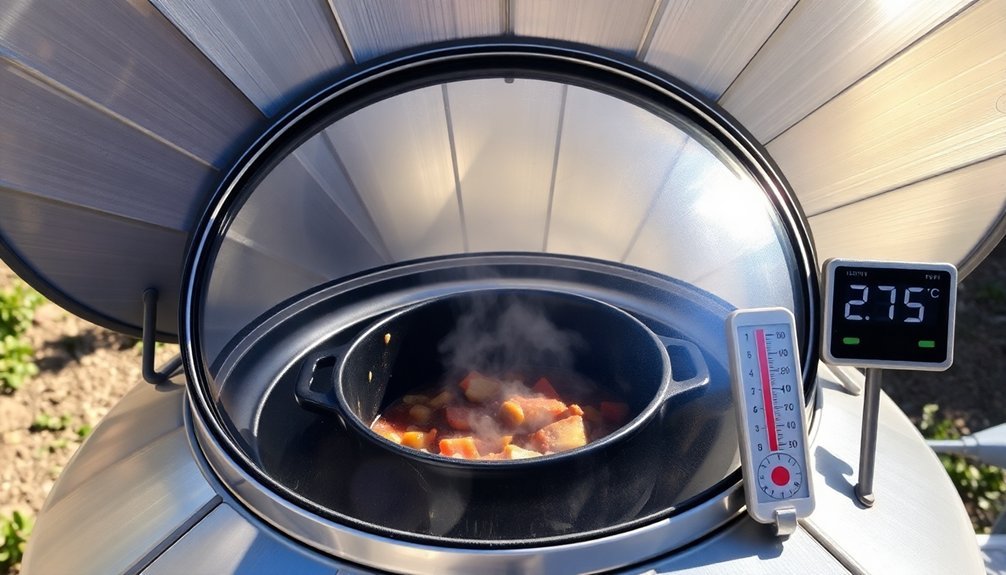
For cloudy days, consider using heat-retained baskets or thermal storage methods to maintain cooking temperatures. Well-designed solar box ovens can maintain cooking temperatures even during intermittent cloud cover. If you're using a parabolic or Fresnel-lens cooker, you'll need to be especially diligent about reorientation to maximize the available sunlight.
Temperature Fluctuations During Overcast Weather
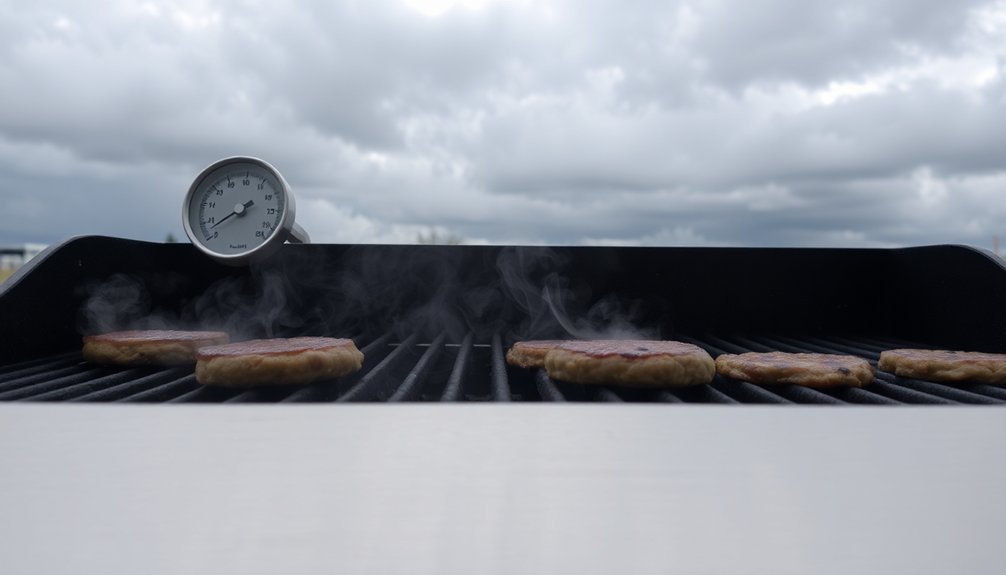
When you're cooking outdoors during overcast weather, you'll notice more stable temperatures due to clouds trapping heat and preventing extreme fluctuations.
Your grill's performance may need adjustment since clouds block direct sunlight and maintain a consistent ambient temperature, unlike the sharp temperature changes on clear days.
The heat retention created by cloud cover can work to your advantage by providing a more predictable cooking environment, though you'll need to account for potentially longer cooking times.
Heat Retention During Clouds
Understanding cloud cover's effect on heat retention can greatly improve your outdoor cooking experience.
When you're cooking outdoors, clouds act as a natural insulator, trapping up to 90% of the heat that bounces off the Earth's surface. This creates a more stable cooking environment, helping you maintain consistent temperatures throughout your cooking session.
Here's how clouds affect your outdoor cooking temperatures:
- They create a greenhouse effect by trapping heat beneath them, preventing rapid temperature changes.
- They reflect heat back toward your cooking area, maintaining warmth even when it's not sunny.
- They work with humidity to distribute heat more evenly, which can affect your cooking times and methods.
This natural insulation system helps you predict cooking times more accurately and protects your equipment from direct sun exposure.
Ambient Temperature Impact Analysis
Beyond heat retention, cloud cover directly shapes ambient temperature patterns during your outdoor cooking sessions.
You'll notice that thick, low-lying clouds can reflect up to 90% of the Earth's heat back to your cooking area, while high clouds create a warming effect on the surface.
During daytime cooking, clouds will help maintain more consistent temperatures by blocking direct sunlight and reducing extreme fluctuations.
When you're planning your outdoor meal timing, remember that overcast conditions typically result in warmer nights but cooler days.
This means you'll experience a narrower temperature range compared to clear skies.
You'll need to adjust your cooking schedule accordingly, as the stable temperatures under cloud cover might require different timing than cooking under direct sunlight.
Grill Performance Under Overcast
Despite overcast conditions affecting your grilling routine, clouds can actually help stabilize cooking temperatures once you've preheated your grill. The insulating effect of cloud cover helps trap heat and reduces sudden temperature drops that you'd typically experience on clear days.
You'll want to optimize your grill's performance under cloudy skies by following these key practices:
- Position your grill away from wind paths to maintain stable temperatures.
- Open the lid less frequently to retain precious heat.
- Monitor temperature rather than relying on standard cooking times.
While you'll need a few extra minutes for preheating, you'll find that cloudy conditions can work in your favor. The key is keeping your grill clean and using fresh, dry fuel to guarantee efficient burning despite higher humidity levels typically associated with overcast weather.
Cloud Types and Cooking Effects
When clouds roll across the sky, they considerably affect your outdoor cooking times by altering the amount of solar radiation that reaches your cooking area. You'll notice the biggest impact under overcast conditions, where your cooking times may need to be extended due to reduced heat absorption. Different cloud types create varying effects on your outdoor cooking experience.
| Cloud Type | Impact on Cooking |
|---|---|
| Scattered | Slight delay in cooking times |
| Broken | Moderate increase in cooking duration |
| Overcast | Significant extension of cooking time |
| Cumulus | Intermittent delays as clouds pass |
| Cumulonimbus | Major disruption; may need to pause cooking |
If you're using solar cooking methods, stratus and altostratus clouds will slow your cooking process substantially, while scattered cumulus clouds might only cause brief interruptions. You'll want to adjust your cooking schedule based on the cloud coverage you observe.
Heat Transfer Through Cloud Cover
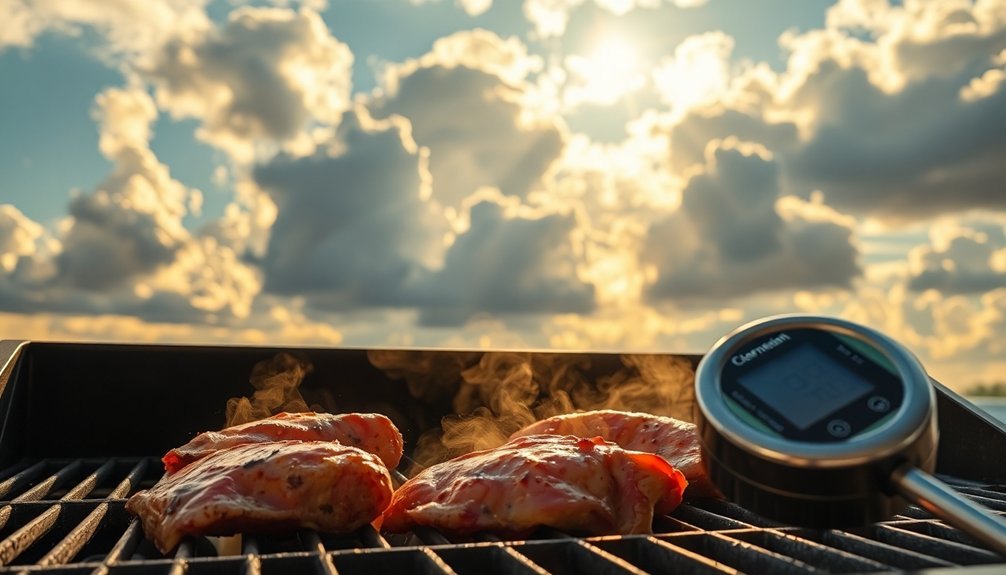
Understanding how cloud cover affects heat transfer is essential for successful outdoor cooking. When clouds block direct solar radiation, they considerably reduce the amount of energy reaching your cooking surface, which impacts how quickly your food will cook.
The three main ways clouds affect heat transfer during outdoor cooking are:
- They reflect and absorb solar radiation before it reaches your cooking area, reducing the available energy for heating.
- They alter convective air currents around your cooking setup, which can affect how heat distributes through your food.
- They influence the overall thermal equilibrium of your cooking system, often requiring longer cooking times to reach desired temperatures.
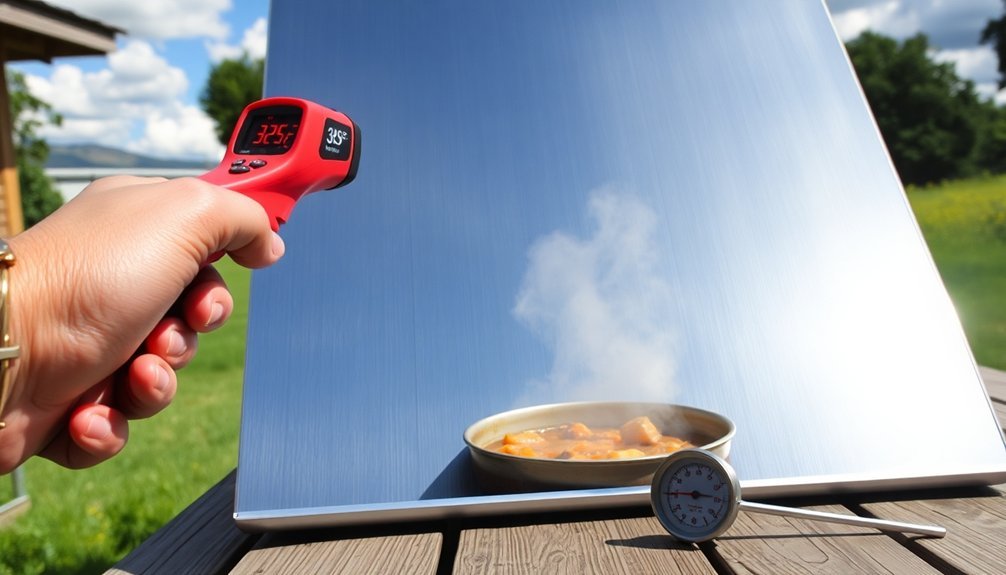
If you're using a solar cooker, you'll notice these effects even more prominently, as clouds diminish the effectiveness of reflectors and reduce the cooker's internal temperature.
Moisture Levels and Cooking Times
When you're grilling in humid conditions, you'll notice faster cooking times because moisture in the air slows down evaporation from your meat's surface.
The reduced evaporation keeps the meat's surface temperature higher, which speeds up the overall cooking process and affects how heat transfers through the food.
You'll need to watch your cooking times more carefully on humid days, as the moisture-rich environment can greatly impact both the temperature equilibrium of your grill and the formation of a proper crust on your meat.
Humidity's Impact on Grilling
Humidity levels play an important role in outdoor grilling, directly affecting both cooking times and food moisture content. When you're grilling in high humidity, moisture can't evaporate quickly from your food's surface, which keeps surface temperatures elevated and speeds up cooking. Conversely, low humidity allows faster evaporation, resulting in longer cooking times.
- Cloud cover and rain increase humidity, leading to faster cooking times that require careful monitoring.
- Higher altitudes create lower humidity conditions, demanding temperature adjustments and longer cooking periods.
- Weather conditions can dramatically shift humidity levels, making it vital to adapt your grilling approach.
You'll need a reliable food thermometer to verify proper doneness, especially when humidity levels fluctuate.
Don't rely solely on standard cooking times, as they may vary greatly based on these environmental factors.
Evaporation and Heat Transfer
The scientific dance between evaporation and heat transfer greatly influences your outdoor cooking results. When you're grilling on a cloudy day, you'll notice that food cooks differently due to the complex relationship between moisture and heat.
Cloud cover increases humidity levels, which slows down evaporation from your food, helping it retain moisture during cooking.
You'll need to adjust your cooking approach since clouds block direct sunlight and affect temperature. While this might seem challenging, it can actually work to your advantage.
Higher humidity levels from cloud cover can speed up cooking times by preventing moisture loss. Instead of relying on standard timing, you'll want to use a thermometer to guarantee proper doneness.
Remember that cooking at slightly lower temperatures for longer periods helps maintain the ideal moisture balance in your food.
Seasonal Cloud Pattern Impact
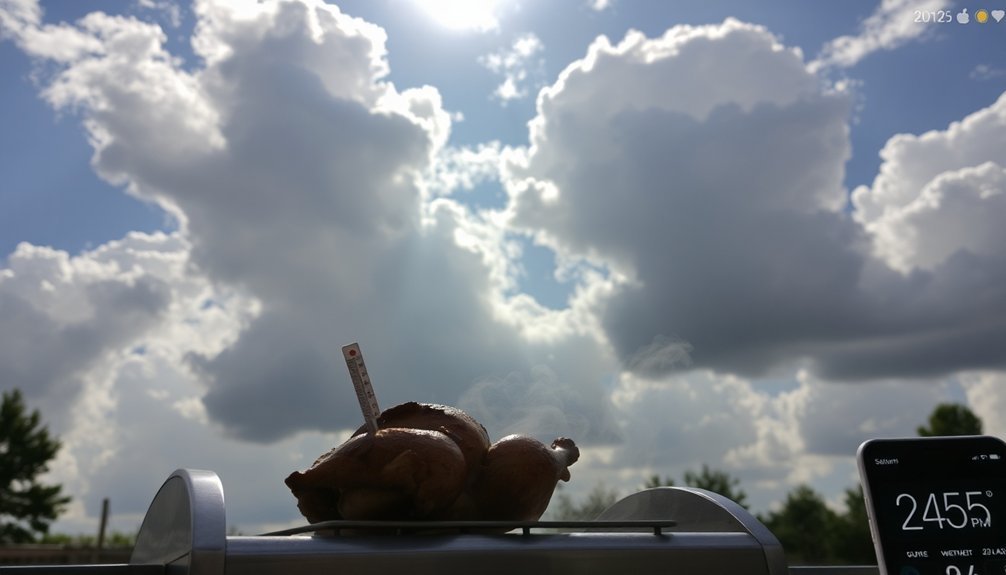
Seasonal variations in cloud patterns create unique challenges for outdoor cooking throughout the year.
You'll need to adapt your cooking methods based on these predictable weather changes to maintain consistent results.
Key seasonal factors that'll affect your outdoor cooking include:
- Cloud cover density and frequency, which varies by season and impacts temperature stability.
- Humidity levels that fluctuate with seasonal cloud patterns, affecting moisture retention in your food.
- Available sunlight throughout different seasons, which directly influences the temperature of your outdoor cooking equipment.
When you're planning outdoor cooking sessions, consider your region's typical cloud patterns for that time of year.
If you're in an area experiencing climate change-related shifts in cloud cover, you'll need to make additional adjustments to maintain your desired cooking outcomes.
Alternative Cooking Methods
When outdoor cooking becomes challenging due to cloud cover, you'll want to explore several alternative cooking methods that can help you prepare meals regardless of weather conditions.
Direct heat methods like grilling, broiling, and sautéing offer quick cooking options with adjustable temperatures and consistent results. For longer cooking times, you can use indirect heat approaches such as Dutch oven cooking or propane stove cooking, which aren't affected by cloud coverage.
If you're dealing with cloudy weather, skip the solar oven and opt for fire pit cooking with coals or a reliable propane stove. These methods give you better control over cooking temperatures and don't rely on sunlight.
You'll find that Dutch ovens are particularly versatile, allowing you to bake, stew, or roast your food evenly regardless of weather conditions.
Weather Monitoring for Outdoor Cooking
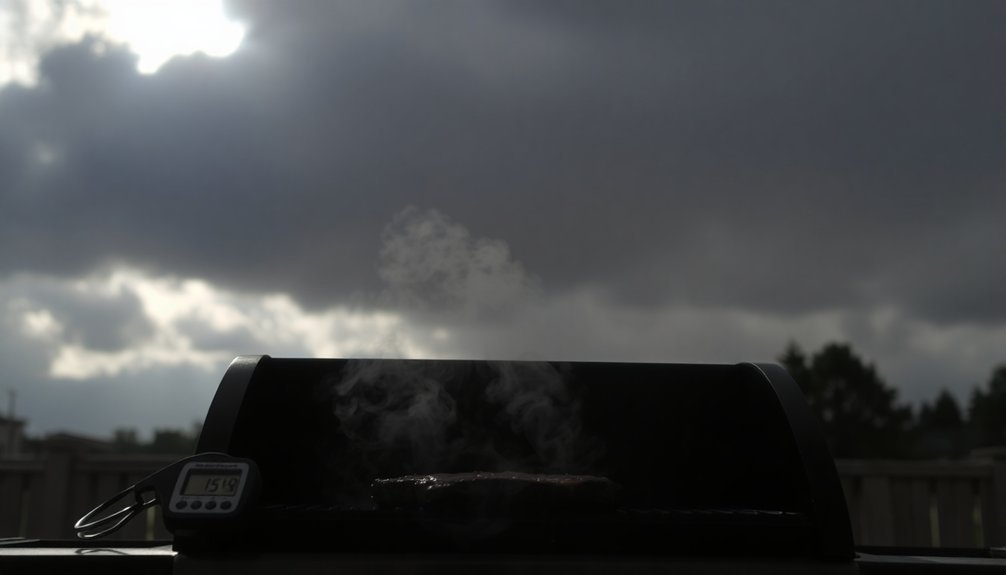
Successful outdoor cooking relies heavily on understanding and monitoring weather patterns, particularly cloud cover. When you're planning your outdoor cooking session, a weather station can provide essential real-time data to help you adjust your cooking times and methods accordingly.
Cloud cover considerably impacts ground temperature, affecting how quickly your food will cook.
Here's what you need to monitor:
- Cloud density – thick clouds reflect more solar radiation, requiring longer cooking times
- Cloud height – low clouds trap heat better, potentially maintaining consistent cooking temperatures
- Cloud coverage percentage – scattered clouds have minimal impact, while overcast skies require substantial cooking time adjustments
Cloud Cover Solutions
Despite the challenges that cloud cover presents to outdoor cooking, implementing effective cover solutions can greatly enhance your cooking experience and protect your equipment. You'll find both permanent and removable options to suit your needs.
For a long-term solution, consider installing permanent structures like pergolas, gazebos, or custom-built roofs. These not only shield your outdoor kitchen from weather variations but also allow you to add features like lighting and fans.
If you prefer flexibility, high-quality removable covers made with materials like WeatherMax 80 offer excellent protection while being easily adaptable.
Your chosen cover should include proper ventilation to prevent moisture buildup and secure anchoring systems for windy conditions.
With the right protection, you'll extend your outdoor kitchen's lifespan and maintain consistent cooking times regardless of cloud cover.
Frequently Asked Questions
Does Cloud Cover Affect the Flavor Profile of Smoked Meats?
Yes, cloud cover enhances your smoked meat's flavor profile. You'll notice better smoke absorption and cleaner blue smoke in humid conditions, leading to more pleasant flavors and improved development of beneficial smoke compounds.
Can Cloud Patterns Help Predict Optimal Grilling Times?
You can use cloud patterns to predict grilling times. Watch for cumulus clouds, which signal fair weather, but if they develop into nimbus clouds, you'll need to adjust your cooking schedule accordingly.
How Do Clouds Impact the Performance of Different Fuel Types?
You'll notice clouds can reduce fuel efficiency by lowering ambient temperatures. They'll affect gas and charcoal grills differently, making them work harder, while solar-powered devices may perform poorly under heavy cloud cover.
Should Grill Temperature Settings Be Adjusted Differently at Night Versus Cloudy Days?
You'll need different adjustments – increase temperature settings at night due to heat loss, while on cloudy days, you'll want slight increases to counter humidity. Monitor your grill's performance and adjust accordingly.
Do UV Rays Penetrating Thin Clouds Affect Food Safety During Outdoor Cooking?
You don't need to worry about UV rays penetrating clouds during outdoor cooking. While UV rays can pass through clouds, they don't affect food safety or cooking temperatures when you're grilling or barbecuing outdoors.
In Summary
You'll need to adjust your outdoor cooking plans when clouds roll in, as they greatly affect temperature and cooking times. Remember to monitor weather forecasts, keep backup heating methods ready, and add extra time to your cooking schedule during overcast conditions. Whether you're grilling or using a solar cooker, understanding cloud cover's impact will help you maintain consistent results in your outdoor cooking adventures.

Leave a Reply