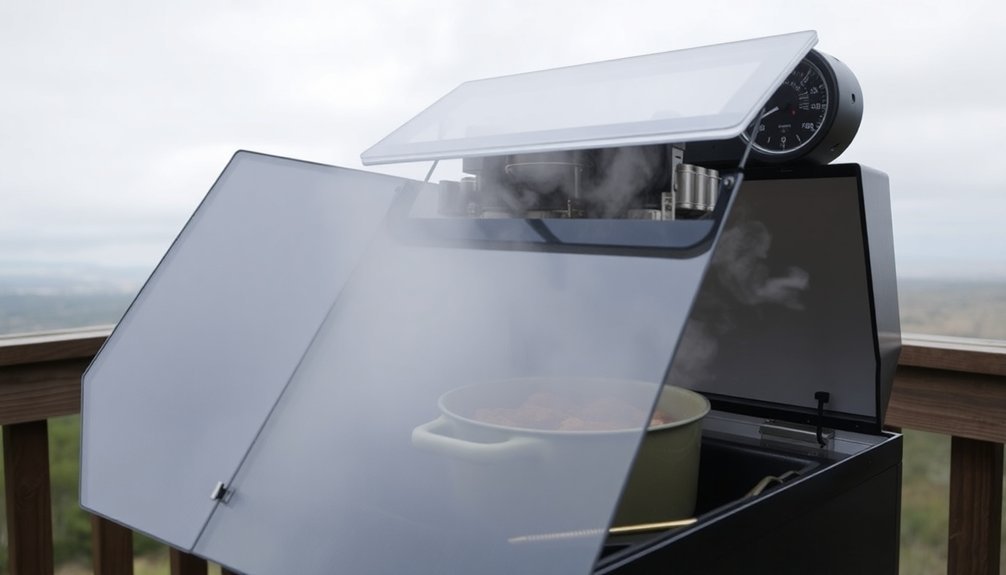
You can still achieve good results with your sun oven on cloudy days by making key adjustments to your cooking approach. Double or triple your usual cooking times and focus on dishes that work well at lower temperatures, like stews, soups, and pre-cooked foods. Position your oven in an unobstructed area and realign it every 30 minutes to maximize limited sunlight exposure. Use dark-colored pots and additional insulation techniques, such as wrapping glass dishes in dark towels, to enhance heat absorption. While cloudy conditions may limit temperatures to around 150°F, proper setup and timing strategies will help you master solar cooking in less-than-ideal weather.
Understanding Cloudy Day Temperature Ranges
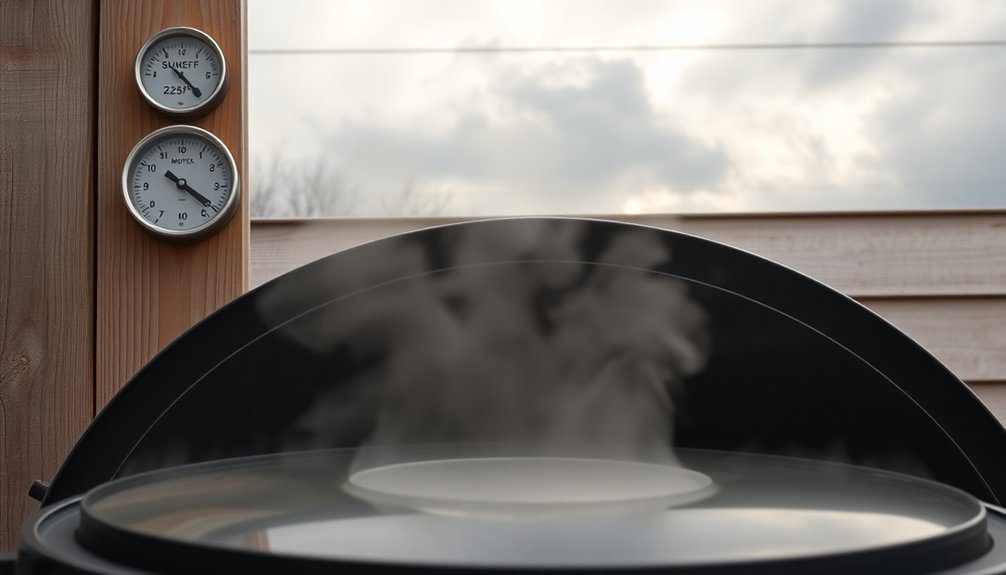
While clouds play an essential role in regulating Earth's temperature, they greatly affect how solar ovens perform. You'll notice that cloudy days are generally cooler than sunny ones because clouds scatter and absorb incoming solar radiation before it reaches the ground. This notably impacts the maximum temperature your solar oven can achieve.
At night, however, clouds act like a natural blanket, trapping heat and keeping temperatures warmer than they'd be under clear skies. They emit infrared radiation toward the ground, functioning as a space heater. High humidity often accompanies clouds and contributes to elevated nighttime temperatures.
You'll experience a smaller temperature range between day and night when it's cloudy, as the cloud cover prevents excessive heat loss after sunset. This temperature regulation affects how you'll need to plan your solar cooking schedule and adjust your expectations for cooking times.
Best Foods for Overcast Days
When cooking with a solar oven on cloudy days, you'll want to focus on foods that perform well at lower temperatures and can handle longer cooking times.
Slow-cooking dishes like stews, soups, and braised meats are excellent choices since they don't require intense heat to develop flavor.
You'll get the best results with moisture-rich foods, such as casseroles and stuffed peppers, which cook effectively even in indirect sunlight. Using a double layer of plastic over your food helps maintain consistent temperatures during cloudy conditions.
Pre-cooked foods are also reliable options – warming up leftovers or heating canned goods requires less energy than cooking from scratch.
To maximize your success, use dark-colored pots and pans that absorb heat more efficiently.
You can also wrap glass dishes in dark towels and guarantee proper insulation of your solar oven.
Remember to rotate your oven periodically to capture the most available sunlight.
Timing Adjustments for Success
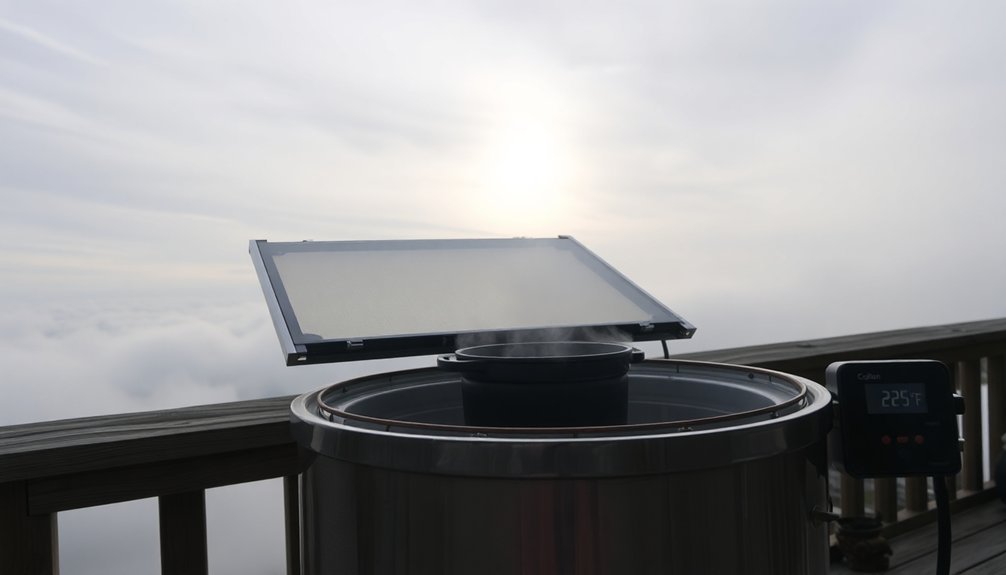
Successful solar cooking on cloudy days depends heavily on proper timing adjustments.
You'll need to double or triple your usual cooking times when clouds are present, as temperatures won't reach the same highs as on sunny days. Monitor your thermometer closely, since temperatures may not exceed 150°F in overcast conditions. The Sun Oven can still achieve 300-375°F temperatures even with some shadows when properly aligned.
Reposition your oven every 30 minutes to track the sun's movement, even when it's hidden behind clouds. Use your sun-track indicators to maintain ideal alignment, and aim the oven where the sun will be strongest between 10 AM and 2 PM.
During winter months or in southern latitudes, you'll face additional timing challenges due to shorter days and lower sun angles. Plan accordingly by starting earlier in the day and being prepared for extended cooking durations.
Equipment Selection and Positioning
Position your Sun Oven in an unobstructed area, using the E-Z Sun-track indicators to align with the sun every 30 minutes. For windy conditions up to 35 MPH, secure the setup with stones or bricks and utilize the wind-resistant alignment leg. Your Cube Stove serves as a reliable backup, accepting various fuels from twigs to solid tablets. Keep reflectors clean and properly angled for maximum efficiency, and create an air gap under pots for better heat retention. The aluminized steel construction ensures your Cube Stove will maintain durability through repeated use in various weather conditions.
| Equipment | Primary Use | Key Feature |
|---|---|---|
| Sun Oven | Sunny to partly cloudy | E-Z Sun-track indicators |
| Cube Stove | Full cloud cover | Multiple fuel options |
| Support Items | All conditions | Stability enhancement |
Weather Monitoring Tips
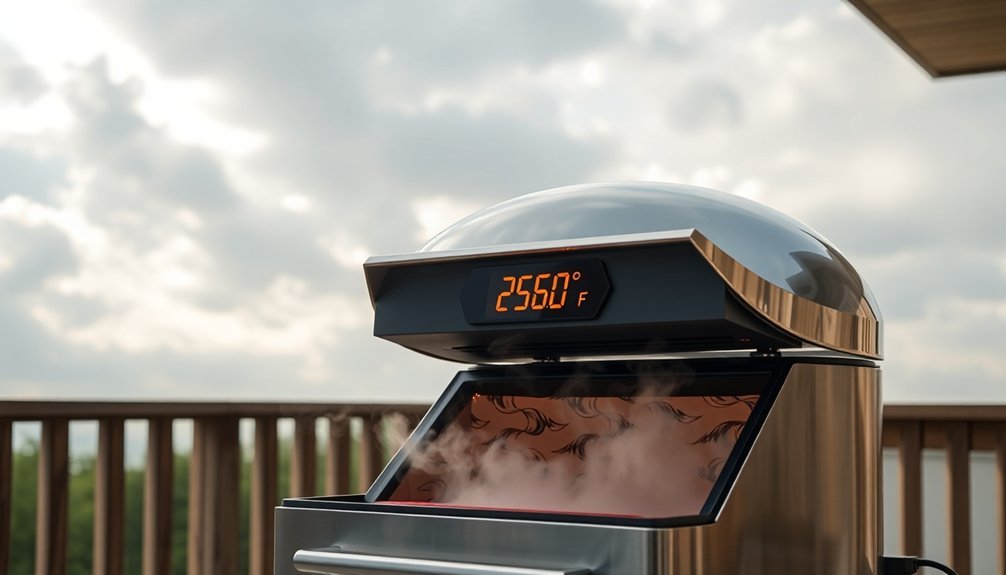
Keeping a close eye on weather conditions directly impacts your solar cooking success.
You'll need to monitor both current conditions and forecasts to achieve ideal results, especially on partly cloudy days when temperatures can fluctuate between 250°F and 300°F.
- Check your UV index forecast – aim for a rating of 7 or higher for the best cooking performance
- Monitor wind speeds and secure your oven if they're approaching 35 MPH
- Look for your shadow – if you can't see it, there's not enough sunlight for effective cooking
- Track cloud patterns to anticipate when you'll need to adjust your oven's position, typically every 30 minutes on partly cloudy days
Don't forget to have a backup cooking plan ready when weather conditions aren't favorable for solar cooking.
Essential Setup Requirements
Properly setting up your Sun Oven requires careful attention to location, alignment, and stability for peak cooking performance.
Choose a spot that'll remain shadow-free throughout your cooking time, avoiding areas near trees or buildings that could cast shadows later.
To align your oven, unsnap the webbing strap and unfold the reflectors, securing them with the thumbscrew mechanism.
Use the E-Z Sun-track indicators to position your oven correctly. You'll need to check and adjust the alignment every 30 minutes to maintain ideal temperature.
For stability, especially on windy days, take advantage of the dual-purpose leveling rack and wire stakes.
Before first use, season your oven by leaving it in direct sunlight for 90-120 minutes with a pot of water and dish detergent.
Maximizing Heat on Limited Sun
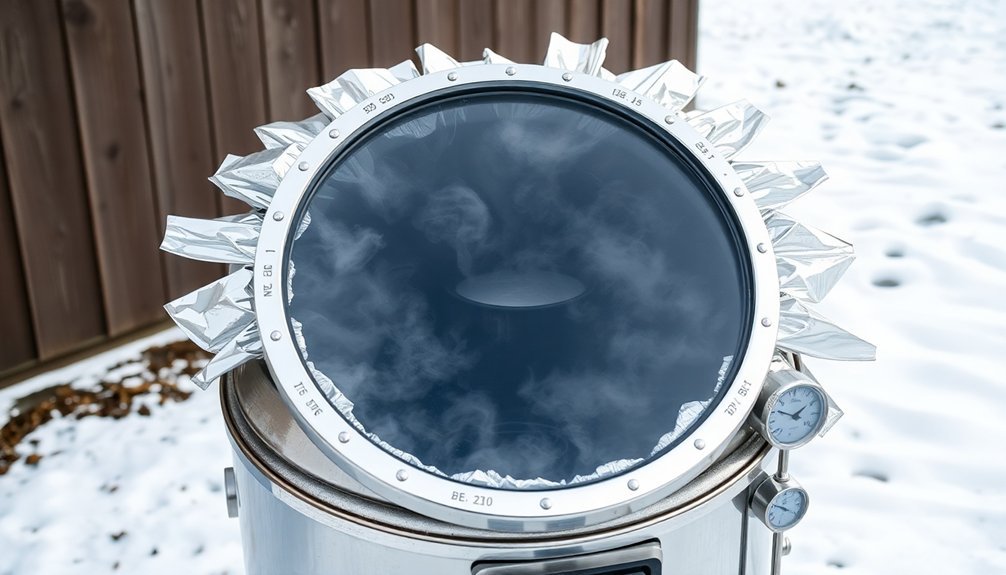
Even on cloudy days, you can maximize your Sun Oven's performance through smart heat enhancement techniques. While intermittent clouds may slow down cooking, they won't stop it completely as long as the sun casts a shadow.
- Position adjustable reflectors at 20-25 degrees on each side to capture maximum sunlight, using aluminum foil or mirrors to boost solar energy collection.
- Layer insulating materials like cotton balls, newspapers, and packing peanuts to maintain consistent temperatures.
- Realign your oven every 30 minutes to track the sun's movement and maintain ideal heat levels.
- Seal all edges with gaskets and use multi-paned glass windows to prevent heat loss.
Remember to preheat your oven and protect it from wind using stakes to guarantee stable positioning throughout the cooking process.
Frequently Asked Questions
Can Sun Ovens Be Used to Dehydrate Foods on Cloudy Days?
You can dehydrate foods in a sun oven on cloudy days, but you'll face longer drying times and need frequent monitoring. It's possible, though less efficient, as long as there's some visible shadow cast.
How Does Altitude Affect Solar Cooking Performance During Cloudy Conditions?
You'll experience reduced solar cooking efficiency at higher altitudes during cloudy days, as clouds combine with thinner atmosphere to decrease available solar radiation. Lower altitudes typically maintain better performance under cloud cover.
Will Cooking With a Sun Oven Attract Wildlife?
Yes, your sun oven can attract wildlife. Cooking smells may draw small animals like chipmunks and lizards, while some creatures are curious about reflective surfaces. You'll want to monitor cooking and store food securely.
Can Multiple Sun Ovens Be Connected to Increase Temperature on Cloudy Days?
You can't effectively connect multiple sun ovens to boost temperatures on cloudy days. It's impractical and would require complex modifications, while offering minimal benefits. Each oven works best as an independent unit.
Does Ambient Humidity Impact Solar Cooking Effectiveness During Cloud Cover?
Yes, humidity will impact your solar cooking during cloudy conditions. You'll experience slower cooking times as moisture in the air absorbs solar energy, but using well-insulated ovens and dark pots helps minimize these effects.
In Summary
You'll find that solar cooking on cloudy days requires patience and strategic planning, but it's still achievable. Focus on foods that cook well at lower temperatures, position your oven effectively, and time your cooking during the brightest periods. With proper equipment setup and weather monitoring, you can successfully use your sun oven even when conditions aren't ideal. Remember to adjust your expectations and cooking times accordingly.

Leave a Reply