
Your monthly batch recipes can thrive under solar power by maximizing nature's free energy source during peak cooking hours. You'll find that solar cookers, which reach temperatures of 180-550°F, are perfect for slow-cooking protein-rich dishes like pulled chicken chili or vegan bean stews. The sun's steady heat between 12:00 PM and 2:00 PM provides ideal conditions for developing deep flavors in soups and curries, while dark-colored pots enhance heat absorption. By aligning your batch cooking with seasonal ingredients and using proper storage containers, you'll create a sustainable meal prep system that's both eco-friendly and efficient. The perfect fusion of solar cooking and batch preparation awaits your discovery.
Solar Batch Cooking Fundamentals

Solar batch cooking harnesses the sun's energy through specialized cookers that transform sunlight into usable heat for food preparation.
You'll find various cooker designs that can match your batch cooking needs, from box cookers that trap heat to parabolic models that concentrate sunlight for higher temperatures.
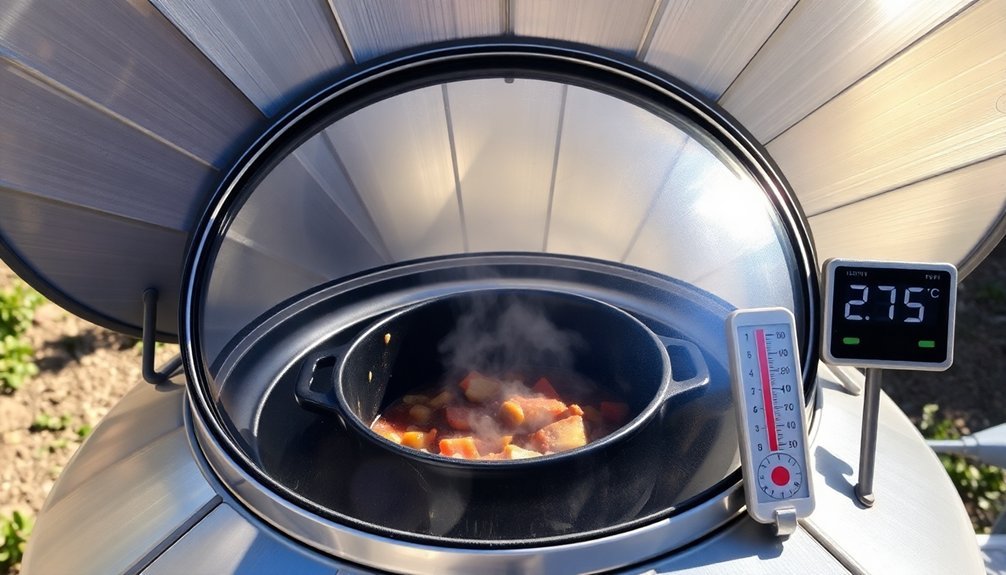
To maximize your cooking efficiency, you'll want to use dark-colored pots and pans that absorb sunlight effectively. For optimal results, focus your cooking during 12:00 pm to 2:00 pm when sunlight is strongest.
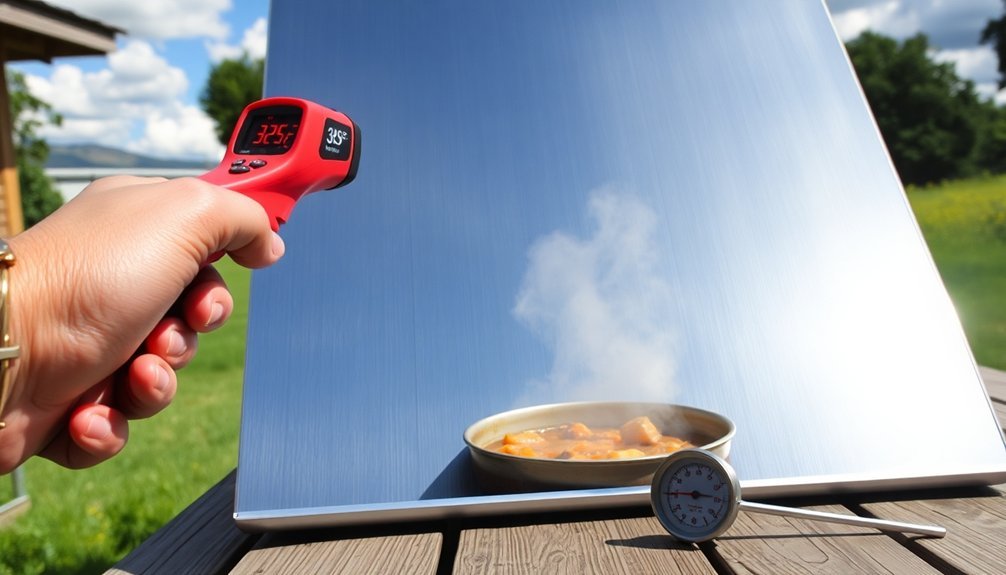
Your cooker can reach temperatures between 180-550°F, depending on the design you choose. For monthly batch cooking, plan around the sun's peak hours and expect cooking times of 1-8 hours for every 4 pounds of food.
You can enhance your results by using thermal mass materials like bricks to store heat, allowing you to continue cooking even as sunlight diminishes.
Best Meals for Monthly Prep
When planning your monthly meal prep, focusing on freezer-friendly dishes that maintain their quality will give you the best return on your time investment. You'll find success with protein-rich options like pulled chicken chili and slow-cooked lamb curry, while vegan alternatives such as five-bean chili and butternut squash curry offer excellent freezability. Incorporating dishes that are easy to prepare like the pulled chicken and black bean chili ensures your meal prep stays manageable and efficient.
| Meal Type | Best Freezer Option | Prep Method |
|---|---|---|
| Protein | Pulled Chicken Chili | Slow Cooker |
| Vegetarian | Five-Bean Chili | Stovetop |
| Pasta | Big-Batch Bolognese | One-Pot |
For maximum efficiency, consider soups and stews like beef bourguignon or Italian vegetable soup, which often taste better after freezing as flavors deepen. Pasta dishes, particularly meat-based sauces like bolognese and ragu, maintain their integrity well and can be portioned easily for future meals.
Equipment and Storage Solutions

Three essential components form the foundation of successful monthly meal prep: reliable cooking equipment, proper storage containers, and smart organization solutions.
You'll need an Instant Pot and food processor to streamline cooking tasks, along with sharp knives and sturdy roasting pans for efficient preparation.
For storage, invest in high-quality freezer-safe containers. Glass containers with tight-fitting lids, like Pyrex, offer durability and clear visibility of contents.
Silicone bags provide flexible storage options, while mason jars work perfectly for pre-cut produce. Don't forget to label everything clearly – you'll thank yourself later. Using dry-erase markers on zipper bags allows for reusable labeling that saves money over time.
Consider getting a deep freezer to maximize your storage capacity. Organize your containers in easily accessible locations, and reuse freezer bags and containers when possible to minimize waste and maintain an efficient system.
Energy Efficient Cooking Schedule
Mastering an energy-efficient cooking schedule starts with smart timing and strategic appliance use.
You'll maximize your kitchen's energy potential by planning multiple dishes that share similar cooking temperatures and can go in the oven simultaneously. When batch cooking, fill your oven to capacity and use ceramic or glass baking dishes to retain heat better.
Start with dishes requiring the highest temperatures, then work your way down as the day progresses. You'll save energy by cooking items back-to-back, utilizing residual heat.
Use your convection setting when possible, as it reduces cooking time by up to 20%. For smaller portions, opt for energy-efficient alternatives like air fryers or pressure cookers. A microwave uses 50% less energy than conventional ovens for reheating meals.
Remember to keep oven door openings minimal and use pot lids on the stovetop to maintain consistent temperatures.
Seasonal Recipe Planning Tips

Successful seasonal recipe planning builds on your energy-smart cooking habits by aligning with nature's rhythms. You'll maximize efficiency by focusing on what's abundant at farmers' markets while planning 6-8 weeks ahead for major holidays.
| Season | Key Ingredients | Best For Batching | Storage Tips |
|---|---|---|---|
| Spring | Asparagus, Peas | Fresh Herb Sauces | Cool, Dark Place |
| Summer | Tomatoes, Berries | Preserves, Salsas | Refrigerate |
| Fall | Squash, Apples | Soups, Baked Goods | Root Cellar |
| Winter | Root Veg, Citrus | Stews, Marmalades | Cool Pantry |
Start by choosing 5-6 seasonal categories you'll rotate through your meal plan. You can streamline your cooking by batching recipes that use the same ingredients, like turning summer tomatoes into sauce, salsa, and soup all at once.
Frequently Asked Questions
How Do Solar Cookers Maintain Food Safety During Extended Batch Cooking Sessions?
You'll maintain food safety by keeping temperatures above 140°F, monitoring cooking times closely, using a thermometer to check internal temperatures, preventing cross-contamination, and adjusting the cooker's position to follow direct sunlight.
Can Batch-Cooked Meals Be Reheated Using Solar Power on Cloudy Days?
You'll find it challenging to reheat batch-cooked meals using solar power on cloudy days. It's best to use alternative heating methods or plan ahead by reheating meals during sunny periods when sunlight's available.
What Backup Cooking Methods Should Be Ready for Unexpected Weather Changes?
You'll need multiple backup options: a propane grill for quick meals, charcoal grill for longer cooking, and an indoor-safe portable stove. Keep fuel stored safely and practice using each method before emergencies arise.
Does Solar Batch Cooking Affect the Nutritional Content Differently Than Conventional Methods?
You'll get better nutrient retention with solar cooking's low, slow temperatures. It preserves B vitamins and antioxidants more effectively than conventional methods, though you'll see slightly lower vitamin C retention compared to quick-cooking techniques.
How Do Different Altitudes Impact Solar Cooking Times for Large Batches?
You'll find your large batches cook faster at higher altitudes due to increased solar intensity. The thinner atmosphere means more direct sunlight reaches your cooker, reducing cooking times despite colder temperatures.
In Summary
You'll find solar batch cooking transforms your monthly meal prep while shrinking your carbon footprint and energy bills. By planning your cooking schedule around peak sunlight hours and choosing season-appropriate recipes, you're maximizing nature's free energy source. Make sure you've got proper storage containers and equipment ready, and you'll soon master the art of efficient, sustainable batch cooking powered by the sun.

Leave a Reply