
Calculate your multi-day solar cooking portions by starting with a weekly protein target (0.8g per kg body weight) and planning 3-ounce servings per meal. You'll need to account for longer cooking times – typically 2-3 times traditional methods, with peak sun hours between 11 AM and 3 PM. Match your cooker size to portion amounts (a 1000-square-inch cooker handles double what a 500-square-inch unit can). For vegetables and grains, double or triple 4-person recipes for leftovers, and store prepped ingredients separately in airtight containers. Reduce summer portions by 10-15% compared to winter meals. Understanding these basics will reveal the full potential of efficient solar meal planning.
Essential Solar Cooking Portion Guidelines

When planning solar-cooked meals, you'll need to adjust your portion calculations to account for the unique cooking environment.
Start by scheduling your cooking between 11 AM and 3 PM to maximize sun exposure, and consider that foods will take two to three times longer than conventional methods.
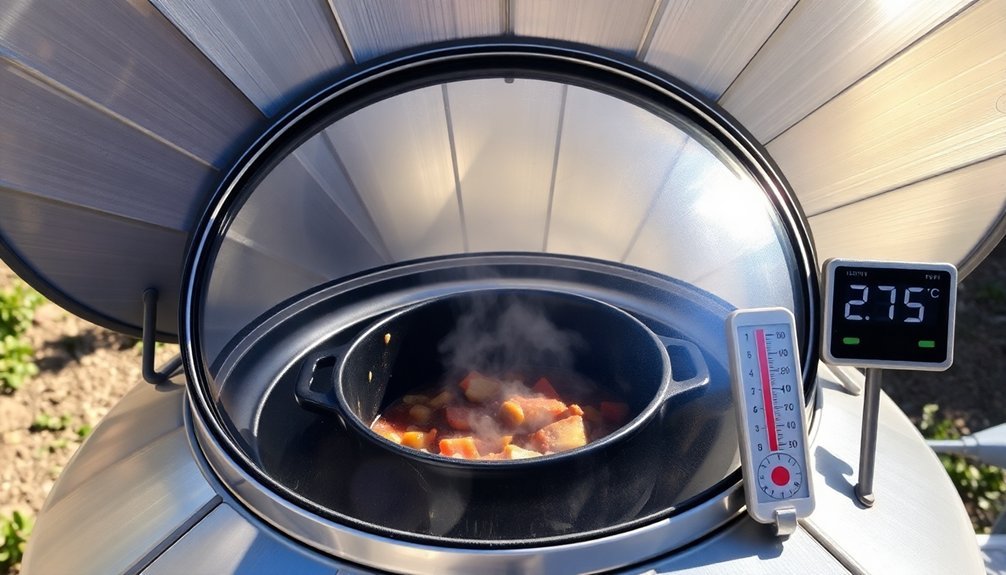
For ideal portions, plan your ingredients based on cooking duration categories: quick items under an hour, vegetables and cut meats for 2-2.5 hours, whole chickens for 3-3.5 hours, and large cuts requiring 4-7 hours. Box cookers work well for these longer cooking times since they can maintain temperatures up to 400°F.
You'll want to reduce liquid quantities by half in your recipes, as solar cooking retains more moisture. Keep portions manageable for your cookware size, ensuring food maintains a safe temperature above 140°F throughout the cooking process.
Use natural food states when possible, like leaving potatoes in their skins.
Planning Weekly Protein Requirements
To maintain healthy protein intake, you'll need about 0.8 grams per kilogram of body weight daily, which you can track by portioning meats into 4-6 ounce servings during batch cooking sessions.
When planning your weekly menu, aim to include at least two 3-ounce servings of fish to meet omega-3 needs while varying your protein sources. During pregnancy and breastfeeding, increase portions to meet the 71 grams daily requirement.
You can simplify portion control by pre-measuring your proteins into individual containers, combining both animal and plant-based options to meet your target protein requirements across seven days.
Protein Per Person Daily
Planning your weekly protein needs starts with understanding the basic requirement of 0.8 grams per kilogram of body weight for sedentary adults.
To calculate your daily needs, divide your weight in pounds by 2.2046 to get kilograms, then multiply by 0.8. For example, if you weigh 150 pounds, you'll need about 54 grams daily.
You'll need to adjust this amount based on your activity level and age. If you're over 50 or regularly exercise, increase your intake to 1.2-2.0 grams per kilogram.
Vegetarians should add 10% more to compensate for plant protein digestibility. Spread your protein intake across meals, aiming for 30-35 grams per meal. Ensure you get a variety of complete amino acids by combining different plant sources like legumes, nuts, and whole grains.
Consider both traditional sources like meat and eggs, and alternatives like Solein or plant-based options to meet your requirements.
Batch Cooking Meat Portions
Once you've calculated your daily protein requirements, batch cooking meat portions can streamline your meal preparation for the week ahead.
Choose versatile meats like ground beef, chicken thighs, or stew meat that work well in multiple dishes. Cook large batches with simple seasonings to maintain flexibility in creating various meals throughout the week. This approach helps achieve time efficiency gains by minimizing daily cooking tasks.
- Cook your selected meat in bulk using a large skillet or pot, seasoning lightly with salt and pepper.
- Divide the cooled meat into meal-sized portions based on your calculated protein needs.
- Store portions in labeled freezer bags or containers for up to 3 months.
You'll maximize efficiency by incorporating your batch-cooked meat into different recipes like curries, rice bowls, and casseroles.
Plan complementary ingredients in advance and adjust portions according to your specific dietary requirements and meal preferences.
Weekly Fish Serving Goals
Meeting your weekly fish serving goals requires careful attention to both quantity and variety. You'll want to include at least two 140g portions weekly, with one being oily fish. To maximize health benefits, prioritize steaming, baking, or grilling over frying.
| Fish Type | Weekly Goal |
|---|---|
| Oily Fish | 1-2 portions |
| Lean Fish | 1-2 portions |
| Local Catch | Max 6 oz |
| Portion Size | 140g (4.9 oz) |
| Protein Content | 22-28g per portion |
If you're planning meals for multiple days, alternate between oily options like salmon or mackerel and leaner choices such as haddock or flounder. Remember that pregnant women and those planning pregnancy should limit oily fish to two portions weekly due to pollutant concerns. When you're meal prepping, consider incorporating fish-free alternatives like flaxseed or walnuts for additional omega-3s.
Calculating Vegetable and Fruit Batches

To make the most of your solar cooking setup, you'll want to plan your vegetable batches around seasonal availability, focusing on summer vegetables like artichokes and corn when they're at their peak.
When calculating your portions, consider that a recipe for 4 people can be doubled or tripled to create leftovers for multiple days, particularly with items like potatoes and squash that have longer cooking times.
You'll need to distribute your daily portions strategically, accounting for both fresh consumption and preservation methods like solar drying for fruits to guarantee nothing goes to waste.
Seasonal Produce Planning
Planning your produce portions throughout the year requires understanding seasonal availability and ideal batch sizes. You'll need to adjust your calculations based on which fruits and vegetables are naturally abundant each season.
Winter calls for heartier produce like root vegetables and squash, while summer brings water-rich options like cucumbers and berries.
- Winter and fall portions should account for denser, longer-lasting vegetables that you can store in larger quantities.
- Spring and summer batches work best with smaller, frequent purchases since produce tends to be more delicate and perishable.
- Match your meal planning to seasonal availability – for example, plan stir-fries in spring when sugar snap peas are fresh, and hearty stews in fall when root vegetables are plentiful.
Daily Portion Distribution
Successful daily portion distribution starts with accurate batch calculations for your fruits and vegetables.
You'll need to multiply your per-person portions (½ pound for vegetables, ½ cup for fruits) by the number of people and days you're planning to serve.
Cut your vegetables uniformly to guarantee even cooking in your solar cooker – aim for ¾-inch pieces or thin slices depending on the recipe.
Store your prepped vegetables and fruits separately in airtight containers to maintain freshness. When planning your portions, mix colorful vegetables for varied nutrition, and select fruits that complement your vegetable dishes.
Remember to adjust your cooking schedule around peak sunlight hours.
You can precook larger batches when sunshine is abundant and use thermal retention containers to keep portions warm for later meals.
Grains and Legumes Batch Sizes
When preparing grains and legumes for multiple days, understanding batch sizes becomes essential for efficient meal planning.
You'll find that most grains triple in volume when cooked, while legumes typically double. For example, one cup of dry quinoa yields three cups cooked, perfect for three to four meals, while one cup of dry kidney beans yields two cups cooked.
- Calculate your weekly needs by multiplying your daily portion by the number of days, then divide by the cooked yield to determine how much dry grain or legume to prepare.
- Consider cooking larger batches of slow-cooking items like garbanzo beans (90-120 minutes) and storing portions for later use.
- Mix different grains like farro and quinoa in your meal prep to vary nutrients and cooking times while maintaining portion control.
Solar Cooker Volume Management

Managing volume in solar cooking differs greatly from conventional batch preparation of grains and legumes. You'll need to match your cooker's size to your desired portion amounts, as larger quantities don't necessarily cook faster in solar cookers.
For a multi-day meal plan, consider that a 1000-square-inch cooker handles twice the volume of a 500-square-inch unit at the same temperature.
When preparing larger batches, you'll want to adjust your reflective flaps throughout the day and guarantee proper insulation to maintain consistent cooking temperatures.
Plan for extended cooking times of 5-8 hours when working with full capacity loads. Place your cooker on a stable, level surface and use weights if needed.
For best results, you'll need continuous sunlight and should factor in seasonal variations when calculating your cooking schedule.
Multi-Day Meal Portion Strategy
Planning multi-day meals requires a systematic approach to portion sizing.
You'll want to start by using a kitchen scale to measure exact portions, ensuring consistency across multiple servings. When cooking with solar power, factor in the longer cooking times and adjust your batch sizes accordingly.
- Divide your total meal volume by the number of desired servings, weighing each portion to maintain balance.
- Store measured portions in containers suitable for both refrigeration and reheating.
- Label each container with the date and serving size to track your meal rotation.
Consider your weekly schedule when planning portions, allowing flexibility for dining out or unexpected changes.
If you're batch cooking, prepare enough for 3-4 days to maintain food freshness while maximizing your solar cooking efficiency.
Remember to account for seasonal variations in cooking times when planning your portions.
Scaling Recipes for Solar Cooking

Successfully scaling recipes for solar cooking requires understanding both traditional portion sizes and solar-specific adjustments. You'll need to account for longer cooking times and adjust your quantities based on the sun's intensity and your cooker's capacity.
| Food Type | Regular Time | Solar Time | Best Container |
|---|---|---|---|
| Meat Roasts | 2-3 hours | 4-5 hours | Glass dish |
| Stews/Soups | 1-2 hours | 3-4 hours | Dark pot |
| Rice/Grains | 30 minutes | 1.5 hours | Black pot |
| Vegetables | 45 minutes | 2 hours | Zip bags |
When scaling your recipes, you'll want to increase cooking times by about 50% and make certain your portions fit comfortably in your solar cooker. Use darker containers for denser foods and consider pre-cooking ingredients that need high heat. Don't overfill containers, as food expands during cooking.
Seasonal Portion Adjustments
You'll need to adjust your meal portions based on seasonal energy requirements, with lighter portions during hot summer months when appetites naturally decrease.
During winter, plan for slightly larger portions of hearty, warming foods to maintain energy levels and body warmth.
Consider reducing summer portions by 10-15% compared to winter servings, especially for dishes containing water-rich produce like tomatoes and cucumbers that help with hydration.
Summer Heat Maximum Portions
Adapting portion sizes during summer's peak temperatures requires three key adjustments to maintain comfortable, nutritious meals.
When planning your sun-cooked dishes, you'll need to balance nutrient density with lighter portions that won't overwhelm you in the heat.
- Reduce protein servings to 4-5 ounces per meal, focusing on lighter options like trout or tofu that won't feel heavy during hot weather.
- Increase your intake of water-rich produce like watermelon, cucumbers, and tomatoes to maintain hydration while naturally reducing portion sizes.
- Plan for smaller, more frequent meals using seasonal ingredients, aiming for 70% fruits and vegetables to 30% proteins and grains.
You can maximize nutrients while keeping portions sensible by incorporating fresh herbs and citrus to enhance flavors without adding bulk.
Winter Weather Portion Planning
As winter temperatures plummet, your daily caloric needs increase by 10-15% to maintain body warmth and energy levels.
You'll need to adjust your meal planning accordingly by including more high-calorie, nutrient-dense foods in your winter portions.
Stock up on non-perishable items that provide sustained energy, like nuts, dried fruits, and canned goods.
For a family of four, plan on storing at least four gallons of water per day, plus extra for cooking and hygiene.
If you're using alternative cooking methods like solar ovens, portion your meals into smaller containers that can be heated quickly while retaining warmth.
Don't forget to account for special dietary requirements and medical needs when calculating portions.
Keep medications readily accessible and maintain a one-month supply of essential prescriptions during winter weather events.
Optimal Batch Cooking Schedule

The success of batch cooking hinges on establishing a well-structured weekly schedule that maximizes both efficiency and food freshness. You'll want to dedicate a consistent time slot, typically 1-3 hours, when you can prep and cook without interruptions. Sunday afternoons often work best, as they're close to the start of your workweek.
- Choose recipes that share common ingredients to streamline your prep work.
- Organize your cooking sequence by starting with items that take longest to cook.
- Plan your grocery shopping day close to your batch cooking session.
Create a cooking game plan that includes cleaning out your fridge, prepping ingredients, and executing multiple recipes simultaneously.
If you're using a slow cooker, factor in extended cooking times and consider starting those dishes first. This systematic approach guarantees you'll have fresh, ready-to-eat meals throughout the week.
Food Storage Between Solar Sessions
Successful food storage between solar cooking sessions requires two key thermal energy storage materials: sunflower oil and erythritol.
You'll find sunflower oil performs better during active solar cooking, while erythritol excels at maintaining stored heat for later use. Both materials are food-safe and cost-effective options for your solar cooking setup.
When you're storing cooked food between sessions, you'll need to follow strict safety guidelines.
While you can safely preserve acidic foods like tomatoes and fruits, you shouldn't attempt to store non-acidic foods like meats and most vegetables without proper high-pressure sterilization.
Your solar cooker's storage system can maintain cooking temperatures even after sunset, but you'll need to monitor efficiency levels carefully.
Consider using a separate thermal energy storage unit to maximize heat retention between cooking periods.
Reheating Previously Sun-Cooked Portions

When reheating sun-cooked portions, you'll need a covered black pot or high-temperature baking bag to maximize heat absorption in your solar cooker.
Add a small amount of water to prevent your food from drying out, and position your pot in the center of the cooker's focal point. You'll need to reposition your cooker every 10-20 minutes to follow the sun's path for ideal heating.
- Most foods will reheat at temperatures between 200-250°F, though parabolic cookers can reach 500°F for faster results.
- Soups require stirring every 10 minutes for even heating, while solid foods need rotation every 10-15 minutes.
- Rice typically takes about 5 hours to reheat thoroughly, so plan accordingly.
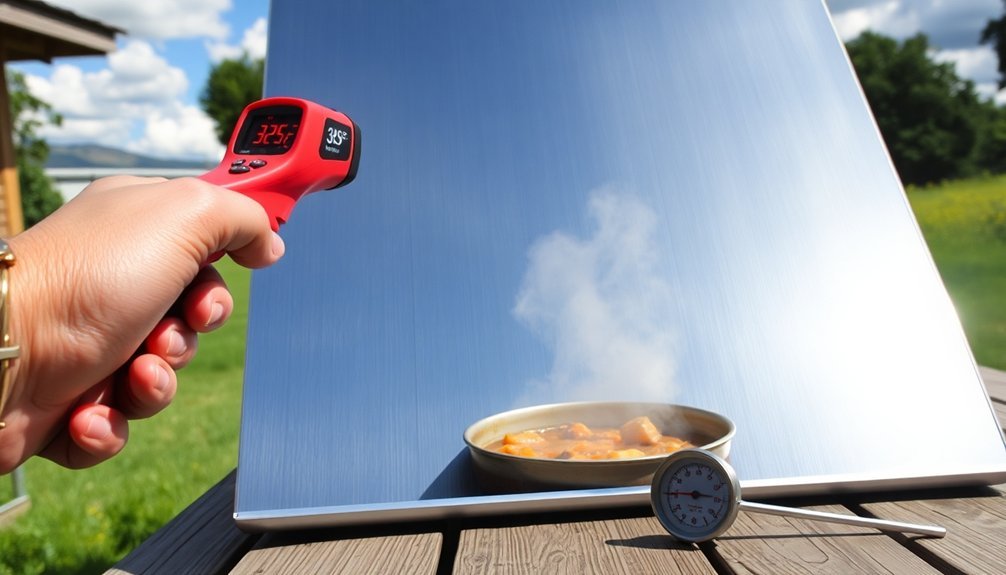
Monitor your food's temperature with a thermometer and always use pot holders when handling containers to prevent burns.
Frequently Asked Questions
How Do Altitude Changes Affect Portion Sizes When Solar Cooking?
You'll need smaller portions at higher altitudes since food cooks faster and more efficiently. The intense solar radiation means you can cook more batches throughout the day with less moisture loss.
Can Marinades Impact Solar Cooking Times for Protein Portions?
Yes, marinades will impact your solar cooking times. You'll need to add 10-30 minutes extra cooking time since the increased moisture content slows down heat absorption. It's best to monitor temperatures carefully when using marinades.
Which Foods Lose Nutritional Value Fastest During Multi-Day Solar Cooking Storage?
You'll notice leafy greens and vegetables high in vitamin C lose nutrients fastest during storage. Water-soluble vitamins degrade quickly, followed by dairy products and eggs, especially when they're exposed to varying temperatures.
Does Cloud Coverage Affect Portion Hydration During Solar Cooking?
Yes, cloud cover directly affects your food's hydration. You'll notice slower cooking times and uneven moisture distribution when clouds block sunlight, so you'll need to adjust portions and cooking duration for proper hydration levels.
Are Metal or Glass Containers Better for Portioning Solar-Cooked Meals?
You'll find metal containers better for initial portioning since they heat quickly and evenly. However, if you're storing portions for later, switch to glass containers as they'll retain heat longer and won't react with food.
In Summary
You'll find batch cooking with your solar cooker becomes second nature once you've mastered portion calculations. Start by dividing weekly meal plans into cookable batches, factoring in your cooker's capacity and typical sun hours. Store cooked portions properly, and you'll have ready-to-reheat meals even on cloudy days. Keep adjusting quantities based on your family's needs and seasonal solar patterns for consistent success.

Leave a Reply