
You can harness sunshine to batch cook several protein-rich foods using a solar oven. Navy beans, split red lentils, and chickpeas work exceptionally well – just pre-soak them overnight and maintain proper water coverage while cooking. Tofu also yields great results when pressed and marinated before solar cooking. The gentle heat (100-180°C) produced by solar ovens helps preserve nutrients while creating tender, flavorful results in about 3-4 hours. Best of all, this eco-friendly cooking method uses considerably less water and energy than traditional methods. There's a whole world of solar cooking techniques waiting to transform your protein preparation routine.
Plant-Based Proteins for Solar Cooking
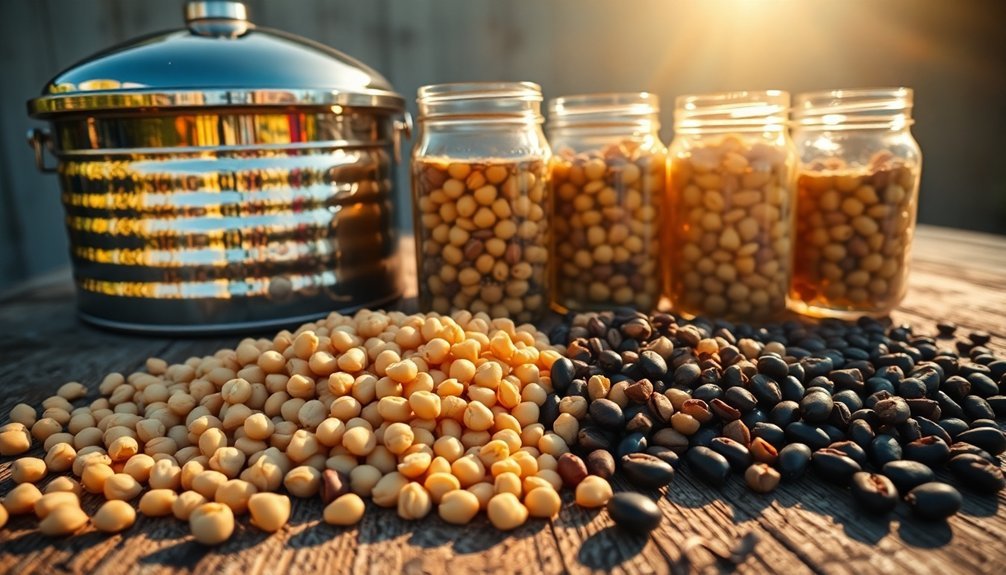
While many think of plant-based proteins as traditional agricultural products, innovative alternatives like Solein are revolutionizing the protein landscape.
You'll find this groundbreaking protein source isn't derived from plants at all – it's created using CO2 and electricity through microbial fermentation.
When you're cooking with solar power, you can easily incorporate Solein into your recipes. It packs an impressive 65-70% protein content and won't alter your food's taste, offering mild umami notes instead.
You'll appreciate its versatility in everything from breads to beverages, and its environmental impact is remarkable: it uses 100 times less water and 20 times less land than plant proteins.
Set to begin commercial production in 2024, Factory 01 in Finland will be the first facility to manufacture this innovative protein source.
While it requires significant electricity to produce (62.5 kWh per kg), Solein's sustainability metrics make it a promising protein choice for your solar-cooked meals.
Preparing Beans in Solar Ovens
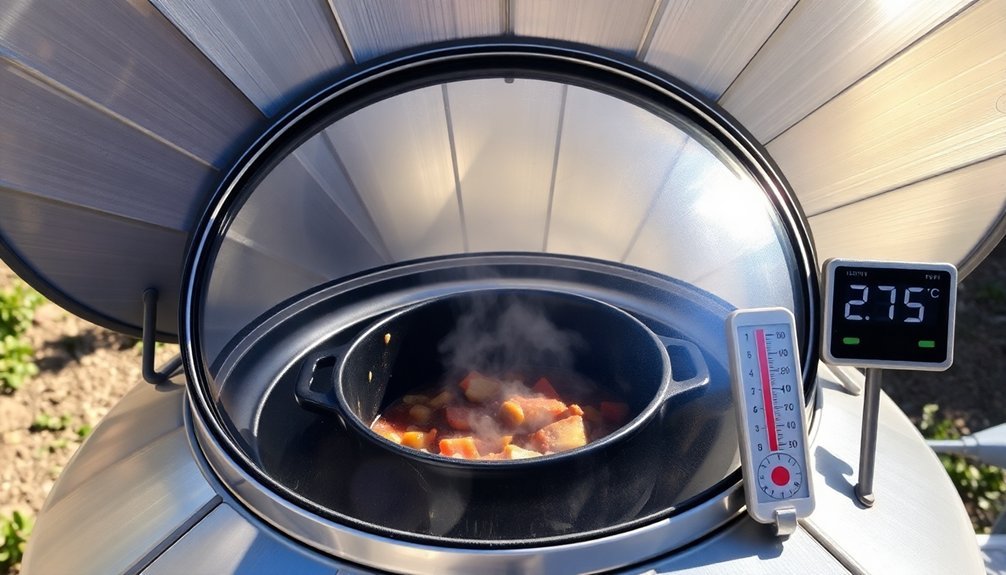
When preparing beans in a solar oven, you'll need to start with proper soaking and setup to guarantee ideal results. Pre-soak your beans overnight, then rinse them thoroughly before placing them in a dark-colored pot with enough water to cover them by 1-2 inches. Cooking times may vary depending on your solar oven's design.
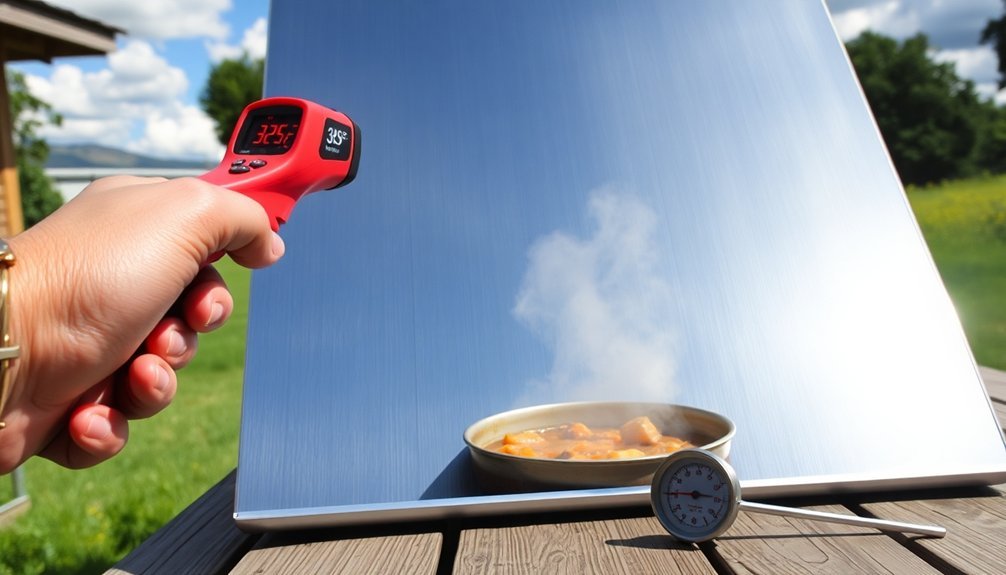
Position your solar oven to track the sun's movement, using reflective surfaces to maximize heat concentration.
- You'll feel confident knowing your beans won't burn, as solar ovens provide gentle, consistent heat between 100°C to 180°C.
- You'll love how the slow cooking process creates perfectly tender beans while preserving their natural flavors.
- You'll appreciate the hands-off cooking approach, requiring minimal attention over 3-4 hours.
- You'll be amazed at how this sustainable cooking method transforms tough beans into creamy, delicious meals.
Solar Cooking Legume Tips
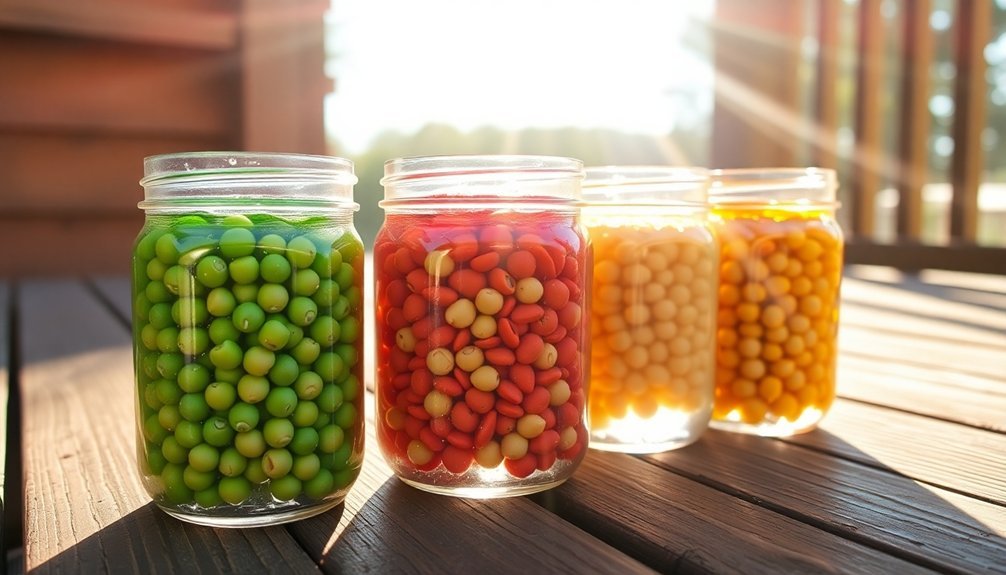
Successful solar cooking of legumes depends on selecting the right varieties and following proper preparation techniques. You'll get the best results with navy beans, split red lentils, and chickpeas, which offer excellent nutritional value and cook reliably in solar ovens. The rich antioxidant content in navy beans makes them an especially good choice for anti-inflammatory benefits.
| Legume Type | Key Benefits | Prep Method | Best Time |
|---|---|---|---|
| Navy Beans | High protein & folate | Overnight soak | 10am-2pm |
| Split Red Lentils | Quick-cooking | No soaking needed | 10am-2pm |
| Chickpeas | Nutty flavor | 8-hour soak | 10am-2pm |
| All Legumes | Nutrient retention | Cover with 2" water | Peak sun |
Position your dark pot facing south and check every 30 minutes. You'll need less cooking time at higher altitudes, and you'll get ideal results when your shadow is shorter than your height. Remember to maintain water coverage throughout cooking for tender, nutritious results.
Batch Cooking Tofu Dishes
Moving from legumes to plant-based proteins, tofu offers excellent potential for solar batch cooking.
You'll want to start by pressing your tofu for 20-30 minutes to remove excess moisture, which creates a better texture for absorbing marinades. Create flavorful combinations using soy sauce, olive oil, and your favorite seasonings like garlic powder and paprika. Using firm or extra-firm tofu varieties will give you the best results for this cooking method.
- Feel the satisfaction of watching your perfectly pressed tofu cubes turn golden brown in the solar oven
- Experience the joy of creating sustainable, protein-rich meals using only sunshine
- Delight in the crispy exterior and tender interior that proper preparation yields
- Savor the accomplishment of mastering different marinades for varied flavors
For best results, arrange your marinated tofu pieces with space between them and cook until they reach your desired crispiness level.
Preserving Solar Cooked Proteins
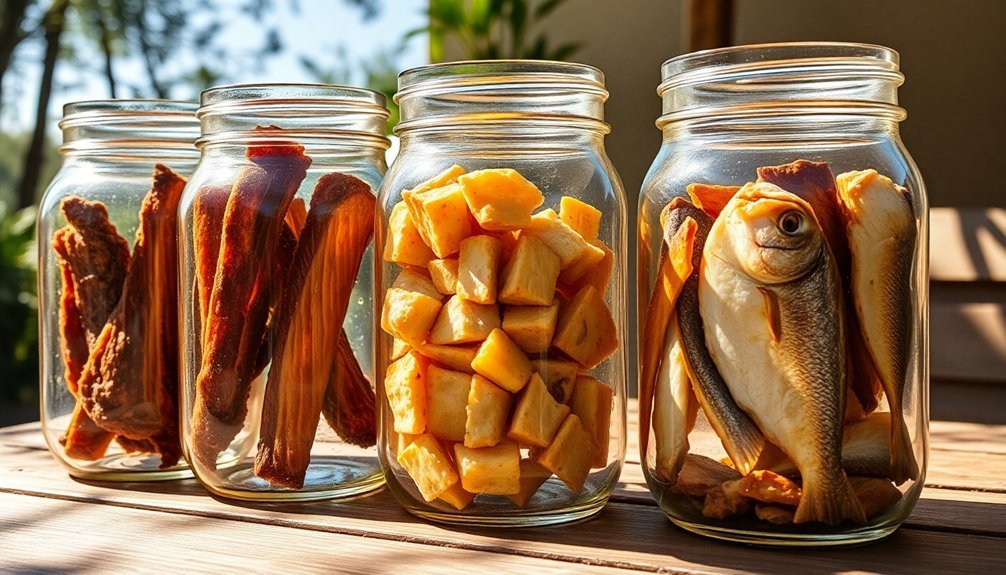
After investing time in solar cooking your proteins, proper preservation techniques guarantee your efforts don't go to waste. You'll find multiple effective storage methods to maintain the quality of your solar-cooked proteins.
Store your proteins in cool, dark places between 50-60°F with low humidity, using airtight containers. For extended shelf life, you can't beat vacuum sealing, which eliminates air and moisture while protecting against oxidation.
If you're planning for long-term storage, freezing at 0°F or below can preserve your proteins for up to two years. Don't forget to portion and label everything clearly.
For shelf-stable options, consider dehydration, especially for meats and beans. Just make certain you're monitoring moisture levels carefully and storing your dehydrated proteins in airtight containers.
Frequently Asked Questions
Can Solar-Cooked Proteins Be Safely Stored at Room Temperature Overnight?
No, you shouldn't store solar-cooked proteins at room temperature overnight. It's unsafe as temperatures between 50°F and 125°F promote rapid bacterial growth. You'll need to refrigerate them promptly after rapid cooling.
How Does Altitude Affect Cooking Times for Proteins in Solar Ovens?
You'll need considerably more time to cook proteins at higher altitudes in your solar oven. Just like traditional cooking, altitude slows cooking time and water absorption, so plan for longer cook times accordingly.
What's the Maximum Protein Batch Size Recommended for Standard Solar Cookers?
You'll want to limit your protein batches to 2-3 pounds in box-type cookers and 1-2 pounds in parabolic cookers. For best results, cut larger proteins into smaller, evenly-sized portions.
Do Different Colored Containers Affect Protein Cooking Efficiency in Solar Ovens?
Yes, container color greatly impacts your protein cooking efficiency. You'll get better results using dark-colored containers, as they absorb more solar energy, while light-colored ones reflect heat and slow down the cooking process.
Can Marinades Help Reduce Solar Cooking Times for Tough Protein Sources?
While marinades won't directly reduce solar cooking times, they'll help tenderize tough proteins and improve texture. You'll get better results by using salt-based or yogurt marinades combined with dark cookware for efficient heating.
In Summary
When you're ready to harness the sun's energy, you'll find that beans, lentils, chickpeas, and tofu are ideal for solar cooking. Store your batched proteins in airtight containers and refrigerate for up to 5 days. You can freeze portions for up to 3 months. Remember to rehydrate dried legumes before solar cooking and maintain consistent temperatures for food safety.

Leave a Reply