
For successful solar cooking, you'll want dark, non-glossy metal pots with flat black finishes that absorb over 90% of sunlight. Cast iron and dark stainless steel are top choices, while aluminum pots need black paint for better absorption. Choose pots between 8-13 inches long and 5-6 inches deep, and always use tight-fitting lids to maintain consistent temperatures. Glass lids let you monitor food without releasing precious heat, while metal lids offer durability. If your pots aren't naturally dark, wrap them in black cloth or apply heat-resistant black paint. Understanding the right materials and modifications can transform your solar cooking experience.
Understanding Solar Cooking Pot Materials
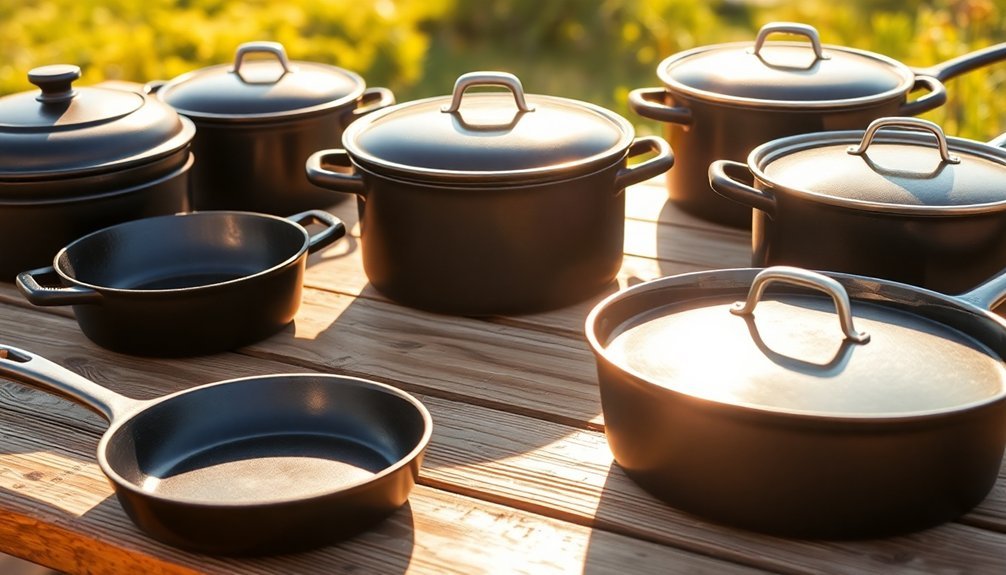
When choosing pots and pans for solar cooking, the material you select plays an essential role in your cooking success.
Cast iron stands out as a top performer, offering superior heat retention and durability, though it's heavier and requires regular seasoning.
Stainless steel provides a practical alternative with its corrosion resistance and easy maintenance, despite not retaining heat as effectively. The Haines stainless steel cookware with its glass lid offers an excellent option for solar cooking enthusiasts who want durability combined with easy monitoring of their dishes.
If you're looking for a budget-friendly option, aluminum's lightweight nature makes it appealing, but you'll need to paint it black to improve heat absorption.
Don't overlook Pyrex and glassware – they're excellent heat retainers, second only to cast iron.
While they're more fragile, their even heat distribution makes them worthy contenders.
Just remember to cover transparent cookware with dark cloth or paint to maximize solar energy absorption.
Dark Metal Pot Benefits
When you're cooking with solar power, dark metal pots offer unmatched advantages in heat transfer speed and efficiency.
Your dark-colored cookware instantly begins absorbing sunlight, converting it into usable heat energy that transfers directly to your food.
These pots' superior absorption properties mean you'll get the maximum benefit from available sunlight, leading to faster cooking times and better results. Thin granite ware pots are particularly effective since they heat up quickly in solar ovens.
Rapid Heat Transfer Properties
Dark metal pots excel at transferring heat from sunlight to your food, thanks to their superior thermal properties. You'll want to evaluate how quickly different materials conduct and retain heat for ideal solar cooking results.
| Material Property | Performance Comparison |
|---|---|
| Heat Conductivity | Copper > Aluminum > Cast Iron > Stainless Steel |
| Heat Retention | Cast Iron > Stainless Steel > Aluminum > Copper |
| Emissivity | Cast Iron (0.95) > Stainless Steel (0.07) |
| Heat Response | Copper/Aluminum (Fast) > Cast Iron/Steel (Slow) |
For solar cooking, cast iron's high emissivity of 0.95 makes it particularly effective at absorbing solar radiation. While it's slower to heat up than copper or aluminum, it maintains consistent temperatures once hot. This stability helps prevent temperature fluctuations when clouds temporarily block the sun. The rough surface texture of cast iron increases its heat absorption efficiency by providing a larger effective contact area for solar energy interaction.
Maximum Sun Energy Absorption
To maximize solar cooking efficiency, you'll want pots with ideal sun energy absorption capabilities. Choose dark-colored, non-glossy metal cookware, particularly those with a flat black finish that can absorb over 90% of incident sunlight.
Copper and aluminum pots work exceptionally well due to their superior thermal conductivity. These metals' high melting points make them durable and safe for solar cooking applications.
You can enhance your existing cookware by applying black enamel paint, which creates an excellent surface for solar absorption. Remember that thinner-walled pots heat up faster than thick ones, and smaller sizes with tight-fitting lids retain heat better.
For best results, position your cookware perpendicular to the sun's rays and consider using an insulated enclosure with a transparent cover. This setup will help you capture more of the sun's energy, which can deliver up to 1,000 watts per square meter at peak conditions.
Size and Heat Retention
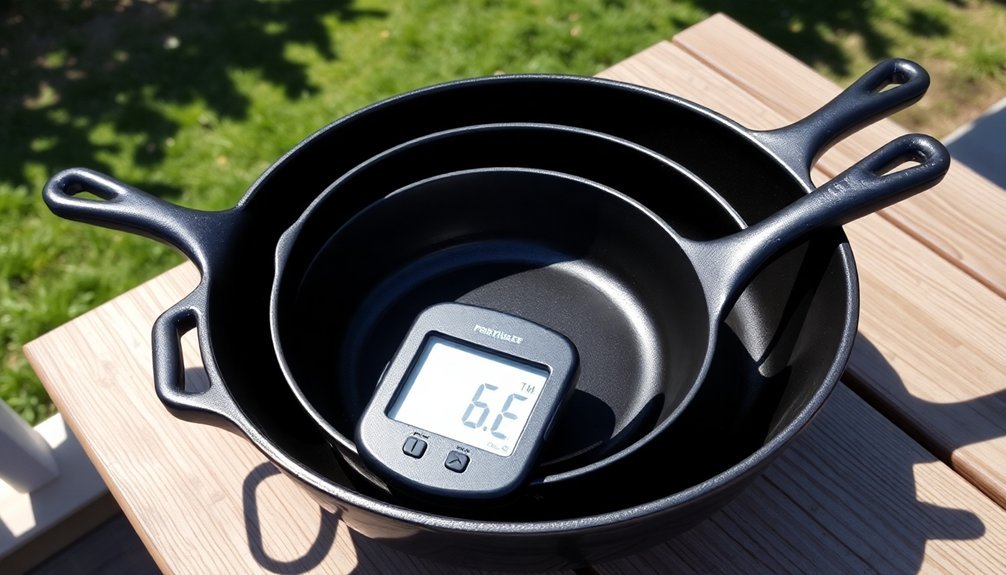
Since successful solar cooking relies heavily on proper equipment, choosing the right size and heat-retaining materials for your pots and pans is essential.
You'll want small to medium-sized cookware that fits common solar ovens while allowing for double stacking when needed. Dark-colored, thin-walled stainless steel pots with multi-layer construction offer ideal heat absorption and distribution.
For maximum heat retention, remember these key factors:
- Select pots sized between 8-13 inches long and 5-6 inches deep to fit most solar ovens.
- Choose dark-colored stainless steel cookware with aluminum layers for superior heat conductivity.
- Insulate your cooking vessel with materials like straw or hay, avoiding air gaps to maintain temperatures for up to 8 hours.
Fill your pots to 80% capacity for the best thermal efficiency during cooking.
Lid Selection for Maximum Efficiency
When choosing lids for your solar cooking vessels, you'll need to weigh the benefits of glass lids, which allow you to monitor cooking progress, against metal lids with reflective surfaces that redirect sunlight into your food.
You'll want to make sure your lids create an airtight seal to maintain consistent cooking temperatures and prevent heat loss through gaps or poor fits.
For foods that produce steam, look for lids with adjustable vents that let you control moisture levels while keeping valuable heat inside your cooking vessel.
Glass Vs Metal Lids
Selecting the right lid for your solar cooking setup can greatly impact your meal's success. When choosing between glass and metal lids, consider your specific cooking needs.
Glass lids let you monitor your food without lifting the cover, which helps maintain consistent temperatures essential for solar cooking. Metal lids offer superior durability but require you to lift them for checking, releasing precious heat.
For ideal solar cooking results:
- Choose glass lids for dishes requiring frequent monitoring, like rice or vegetables.
- Select metal lids for long, slow-cooking meals where durability matters more than visibility.
- Consider temperature resistance – both types work well, but glass lids typically have lower heat limitations.
Lid Seals Matter
Three critical features define an effective lid seal for solar cooking: airtightness, durability, and heat retention.
You'll want to guarantee your lid creates an airtight seal using rubber gaskets or plastic wrap to prevent heat from escaping. This seal must be secure while still allowing you to open and close the lid easily for checking your food.
Choose materials that can withstand high temperatures without warping or degrading. Stainless steel and aluminum offer excellent durability, while glass or transparent materials let you monitor your cooking progress.
Look for lids with oven-safe handles and insulation to enhance heat retention.
Don't forget to check your seals regularly for wear and tear. A properly sealed lid will help maintain consistent cooking temperatures and make the most of your solar cooker's efficiency.
Venting Steam Properly
While airtight seals help maintain heat, proper steam venting plays a key role in successful solar cooking. You'll want to select lids with strategically placed ventilation holes that let you control steam release without losing excessive heat. Glass lids offer the advantage of monitoring your food's progress without lifting the cover and disrupting the cooking process.
For ideal steam management in your solar cooking setup, focus on these critical factors:
- Choose tight-fitting lids with adjustable vents to regulate moisture levels based on your recipe.
- Confirm your cookware distributes heat evenly through layered materials like stainless steel with aluminum cores.
- Pick handles that can withstand high temperatures and won't compromise your grip when checking or stirring food.
Remember to match your cookware's material to your specific needs – cast iron for heat retention or stainless steel for acidic foods.
Affordable Cookware Options
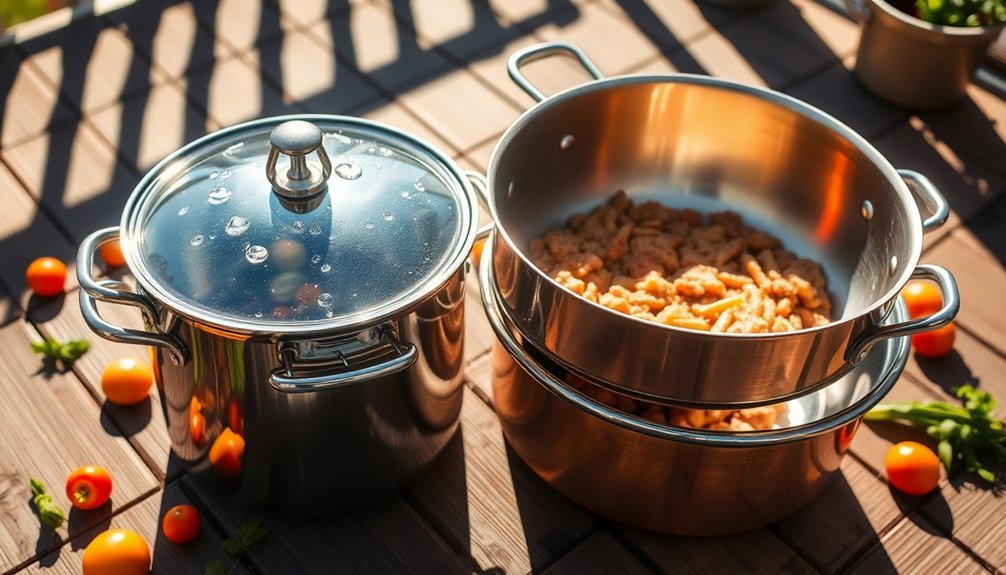
Budget-conscious solar chefs can find several cost-effective cookware options that don't compromise on quality. Tramontina sets, made from 18/10 stainless steel, offer excellent value while meeting solar cooking requirements.
You'll find their thin-walled construction heats quickly and retains temperature well.
If you don't need a complete set, consider purchasing individual pieces that match your cooking needs. Look for dark-colored pots with tight-fitting lids and oven-safe handles. Short, wide designs work better than tall ones for even heating.
You can pair these with affordable solar cookers like the SCI CooKit or Copenhagen models, which fold flat for easy storage. For a versatile option, try a 4.5-quart stainless steel pot with a black exterior and glass lid – it's perfect for most solar cooking applications.
Customizing Pots for Solar Use
Since most pots aren't specifically designed for solar cooking, you'll need to customize existing cookware to maximize efficiency.
If your pot isn't dark-colored, you can wrap it in a black cloth to enhance heat absorption. For best results, choose thin-walled pots with tight-fitting lids that'll retain heat while allowing quick heat transfer.
Here's how to adapt your existing cookware for solar cooking:
- Remove any shiny or reflective coatings that might deflect sunlight, and consider painting the exterior with heat-resistant black paint.
- Replace plastic or wooden handles with oven-safe alternatives that can withstand prolonged sun exposure.
- Add silicone lid straps or clips to guarantee a tight seal, preventing heat and moisture loss during cooking.
Durability and Performance Testing
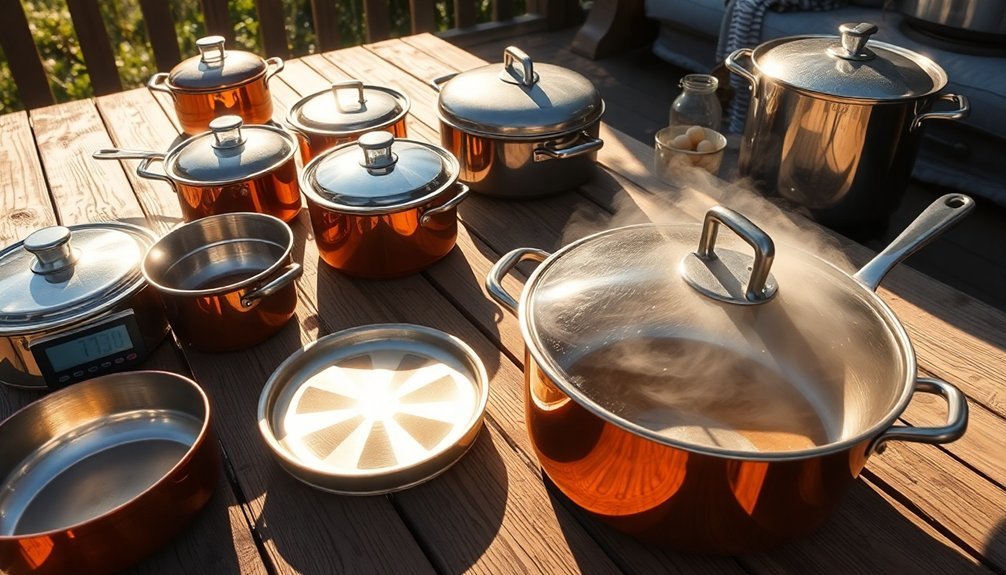
Testing a pot's durability and performance is essential before committing to solar cooking. You'll want to evaluate both heat distribution and material resilience through practical tests.
| Test Type | What to Check |
|---|---|
| Heat Test | Use infrared thermometer to measure surface temperature distribution |
| Food Test | Try frying eggs and browning butter to assess cooking performance |
| Material Test | Check for warping or discoloration after repeated use |
| Safety Test | Verify handle stability and lid fit at high temperatures |
Look for pots with 5-ply construction, like the All-Clad D5 series, as they provide superior heat distribution. Dark-colored surfaces, particularly black, absorb solar heat most effectively. You'll also want to confirm your pot retains heat well – glass lids with silicone rims are excellent for this purpose. Remember to test the pot's weight and balance when full to guarantee safe handling.
Solar Cooking Temperature Control
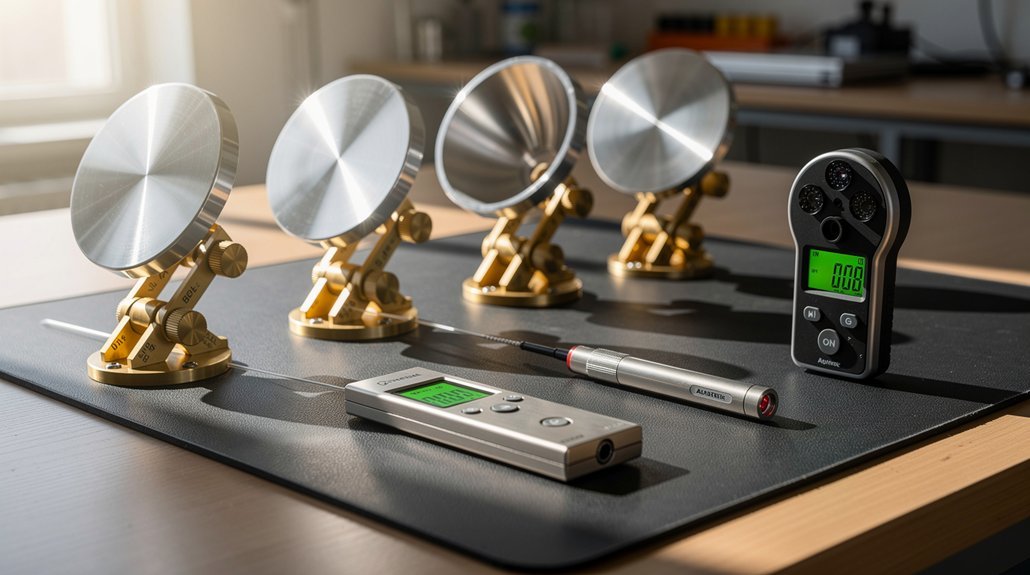
Managing temperature effectively in solar cooking requires careful attention to both positioning and insulation techniques. You'll need to monitor your solar oven's temperature regularly, aiming for 150-225°F using a reliable thermometer or thermocouple. Preheat your oven for 20-30 minutes before cooking to reach ideal temperatures.
To maintain consistent cooking temperatures:
- Adjust your oven's position every 30-45 minutes to track the sun's movement, ensuring maximum heat collection.
- Use dark-colored, lidded cookware to capture and retain heat more efficiently.
- Keep the heat seal tight and utilize reflective surfaces like aluminum foil to enhance temperature control.
Remember to choose a sheltered spot protected from wind, as this can greatly impact your oven's temperature stability.
For precise control, consider incorporating weather data to predict and adjust cooking times accordingly.
Frequently Asked Questions
Can I Use My Regular Non-Stick Cookware in a Solar Oven?
Yes, you can use regular non-stick cookware in a solar oven, but you'll get better results with dark-colored pans. Just make sure your cookware can handle temperatures up to 350°F and has durable coatings.
How Do I Prevent Food From Sticking Without Using Oils?
You'll prevent sticking by using liquids like broth or water instead of oil. Preheat your pan properly, cook on medium heat, and guarantee food's at room temperature. Quality nonstick or ceramic titanium cookware helps too.
Will Plastic Handles on Pots Melt in Solar Ovens?
Yes, your plastic handles can melt in solar ovens since they reach temperatures over 300°F. You'll need to use cookware with metal, glass, or heat-resistant handles instead to guarantee safe cooking in your solar oven.
Can I Stack Multiple Pots Inside the Solar Oven Simultaneously?
Yes, you can stack multiple pots in your solar oven. You'll need to arrange them carefully on the leveling tray, and they'll work best when using standard round pots with glass or enamel lids.
Should I Season Cast Iron Differently When Using It for Solar Cooking?
You don't need to season cast iron differently for solar cooking. Use the same oil-based seasoning process, but expect longer heating times. Solar seasoning offers the bonus of avoiding indoor smoke and odors.
In Summary
You'll get the best results from your solar cooking by choosing dark, thin-walled metal pots with tight-fitting lids that maximize heat absorption and retention. Remember to test your cookware's performance and make adjustments as needed. Whether you're using budget-friendly options or customized pots, proper temperature control and material selection will guarantee successful sun-powered meals that save energy and preserve nutrients.