
Better insulation in your sun oven creates a powerful thermal barrier that traps and maintains higher cooking temperatures. When you use quality materials like polystyrene, rigid foam, or fiberglass, you'll minimize heat loss through conduction, convection, and radiation. Your oven's multi-layer construction works to preserve heat while blocking cold air infiltration, helping temperatures reach up to 350°F (177°C). Proper installation without gaps or wrinkles guarantees maximum efficiency, while well-maintained seals prevent precious heat from escaping. Understanding these insulation principles can transform your solar cooking experience into a more effective and energy-efficient process.
Understanding Heat Loss Basics
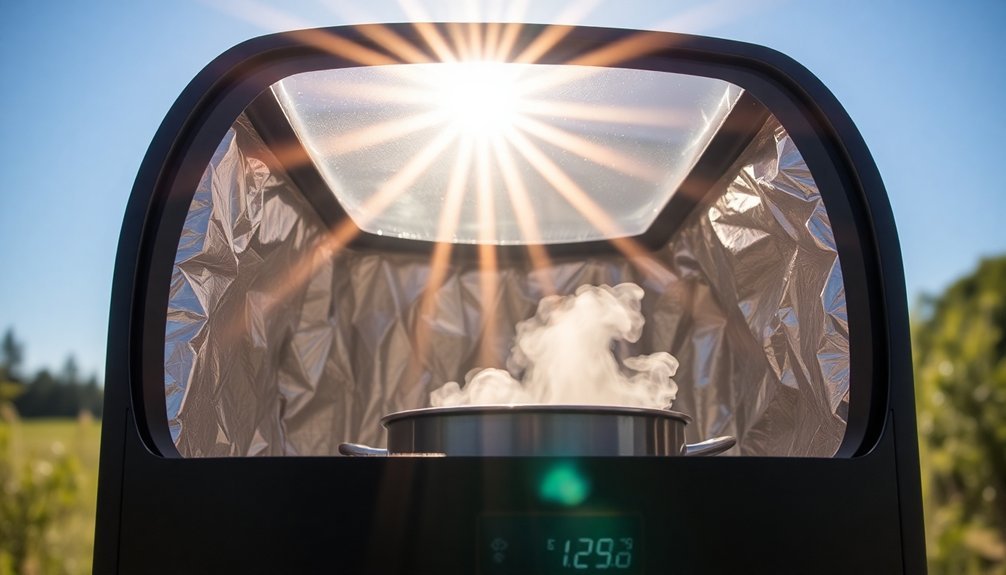
When you're building your sun oven, you'll need to combat conduction, where heat transfers directly through materials like metal and concrete.
You'll also face convection losses as air moves through gaps and openings, carrying precious heat away from your cooking space.
Radiation, which transfers heat through electromagnetic waves, can work for or against you – while it helps capture the sun's energy, it can also let heat escape.
Your oven's effectiveness depends on how well you manage these heat loss types. An airtight structure helps prevent unnecessary heat from escaping and reduces overall energy demand.
Best Insulation Materials
Selecting proper insulation materials stands as your most critical decision when building an efficient sun oven. You'll find that modern insulation options offer superior heat retention compared to traditional materials.
| Material | Benefits | Best Use |
|---|---|---|
| Polystyrene | High heat retention, lightweight | Interior walls |
| Rigid Foam | Superior R-value, durable | Base and sides |
| Fiberglass | Heat resistant, crush-proof | Exterior shell |
For peak performance, you'll want to combine different insulation types. Start with rigid foam for your base, add polystyrene to your walls, and protect it all with fiberglass. Don't forget to include newspaper between layers to fill any gaps. When you're installing the materials, make sure they're water-resistant and properly sealed to prevent moisture damage and maintain insulation effectiveness over time. The project's total cost of around €75 makes it an affordable way to create an eco-friendly cooking solution.
Temperature Control Through Layers
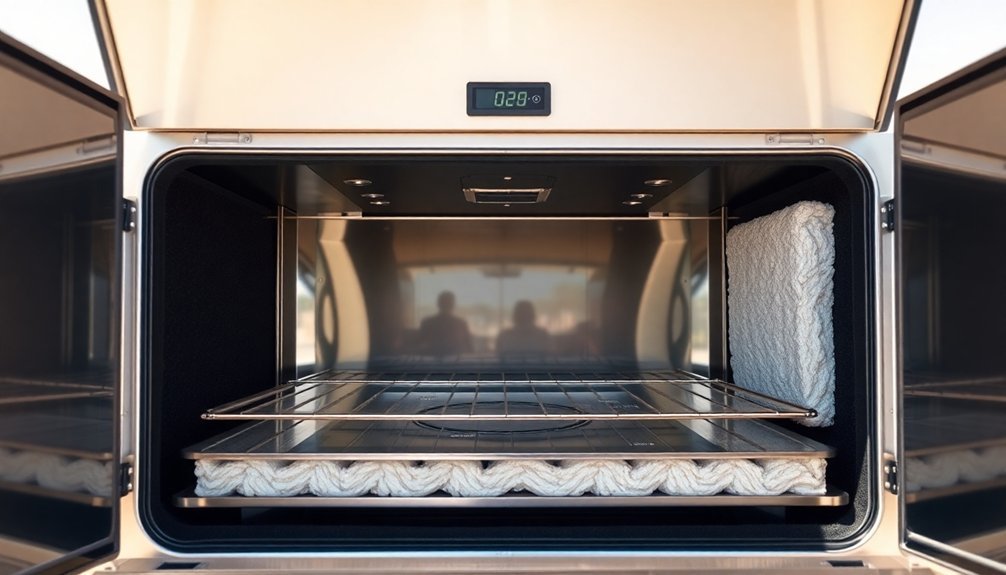
Your sun oven's layered construction creates an impressive thermal barrier that keeps heat locked inside the cooking chamber.
You'll find high-quality fiberglass insulation between the outer ABS plastic shell and inner black anodized metal chamber, working alongside specialized low-iron tempered glass to maintain cooking temperatures.
These multiple layers guarantee your oven stays hot inside while remaining cool to touch on the outside, making it both efficient and safe to use. An airtight seal around the chamber prevents heat from escaping while keeping unwanted pests out.
Multi-Layer Heat Trapping
Layering multiple heat-trapping elements creates a highly efficient solar oven that can reach and maintain ideal cooking temperatures.
You'll want to combine reflective surfaces, like aluminum foil or mirrors, with dark-colored absorption layers that convert sunlight into heat.
Adding insulating materials such as newspaper or cotton between layers prevents heat from escaping, while a transparent window lets sunlight in while keeping warmth inside. Trapped air pockets between layers provide additional thermal insulation benefits.
- Use double-paned glass or thick plastic for your transparent layer to reduce condensation and enhance insulation effectiveness.
- Position multiple reflectors at strategic angles to maximize the sunlight directed toward your cooking surface.
- Choose dark-colored cookware and line your oven's interior with black paper to boost heat absorption and retention.
Thermal Barrier Benefits
Effective thermal barriers in sun ovens create a powerful defense against heat loss through multiple protective layers. Your oven's high-quality, food-grade insulation maintains internal temperatures above 500° while keeping the exterior cool enough to touch.
| Layer Type | Primary Function |
|---|---|
| Inner Shell | Anodized metal for heat retention |
| Fiberglass | Non-toxic insulation barrier |
| Outer Shell | ABS plastic protection |
| Glass Door | Low-iron tempered seal |
The insulation system works like your home's thermal control layer, regulating temperature by slowing heat transfer. You'll find the glass door stays relatively cool at 155° even when your oven chamber reaches 350°. With proper insulation, you're able to maintain cooking temperatures between 300-400° on clear days, while the airtight gasket seal guarantees maximum heat retention.
Safety First Design Tips
When designing a Sun Oven, safety features must be the top priority. The use of ABS plastic for the outer shell and high-grade insulation creates a cool-touch exterior while maintaining high internal temperatures.
You'll find that even when your oven reaches 400°F inside, you can safely handle it without burning yourself.
The incorporation of tempered glass and stable alignment features guarantees you're protected from both heat and potential tipping hazards.
You'll appreciate how the warm glass door deters animals while remaining safe enough for children to be around.
- Position yourself so your shadow blocks reflections to protect your eyes when checking food
- Use the wire stakes in windy conditions to prevent tipping
- Trust the high-quality insulation to keep the exterior cool while cooking at high temperatures
Energy Collection and Retention
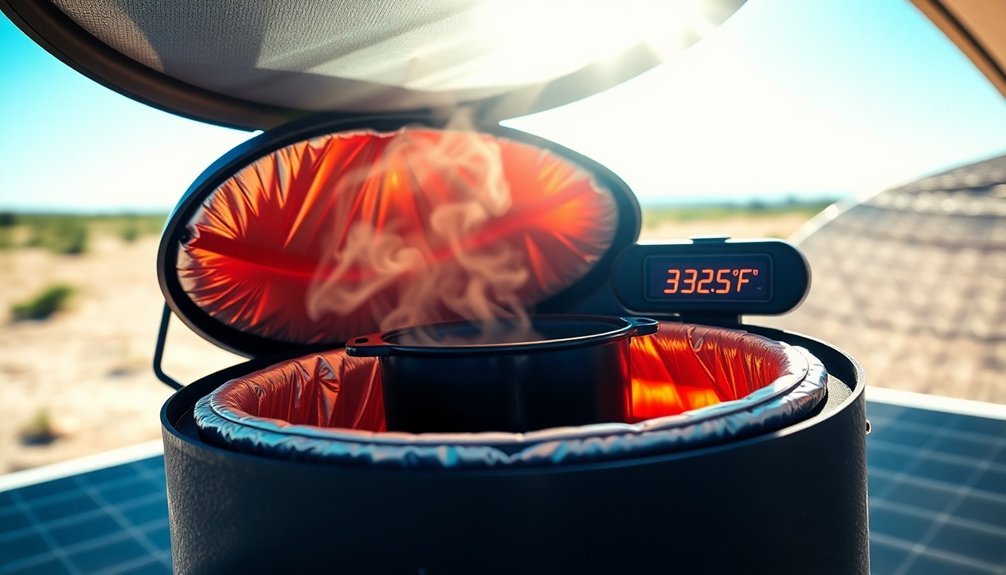
Since proper energy management makes or breaks a solar oven's performance, you'll need to focus on both collection and retention strategies. You'll want to maximize sunlight capture through reflective surfaces while minimizing heat loss through insulation.
| Component | Collection Role | Retention Method |
|---|---|---|
| Window | Allows sunlight entry | Multi-pane design |
| Walls | Reflects internal rays | High R-value materials |
| Base | Absorbs thermal energy | Dense insulation layer |
| Seal | Maintains air pressure | Gasket system |
| Surface | Dark color absorption | Heat sink properties |
To optimize your oven's efficiency, you'll need to align it with the sun every 30 minutes. Use materials like aluminum foil for reflection and dark surfaces for absorption. Don't forget to incorporate trapped air spaces in your insulation – they're essential for maintaining those 300-400°F cooking temperatures you'll need.
Insulation Installation Methods
The proper installation of insulation determines your solar oven's ultimate success. You'll need to secure insulation on the bottom, sides, and around the inside top of your box, leaving only the glazed surface exposed.
Use adhesive (not hot glue) to attach materials like closed cell foam, fiberglass, or rockwool, and carefully tape all seams to prevent heat loss.
- Create miter joints at corners to guarantee complete coverage and eliminate gaps where heat might escape.
- Apply reflective aluminum foil over your insulation to enhance heat retention.
- Layer your insulation materials to reach ideal thickness (1.5-2 inches for closed cell foam).
For maximum efficiency, you'll want to focus on creating a continuous barrier that traps thermal energy inside the cooking cavity.
Remember to overlap insulation pieces and seal every connection point carefully.
Maintenance for Peak Performance
To keep your sun oven performing at its best, you'll want to regularly clean and inspect the insulation to prevent debris from reducing its effectiveness.
You should check the seals monthly to verify they're maintaining proper compression and aren't showing signs of wear or damage.
Don't forget to apply silicone lube to the gaskets during your monthly inspection, as this helps maintain an airtight seal that's vital for peak insulation performance.
Clean Insulation Stays Effective
Maintaining clean insulation in your sun oven plays an essential role in its overall performance and longevity. You'll need to keep moisture away from the insulation materials to preserve their thermal resistance and heat-retaining properties.
When cleaning your sun oven, use non-abrasive glass cleaners for reflectors and wipe the interior with a dry cloth to prevent moisture buildup.
- Clean spills immediately to protect the insulation and prevent degradation
- Inspect reflectors regularly to maintain 86% reflectivity
- Create a small air gap between insulation and structure for peak heat retention
High-quality insulation materials like spun fiberglass, rockwool, or cellulose provide excellent thermal resistance.
You'll want to make sure your insulation stays dry and properly installed, without wrinkles or gaps, to maximize your sun oven's efficiency and cooking performance.
Check Seals Monthly
Regular seal inspections serve as a critical maintenance task for your sun oven's ideal performance.
You'll want to examine your oven's gasket and seals monthly to catch any potential issues before they affect your cooking results.
When checking your seals, look for gaps, cracks, or signs of wear that could compromise the airtight barrier. A properly functioning gasket helps maintain consistent high temperatures and prevents heat loss, which directly impacts your oven's efficiency.
You'll find that well-maintained seals reduce cooking time and energy consumption.
To keep your seals in top condition, simply wipe them with a damp cloth to remove any debris.
If you notice any deterioration, don't wait to adjust or replace the gasket – proper seals are essential for your sun oven's longevity and performance.
Frequently Asked Questions
Can You Use a Solar Oven on Snowy Days With Proper Insulation?
You can use your solar oven on snowy days if it's bright and clear. While outside temperature isn't critical, you'll need proper insulation and should focus on peak hours between 10 AM and 2 PM.
How Long Does Insulation Material Typically Last Before Needing Replacement?
Your insulation's lifespan varies: fiberglass can last 15-100 years, cellulose 20-30 years, and spray foam up to 100 years. You'll need replacement sooner if there's moisture damage or pest infestation.
Does Humidity Affect the Performance of Different Insulation Materials?
Yes, humidity considerably affects your insulation's performance. You'll notice materials like cotton and rock wool lose effectiveness in high humidity, while EPS, XPS, and PUR remain more stable with minimal performance changes.
Can Insulation Materials Affect the Taste of Food Cooked in Solar Ovens?
No, insulation materials won't affect your food's taste since they don't contact your food directly. They're placed outside the cooking cavity and only help maintain temperature and moisture levels while you're cooking.
What's the Maximum Temperature Difference Between Inner and Outer Walls With Insulation?
You'll typically see a maximum temperature difference of 200-250°F between your sun oven's inner and outer walls. With proper insulation, the interior can reach 350°F while the exterior stays just slightly above ambient temperature.
In Summary
You'll find that proper insulation transforms your sun oven from a basic cooker into a high-performance solar appliance. By choosing the right materials, installing multiple layers correctly, and maintaining your insulation system, you're maximizing heat retention and cooking efficiency. Remember to check your insulation regularly for wear and tear, and don't forget those essential safety measures. With these improvements, you're ready to harness the sun's power more effectively.