
Your oven's temperature fluctuates on sunny days because strong sunlight entering through kitchen windows converts to infrared radiation, greatly heating your kitchen space. This solar heat gain can warm your kitchen even during cold weather, with up to 76% of solar heat entering through windows. As your kitchen's ambient temperature rises, it affects your oven's thermostat and its natural heating cycle pattern, causing wider temperature swings above and below your set point. While your oven typically fluctuates 30 degrees in either direction, direct sunlight can amplify these variations. Understanding key factors like window treatments and ventilation will help you maintain more consistent temperatures.
Solar Impact on Kitchen Temperature
How does solar energy affect your kitchen's temperature? When sunlight enters through your windows, it converts to infrared radiation, which can greatly heat your kitchen space. This process mimics how solar cookers work, especially if you've got south-facing windows letting in direct sunlight.
Your kitchen's temperature fluctuations are more noticeable on clear, sunny days when the UV index is high. Even if it's cold outside, strong sunlight can warm your kitchen considerably due to the same principles that make solar ovens effective. Well-insulated windows can help maintain consistent temperatures even in colder climates, similar to how solar cookers operate in northern regions.
The sun's rays penetrate glass and create a greenhouse effect, trapping heat inside. This trapped heat can affect your oven's temperature sensing and performance, particularly if your kitchen isn't well-ventilated or if you don't have proper window insulation or shading.
Heat Transfer Through Windows
Your kitchen's windows can greatly impact oven temperature control through solar heat gain, as sunlight passing through glass creates a greenhouse effect that raises ambient room temperature.
When direct sunlight hits your windows, it can add substantial heat load to your kitchen space, making it harder for your oven to maintain consistent temperatures. According to studies, 76% of solar heat enters homes through windows during summer months.
Understanding how windows transfer heat will help you better manage your kitchen's temperature and improve your oven's performance through strategic window treatments or shading.
Solar Gain Through Glass
Windows are a significant source of temperature fluctuations in your oven's environment, primarily through solar gain and heat transfer.
When sunlight hits your kitchen windows, it creates a greenhouse effect through radiation, conduction, and convection. Short wavelengths enter easily but longer wavelengths get trapped, causing indoor temperatures to rise. The intensity of solar heat gain depends on your window's orientation to the sun and the type of glazing you have installed.
You'll notice more temperature variations if you've got clear, single-pane windows.
Low-e coatings, tinted glass, or window films can help you reduce this solar impact by reflecting infrared energy. Double or triple-paned windows with gas fillings will further minimize heat transfer.
If you're concerned about your oven's performance, consider installing window coverings like cellular shades or blackout curtains. They'll trap air and provide an extra barrier against unwanted solar gain.
Heat Load Affects Control
While controlling your oven's temperature might seem straightforward, the heat load from nearby windows can considerably impact its performance. Your oven's ability to maintain a steady temperature depends heavily on the ambient conditions, which are influenced by heat transfer through windows. For accurate temperature monitoring, you can check product support through troubleshooting guides and FAQs.
| Heat Source | Control Impact |
|---|---|
| Direct Sun | +30°F variation |
| Poor Insulation | Higher cycling |
| Window Drafts | Uneven heating |
| Room Temperature | Unstable baseline |
| Seasonal Changes | Variable control |
You'll notice more temperature fluctuations when your windows aren't properly insulated. Double-glazed windows with low-e coatings can help stabilize room temperature, reducing the frequency of your oven's temperature cycling. If you're experiencing significant variations, consider installing window films or cellular shades to minimize heat transfer and improve your oven's temperature control.
Ambient Temperature Control Methods
You'll need to manage window shades strategically throughout the day to prevent excess heat from affecting your oven's temperature stability.
Proper kitchen ventilation plays a vital role in maintaining consistent ambient temperatures, as uncontrolled airflow can create hot or cold spots near your oven.
Window Shades and Ventilation
Maintaining a consistent kitchen temperature begins with proper window shade management, an essential factor in controlling ambient conditions that affect oven performance.
You'll want to install cellular shades within your kitchen window frames, as they can reduce heat gain by up to 60% during hot days and prevent heat loss by 40% during cold seasons.
For maximum efficiency, mount your shades close to the glass and consider adding side tracks.
During summer, keep your shades closed when the sun's directly hitting your kitchen windows. In winter, you can open them during sunny hours to naturally warm the space.
If you're looking for automated control, motorized blinds can adjust throughout the day to maintain ideal kitchen temperatures.
For west-facing kitchen windows, consider adding awnings, which can reduce solar heat gain by up to 77%.
Kitchen Air Flow Management
How effectively you manage kitchen airflow can considerably impact your oven's temperature stability.
You'll want to implement a Demand Control Kitchen Ventilation (DCKV) system that automatically adjusts fan speeds based on cooking activity and heat levels. These systems use optic and temperature sensors to respond quickly to changes in your kitchen's environment.
Don't make the mistake of running exhaust fans unnecessarily or leaving equipment on when it's not in use.
Instead, focus on proper make-up air management to maintain consistent temperatures. Your HVAC system should be correctly sized and balanced for your kitchen space.
Keep vents and equipment clean and well-maintained to guarantee ideal airflow. If you're using older ventilation equipment, consider upgrading to energy-efficient models that offer better temperature control and reduced heat output.
Oven Thermostat Response Patterns
When your oven's temperature fluctuates, it's following a predictable pattern driven by its thermostat's bimetallic strip mechanism. As heat builds up, the strip bends until it breaks the electrical circuit, shutting off the heating element.
Once the oven cools, the strip contracts, reconnecting the circuit and restarting the heating cycle.
You'll typically see temperature swings of up to 30 degrees above and below your set point, creating a saw-tooth pattern as your oven cycles on and off.
These fluctuations can be more pronounced if you've placed items like cookie sheets on the bottom rack or if there's restricted airflow. The thermostat's location and your oven's heat loss rate also influence these patterns.
Regular calibration using an oven thermometer can help guarantee your temperature swings stay within an acceptable range.
Room Ventilation Effects
Proper ventilation in your kitchen plays an essential role in managing oven temperature fluctuations. When you're baking on a warm day, you'll need adequate airflow to prevent your oven from working harder than necessary to maintain its set temperature.
Poor ventilation leads to stuffy, humid conditions that can cause temperature swings of up to 30 degrees Fahrenheit in either direction.
You can improve airflow by using kitchen exhaust fans and opening windows strategically. A balanced mechanical ventilation system will help push out hot, humid air while drawing in cooler air from outside.
If you block your oven's vent, you'll create air stratification, where hot air rises and cooler air settles at the bottom. This can trick your oven's temperature sensor and result in uneven heating throughout the cavity.
Direct Sunlight Exposure Solutions
Much like room ventilation, direct sunlight can greatly impact your oven's temperature stability. To protect your oven from unwanted temperature fluctuations, you'll need to address sunlight exposure strategically.
Start by evaluating your oven's location. If it's near a window, install shading devices like blinds or curtains to block direct sunlight. You can also use heat-reflective window films for additional protection.
Don't forget to check your oven's seals and insulation, as these components help maintain stable internal temperatures regardless of external conditions.
If you're still experiencing issues, verify your oven's temperature accuracy with an oven thermometer. You may need to recalibrate the thermostat following your manufacturer's guidelines.
Regular maintenance of heating elements and temperature sensors will also guarantee your oven performs consistently throughout sunny days.
Temperature Monitoring Best Practices
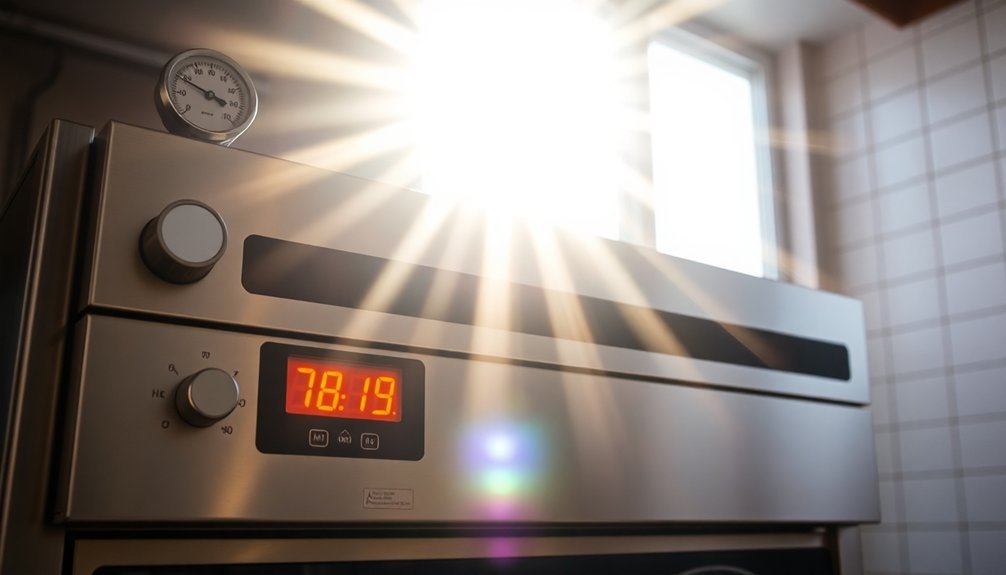
Effective temperature monitoring requires four essential components: accurate devices, proper placement, regular calibration, and meticulous data recording.
You'll want to use digital data loggers with buffered probes to track temperatures at 30-minute intervals, ensuring the display is easily visible outside your oven.
Place sensors strategically in hot and cold spots to capture accurate readings.
Don't forget to calibrate your devices according to manufacturer specifications and regularly check door seals for any compromise.
When recording data, document temperatures to the tenth decimal place and maintain at least two daily readings.
You should download and review your temperature data weekly or monthly to spot any issues.
If you experience temperature excursions, thoroughly document the event, actions taken, and outcomes.
Seasonal Kitchen Temperature Variations
Your kitchen's ambient temperature can change dramatically throughout the year due to solar heat passing through windows, especially during peak daylight hours.
Kitchen humidity levels shift with the seasons, affecting how your oven behaves and potentially impacting baking results.
To maintain consistent oven performance year-round, you'll need to adjust your indoor temperature controls and consider using window treatments during intense summer months.
Solar Heat Through Windows
When seasonal temperature variations affect your kitchen, solar heat through windows plays a major role in oven temperature fluctuations. Your kitchen's windows, especially south-facing ones, can act like mini solar collectors, allowing sunlight to pass through and heat interior surfaces.
This solar gain can raise your kitchen's ambient temperature greatly, particularly during summer afternoons.
You'll notice the greatest impact if you've got west-facing windows, as they let in intense afternoon sun when temperatures are already at their peak.
The type of windows you have matters too – single-pane windows offer little protection, while double or triple-pane options provide better insulation.
To maintain consistent oven temperatures, you'll want to take into account using awnings, blinds, or reflective films, which can reduce solar heat gain by up to 77%.
Kitchen Humidity Impact
Seasonal changes in kitchen humidity considerably impact your cooking and baking results throughout the year.
You'll notice that during warmer months, your kitchen's humidity levels rise, causing baked goods to absorb more moisture and potentially become undercooked. Conversely, winter's low humidity can lead to overly dry results.
You'll need to adapt your recipes accordingly by adjusting liquid ingredients to compensate for these humidity variations.
When you're running your oven, it'll increase both temperature and humidity in your kitchen space. To maintain ideal conditions, you can use exhaust fans, open windows, or employ humidity control devices.
Understanding these seasonal fluctuations helps you achieve consistent results – just remember that proper ventilation and temperature control are essential for successful cooking outcomes.
Indoor Temperature Control Tips
Building on humidity's effects, indoor temperature control plays a major role in kitchen management throughout the year.
You'll need to adjust your cooking approach as seasons change to maintain ideal kitchen conditions and guarantee consistent oven performance.
- Keep your oven's door seal tight to prevent unnecessary heat loss and temperature swings.
- Monitor room temperature, as it directly affects your oven's temperature cycling.
- Adapt cooking methods to match seasonal needs – lighter techniques in spring/summer, heartier ones in fall/winter.
- Check your oven's thermostat and elements regularly to maintain proper temperature control.
- Position your oven away from drafts and direct sunlight to minimize external temperature influences.
Remember that your oven naturally cycles within a 60-degree Fahrenheit range (+30/-30), but proper indoor temperature control can help minimize these fluctuations and improve your cooking results.
Energy Efficiency During Sunny Days
How effectively your solar panels harness sunlight can make a significant difference in energy production.
You'll get maximum energy output on clear, sunny days when direct sunlight hits your panels at ideal angles. While summer brings longer daylight hours and increased production potential, you'll want to monitor temperature levels since excessive heat can actually reduce efficiency.
During peak sunshine, your panels will perform best in cooler temperatures, as high heat increases internal resistance in photovoltaic cells.
You can enhance your system's performance by adjusting panel tilt angles seasonally to capture more sunlight.
Even on cloudy days, your panels will still generate power, though at reduced efficiency levels of 10-25% during heavy overcast conditions and 50-80% during partial cloud cover.
Heat Distribution Optimization Techniques
When tackling uneven heating in ovens, you'll need to implement several key optimization techniques to achieve consistent temperatures throughout the cooking space.
Modern optimization methods combine deep learning models with practical solutions to address temperature fluctuations effectively.
- Place a baking stone on the lower rack to act as a heat sink and stabilize temperature variations.
- Rotate your baking sheets regularly to prevent hot spots from causing uneven cooking.
- Adjust rack placement strategically, considering that heat rises to the top of the oven.
- Use neural network-based monitoring systems to identify and track temperature patterns.
- Implement targeted heat distribution controls based on parametric examinations of your oven's behavior.
These techniques draw from both traditional baking wisdom and advanced thermal system optimization strategies, ensuring you'll get more consistent results from your oven.
Frequently Asked Questions
Does Humidity Affect Oven Temperature Fluctuations During Sunny Weather?
Yes, humidity does affect your oven's temperature. You'll notice more fluctuations when it's sunny because warmer air holds more moisture, which can impact heat transfer and your oven's ability to maintain consistent temperatures.
Can Painting Kitchen Walls a Different Color Reduce Solar Heat Impact?
Yes, you'll notice a difference if you paint your kitchen walls in light colors. They'll reflect more sunlight and reduce heat absorption, while dark colors can absorb up to 90% of solar heat.
Do Gas Ovens Fluctuate Differently Than Electric Ovens on Sunny Days?
You won't notice a difference between gas and electric oven fluctuations based on sunshine. While gas ovens typically have wider temperature swings than electric ones, this difference isn't related to sunny weather.
How Do Smart Ovens Handle Temperature Variations Compared to Conventional Ones?
You'll find smart ovens maintain steadier temperatures through advanced sensors and continuous adjustments, while conventional ovens simply cycle on and off. Smart ovens also learn from usage patterns to optimize temperature control.
Does Cooking at Night Eliminate Sun-Related Temperature Fluctuation Problems Completely?
You don't need to cook at night because sunlight doesn't affect your oven's temperature fluctuations. These variations are caused by internal thermostat cycling and mechanical operations, regardless of the time you're cooking.
In Summary
Your oven's temperature fluctuations on sunny days stem from multiple factors you can control. By managing solar heat through windows, maintaining proper kitchen ventilation, and monitoring your oven's thermostat response, you'll achieve more consistent baking results. Consider installing window treatments, using exhaust fans, and checking your oven's calibration regularly. These steps will help minimize temperature variations and improve your cooking experience year-round.