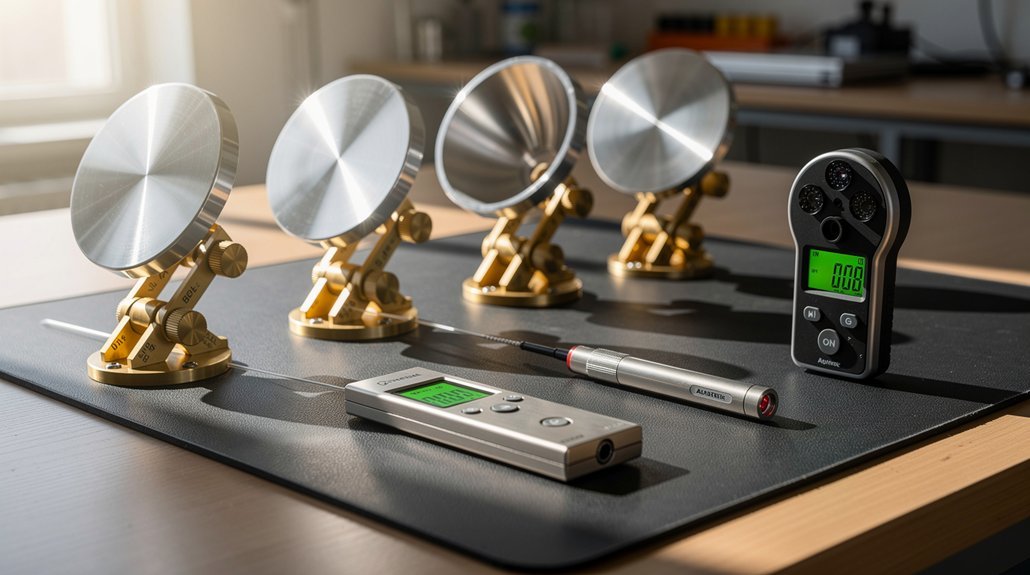

Solar cooking can transform your camping meals by harnessing temperatures up to 550°F using only the sun's power. You'll need reliable equipment like a GoSun Sport cooker or a DIY setup with reflective materials and insulation. Plan your meals around peak sunlight hours (10 AM – 4 PM) and prep ingredients at home for efficiency. Proteins like chicken and fish work great, while vegetables and baked goods are also possible with proper timing. Set up your cooking station on stable ground with designated prep zones and keep your panels clean. Master these basics, and you'll reveal a world of sun-powered culinary possibilities.
Essential Solar Cooking Equipment
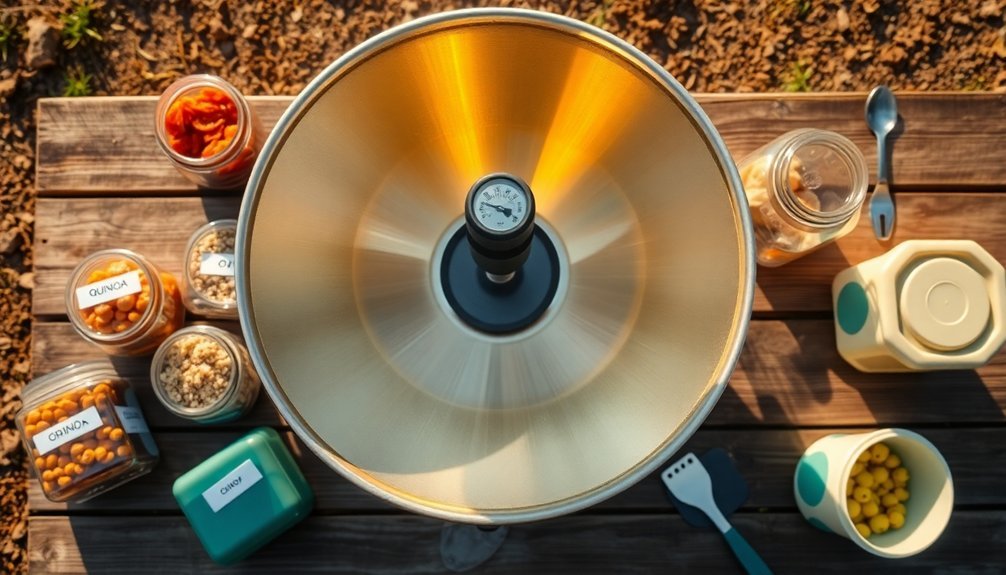
The right solar cooking equipment can make or break your camping culinary experience. For best results, you'll need a reliable solar cooker, either commercial or DIY. The GoSun Sport offers impressive performance, reaching 550°F and cooking meals in under 20 minutes, while being portable enough for hiking trips.
Your solar cooker needs four key components: glazing to trap heat, insulation to maintain temperature, reflective materials to focus sunlight, and appropriate cooking containers. Choose dark-colored pots or skillets for better heat absorption – enameled metal, cast iron, or stainless steel work best. For optimal safety, ensure your cookware doesn't trigger security restrictions when purchasing online.
If you're going the DIY route, gather cardboard boxes, aluminum foil, duct tape, and saran wrap. While DIY models reach lower temperatures (around 300°F) and require more sun tracking, they're cost-effective for basic solar cooking needs.
Planning Your Solar Meal Schedule
When planning meals for solar cooking while camping, successful execution depends heavily on understanding sunlight patterns and weather conditions.
You'll need to assess your campsite's sun exposure and identify peak cooking hours, typically between late morning and early afternoon.
Create a detailed meal plan that groups dishes with similar cooking times. You can maximize efficiency by prepping ingredients at home and organizing them in labeled containers. Remember to include snacks and drinks to stay energized throughout your solar cooking adventure.
Since most solar-cooked meals take 2-4 hours, schedule your cooking during the sun's strongest hours. Consider dishes that can cook simultaneously, and prioritize recipes that don't need constant attention.
Keep your schedule flexible to adapt to weather changes, and pack all necessary ingredients ahead of time.
Using a menu template or spreadsheet will help you stay organized and guarantee you don't forget essential items.
Best Foods For Solar Cooking
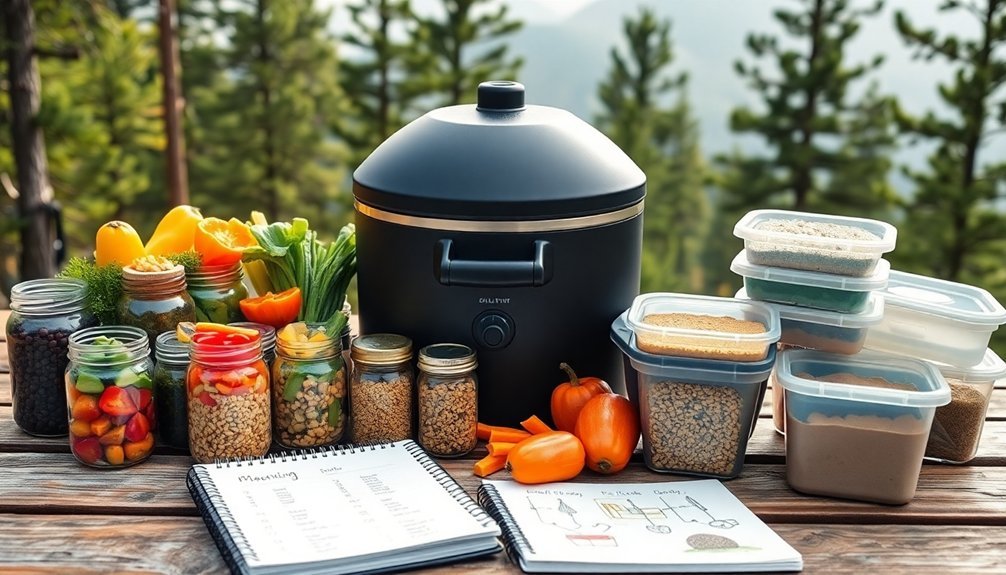
Successfully executing your solar cooking schedule requires choosing the right ingredients and dishes.
You'll find that proteins like chicken and fish are excellent choices, with fish fillets cooking in just 45-75 minutes, while chicken works well in dishes like biryani and tandoori preparations.
For vegetarian options, you can't go wrong with vegetables like bell peppers and potatoes, though you'll need to plan ahead as potatoes take up to 6 hours to reach ideal tenderness. Solar cooking produces dishes with even, consistent cooking thanks to minimal air movement inside the cooker.
Eggs are particularly versatile for breakfast dishes, and dairy products like cheese and yogurt enhance many solar-cooked meals.
If you're craving baked goods, you can make everything from scones to lasagne, with pumpkin scones taking just 22-25 minutes in full sun.
Remember that most dishes require longer cooking times than conventional methods.
Setting Up Your Cooking Station
Creating an efficient solar cooking station demands careful planning and strategic equipment placement. Position your solar panels where they'll receive maximum sunlight throughout the day, and keep them clean for ideal performance. The 160W to 200W capacity panels provide sufficient power for running basic kitchen appliances.
Set up distinct zones for food prep, cooking, and cleaning to maintain organization and efficiency.
- Place your portable power station centrally, ensuring easy access to both AC and DC outlets for your appliances.
- Arrange your solar cooker on a stable, flat surface with clear sun exposure, using adjustable stands for proper angling.
- Set up your prep area with a sturdy table and essential tools within arm's reach.
- Create a designated storage zone for ingredients and cookware, keeping them protected from the elements.
Remember to use LED lighting for evening meal prep and maintain proper food safety temperatures throughout your setup.
Temperature Management While Cooking
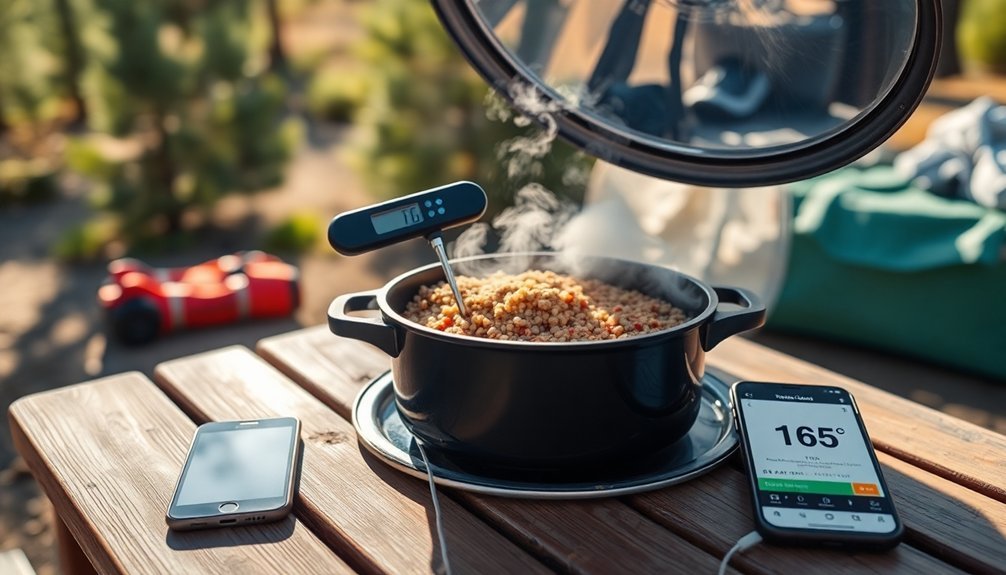
Maintaining precise temperature control during solar cooking requires active monitoring and strategic adjustments throughout your cooking session.
Position your solar oven in direct sunlight between 10 AM and 4 PM, and track internal temperatures with a thermometer, aiming for 200°F.
When using a Dutch oven with coals, remember the 3/4 top and 1/4 bottom rule for baking, while placing all coals underneath for frying and simmering.
You'll want to create coal rings around the top and bottom to achieve roughly 350°F, adjusting as needed.
Don't forget to maximize heat retention by checking your reflective surfaces regularly.
Keep aluminum foil tape securely fastened and replace it when damaged.
As the sun moves, you'll need to rotate your cooking setup to maintain consistent heat distribution.
Frequently Asked Questions
Can Solar Cookers Work on Overcast or Partially Cloudy Days?
Yes, you'll find solar cookers can work on overcast days, though they'll cook slower. You can still prepare meals using insulated box ovens and heat-retention baskets, but you'll need to plan for longer cooking times.
How Do You Clean and Maintain a Solar Cooker?
Clean your solar cooker with hot, soapy water and a rag on tongs. You'll need to maintain reflective surfaces regularly, remove dust, and check for damaged parts. Don't forget to polish metallic components.
What Happens if Animals Approach the Solar Cooker While Cooking?
If animals approach your solar cooker, you won't need to worry about them getting burned. However, you should keep them away to prevent knocking over the cooker or contaminating your food.
Can Solar Cookers Be Used at High Altitudes During Camping?
You'll find solar cookers work exceptionally well at high altitudes due to increased UV radiation and clearer skies. They're actually more efficient up there, and you'll often experience faster cooking times than at lower elevations.
Does Food Cooked in Solar Ovens Taste Different From Conventionally Cooked Meals?
Yes, you'll notice food tastes better in solar ovens because they cook slower and preserve more nutrients. You'll find meats are more tender, flavors are enhanced, and natural tastes are better maintained due to gentle cooking.
In Summary
You'll find solar cooking while camping becomes second nature with practice and proper planning. Make the most of your eco-friendly cooking setup by starting early, choosing the right equipment, and selecting foods that work well with solar heat. Remember to monitor temperatures closely and always have a backup plan. Once you've mastered these basics, you'll enjoy delicious sun-cooked meals in the great outdoors.