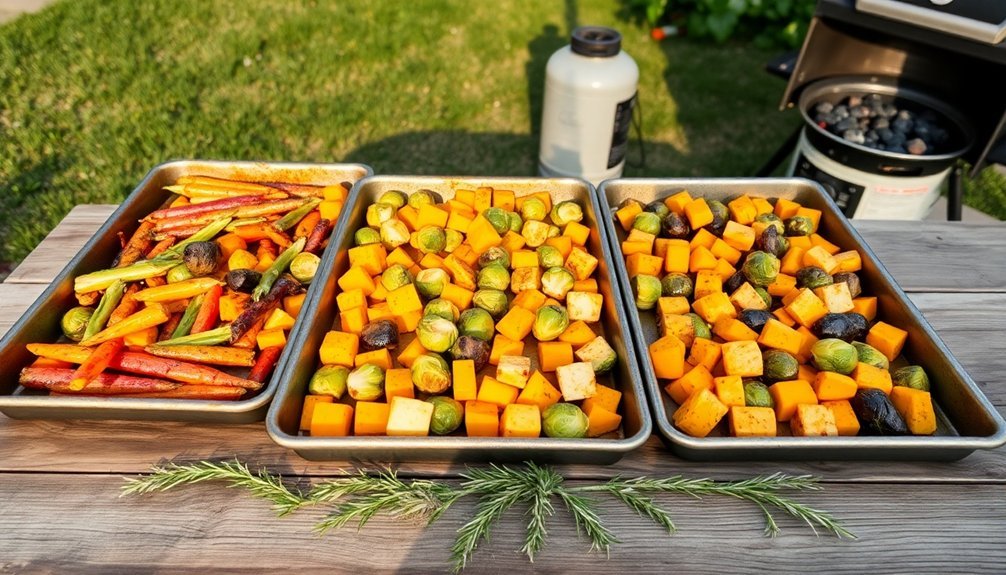
Transform your outdoor cooking game with these five versatile methods for batch-roasting vegetables. You'll master the classic campfire cast iron technique, harness the sun's power with a solar oven, utilize a grill basket for perfect char marks, explore earth pit cooking with a Dutch oven, or infuse smoky flavors using a smoker box. Each method offers unique benefits, from the rustic appeal of cast iron to the eco-friendly solar approach. With proper tools and timing, you'll create tender, flavorful vegetables while enjoying the fresh air. These proven techniques will elevate your outdoor culinary adventures to new heights.
Campfire Cast Iron Method
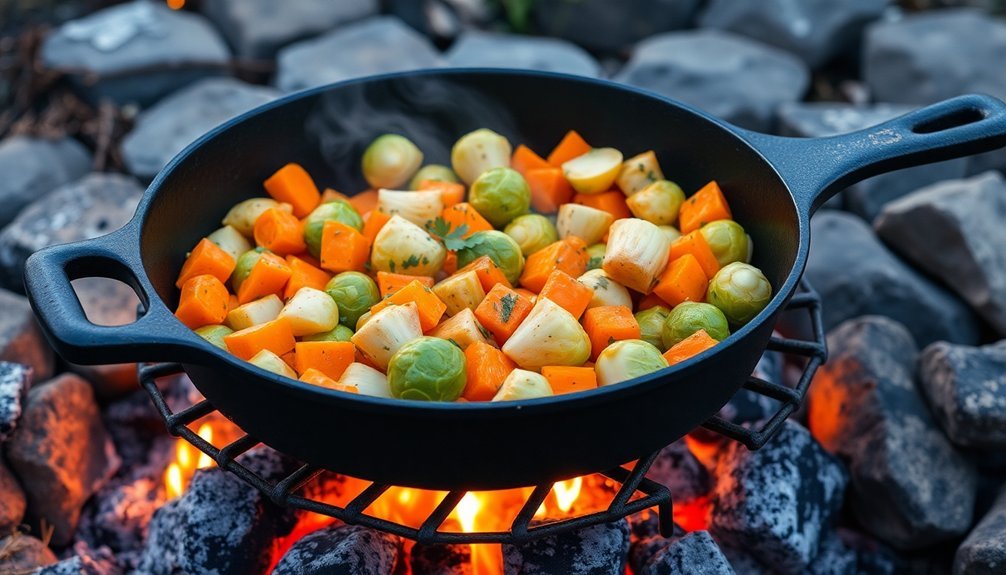
When roasting vegetables outdoors, a cast iron skillet over a campfire offers unmatched versatility and flavor.
You'll want to heat your skillet over medium-high heat while you prep your vegetables. Select a mix of sweet and root vegetables like corn, bell peppers, asparagus, and Yellow Finn potatoes for diverse textures and tastes. For safe outdoor cooking, wear fireproof gloves when handling the hot skillet.
Drizzle your chosen vegetables with olive oil and season them well. Once your fire's ready, place everything in the skillet and cook for 10-15 minutes.
You'll know they're done when the colors are vibrant and the vegetables are tender. Test corn kernels by pressing them – they should pop easily with juice.
Remember to stir occasionally for even cooking, and if you're using a charcoal setup like a Big Green Egg, you'll get an extra smoky finish.
Solar Oven Batch Cooking
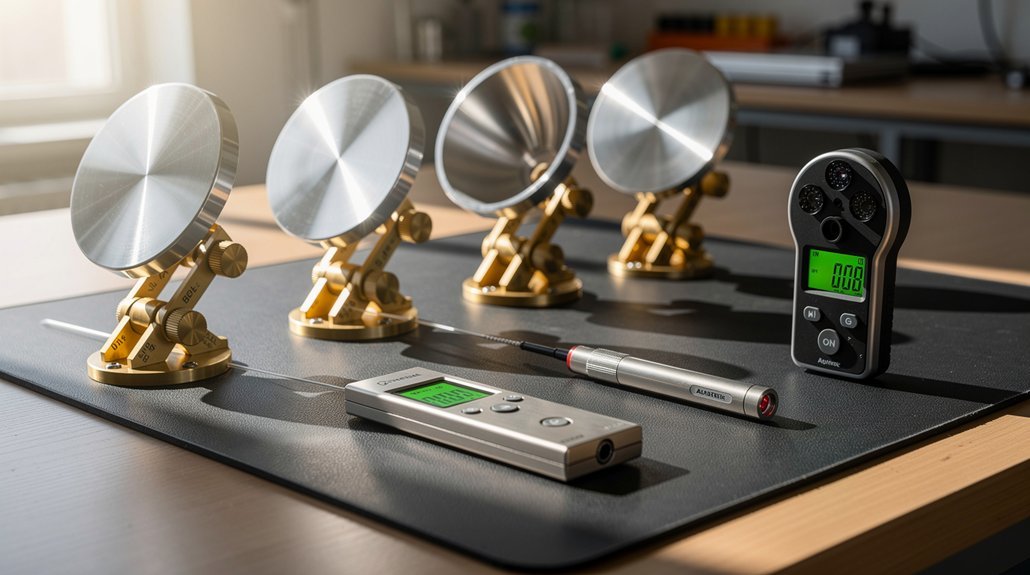
Harnessing the sun's energy through a solar oven provides an eco-friendly way to batch roast vegetables outdoors. You'll need to choose from various types, including parabolic, box-type, or tube-style cookers that can reach temperatures up to 325°F.
Start by finely chopping your vegetables like eggplants, tomatoes, and zucchinis. Place them in a black cooking pot with a glass of water, olive oil, and seasonings. Many home chefs join the Solar Family community to share their favorite roasting techniques.
Before cooking, preheat your solar oven in direct sunlight. You'll want to adjust its position throughout the day to follow the sun's path.
The cooking process takes 1.5 to 3 hours depending on your oven type. Don't forget to stir occasionally and check for doneness.
Remember to wear sunglasses when handling the hot oven and use parchment paper for better heat retention.
Grill Basket Vegetable Roasting
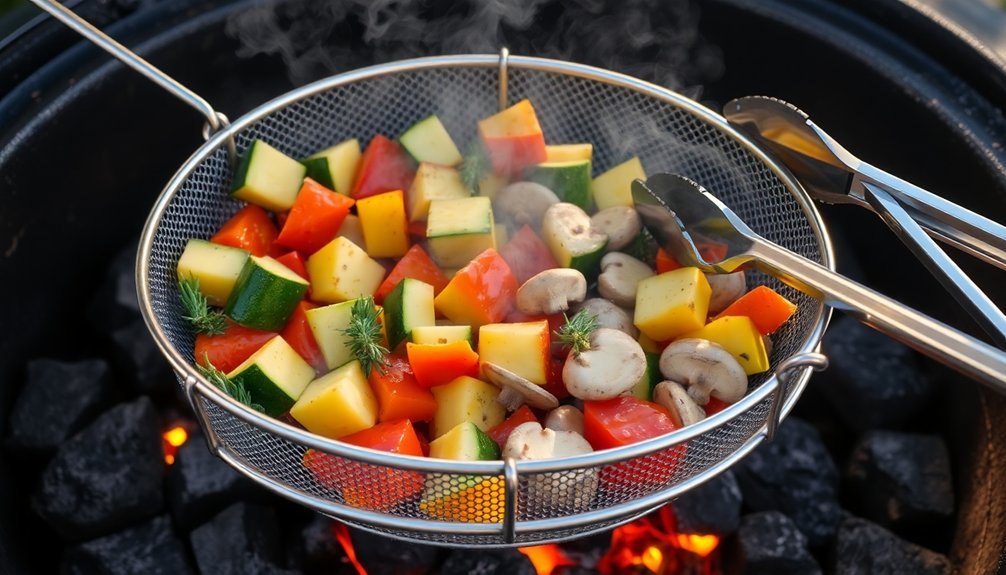
Ready to elevate your outdoor cooking game? A grill basket is your secret weapon for perfectly roasted vegetables outdoors.
Start by preheating your grill to 375-400°F and heat the oiled basket for 10 minutes to prevent sticking.
Select vegetables of similar size, like Brussels sprouts, potatoes, and mushrooms, cutting them uniformly if needed. For best results, cut your onions into ½ inch thick rounds for even cooking.
You'll want to marinate them in olive oil, balsamic vinegar, salt, and pepper for at least 10 minutes, or simply toss with oil and seasonings.
After discarding excess marinade, spread your veggies in the hot basket.
Grill for 10-12 minutes with the lid closed, stirring every 5-8 minutes until they're tender and caramelized.
Don't forget to rotate the basket for even cooking.
Once done, transfer to a platter and garnish with fresh herbs.
Dutch Oven Earth Pit
Transform your backyard into a rustic cooking sanctuary by mastering the Dutch oven earth pit method. You'll need a 10 or 12-inch Dutch oven and a variety of uniformly cut vegetables. Coat your veggies with oil, herbs, and spices before placing them in your preheated oven. The Dutch oven's superior heat retention ensures vegetables cook evenly and stay tender.
| Time | Temperature | Best For |
|---|---|---|
| 1 hour | 350°F | Quick roasting |
| 2-3 hours | 300°F | Slow cooking |
| Variable | 300-350°F | Root vegetables |
Monitor your vegetables throughout cooking, turning them once for even results. Add broth or wine to deglaze those flavorful browned bits. When done, serve directly from the Dutch oven or transfer to a platter. Don't forget to garnish with fresh herbs like parsley for a professional touch. You can store any leftovers in the refrigerator or reheat them later in your Dutch oven.
Smoker Box Technique
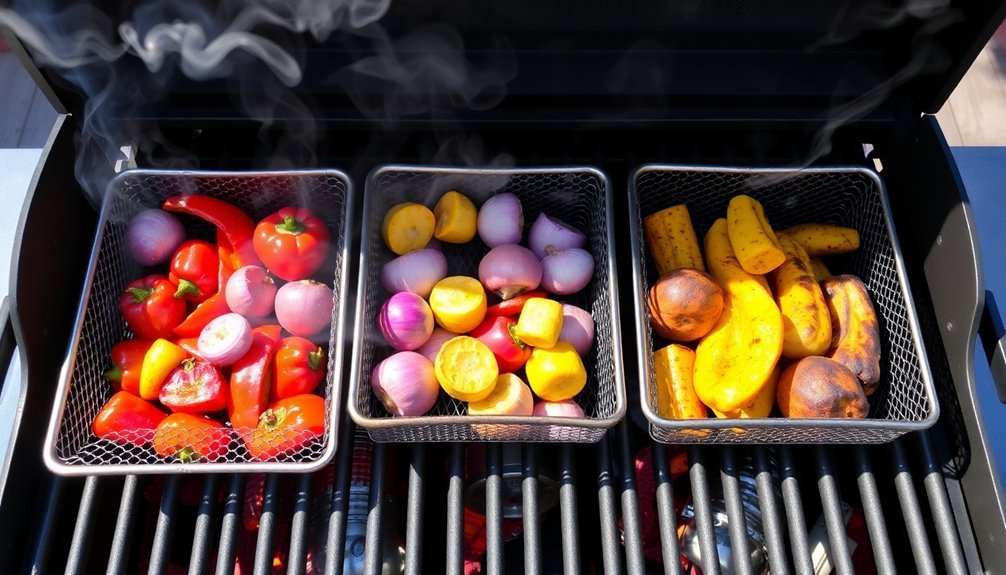
The smoker box technique adds an irresistible layer of smoky flavor to your outdoor-roasted vegetables.
Start by soaking your wood chips for an hour, then drain and place them in a smoker box under your grill rack.
Heat your grill on high until smoke appears, then reduce to medium heat.
You'll want to prep your vegetables by tossing them with oil and seasonings, cutting them into uniform pieces for even cooking. Choose from favorites like bell peppers, onions, mushrooms, and broccoli.
Place your seasoned vegetables in a grill basket or on skewers, arranging them in a single layer.
Close the lid and grill for 10-12 minutes, turning occasionally until they're tender.
You'll know they're done when you can easily pierce them with a fork.
Frequently Asked Questions
How Do You Protect Vegetables From Wildlife While Roasting Outdoors?
You'll need to stay with your vegetables while they're roasting outdoors. Use wire cages or mesh covers to protect them from birds and wildlife, and don't leave food unattended in open spaces.
Can You Roast Frozen Vegetables Outdoors Without Thawing First?
Yes, you can roast frozen vegetables without thawing. You'll need high heat (450°F) and extra oil. Place them directly on a preheated surface and guarantee they're spread out to prevent steaming.
What's the Best Way to Transport Pre-Seasoned Vegetables to Outdoor Cooking Sites?
Store your pre-seasoned vegetables in airtight containers and transport them in a cooler with ice packs. You'll want to keep them below 8°C and out of direct sunlight during the journey.
Should Vegetables Be Wrapped in Foil During Extreme Weather Conditions?
You'll want to wrap your vegetables in foil during extreme weather, as it protects against moisture and temperature changes. However, consider using breathable containers in humid conditions to prevent unwanted steaming.
How Do Different Wood Types Affect the Flavor of Roasted Vegetables?
You'll find that mild woods like apple, cherry, and maple add subtle sweetness to your vegetables, while stronger woods like hickory and mesquite can overpower them. Oak and alder offer balanced, gentle smokiness.
In Summary
You'll love having these five outdoor veggie roasting methods in your cooking arsenal. Whether you're using a classic cast iron over the campfire, harnessing solar power, grilling in batches, trying traditional earth pit cooking, or infusing smoky flavors, you've got options for any outdoor setting. These techniques will help you create delicious, tender vegetables while enjoying the fresh air and natural surroundings.